Description
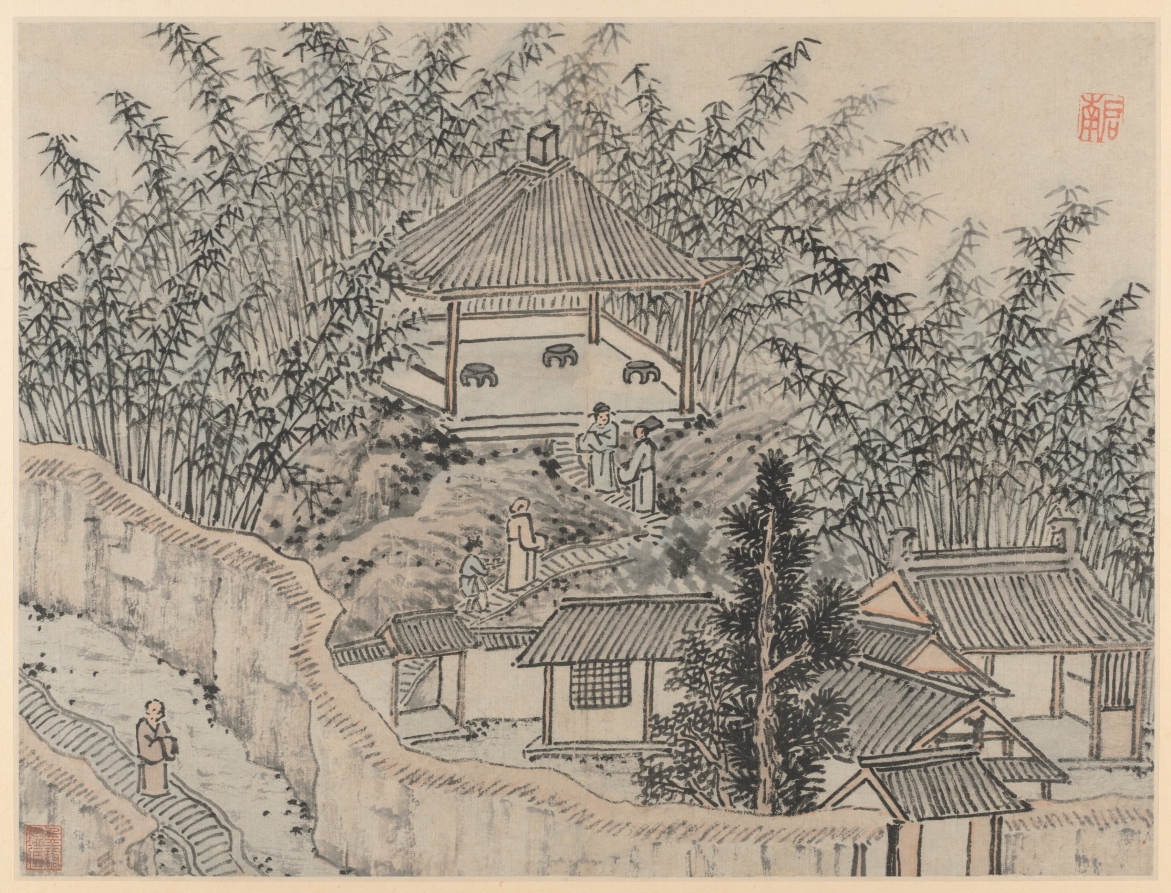
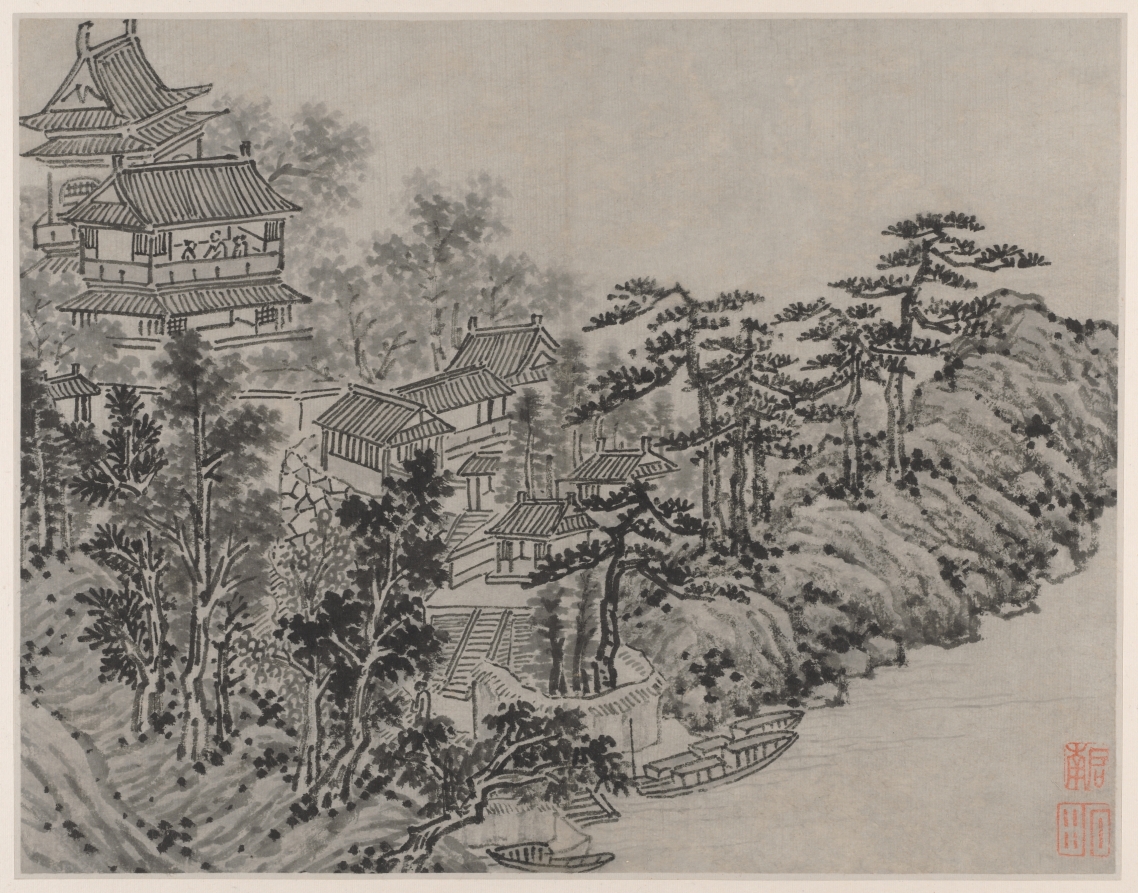
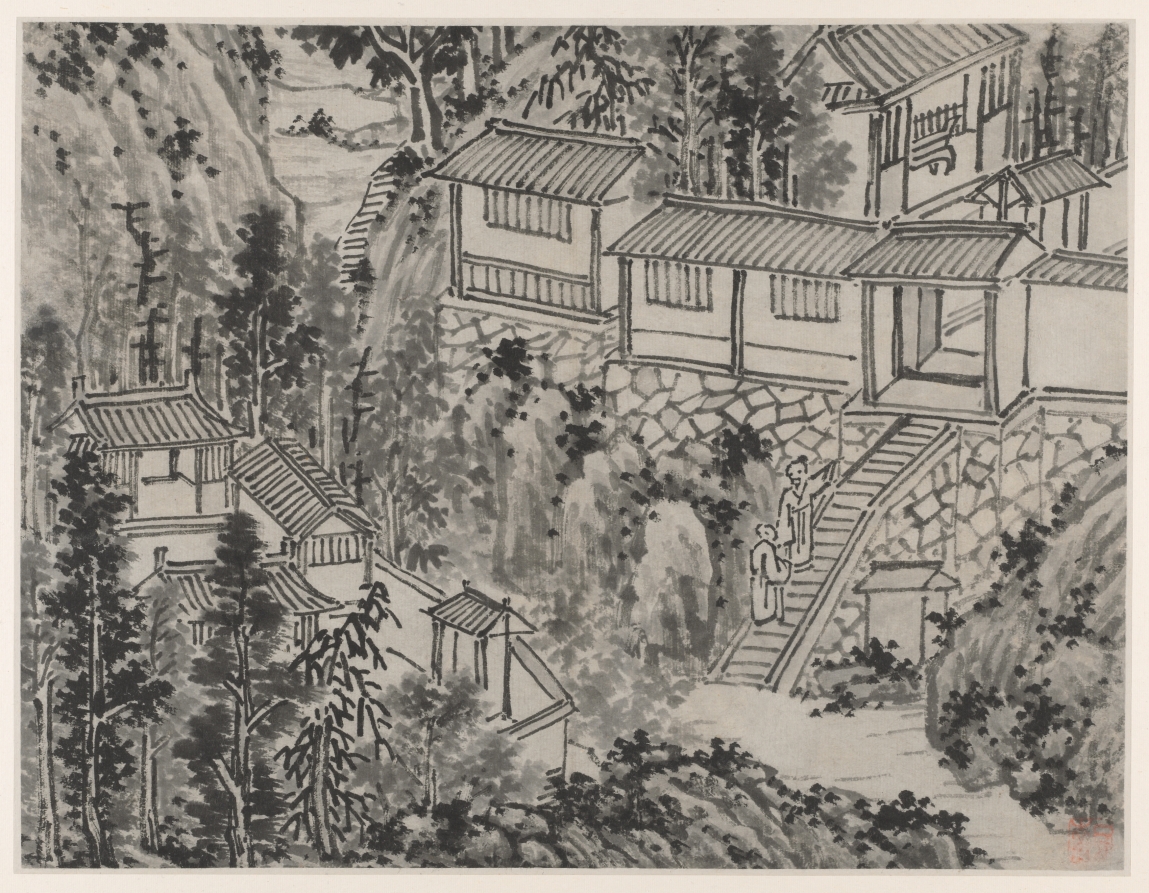
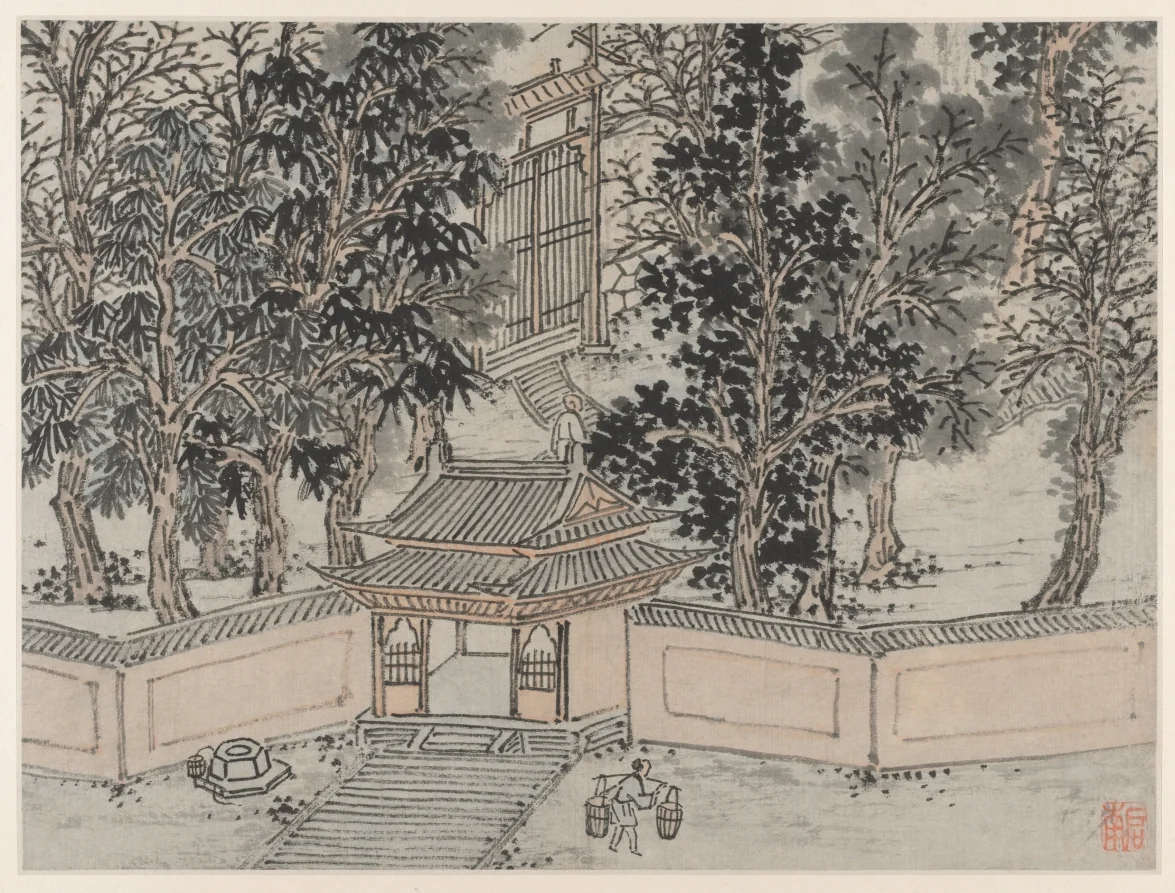
Views of Tiger Hill depicts a historic site a few miles northwest of Suzhou. The scenes simulate a visit from arriving by boat at the foot of the mountain to climbing to Cloudy Cliff Monastery. Representations of the artist’s mature style, Shen Zhou included views in subtle colors in the suite of monochrome scenes.
A Suzhou native, Shen Zhou was supported by family wealth and rejected an official career in favor of life as a retired scholar. Turning to painting in midlife, he is regarded as the founder of the Wu School of painting, with its center in Suzhou.
A Suzhou native, Shen Zhou was supported by family wealth and rejected an official career in favor of life as a retired scholar. Turning to painting in midlife, he is regarded as the founder of the Wu School of painting, with its center in Suzhou.
Provenance
Hu Zhishou 胡之壽 [late 18th–mid 19th century[; Binliang 斌良 [1784–1847]; Hou Shigong 侯士恭 [late 19th–early 20th century]; Richard B. Hobart [1885-1963], Cambridge, MA; (Walter Hochstadter [1914–2007], New York, NY, sold to the Cleveland Museum of Art) (?-1964); The Cleveland Museum of Art, Cleveland, OH (1964-)
Accession Number
1964.371.10
Medium
Album leaf; ink on paper or ink and slight color on paper
Dimensions
Image: 30.8 x 41.1 cm (12 1/8 x 16 3/16 in.); Overall: 36.5 x 49.9 cm (14 3/8 x 19 5/8 in.)
Classification
Painting
Credit Line
Leonard C. Hanna Jr. Fund
Tags
Color: Brown Color: Gray
Background & Context
Background Story
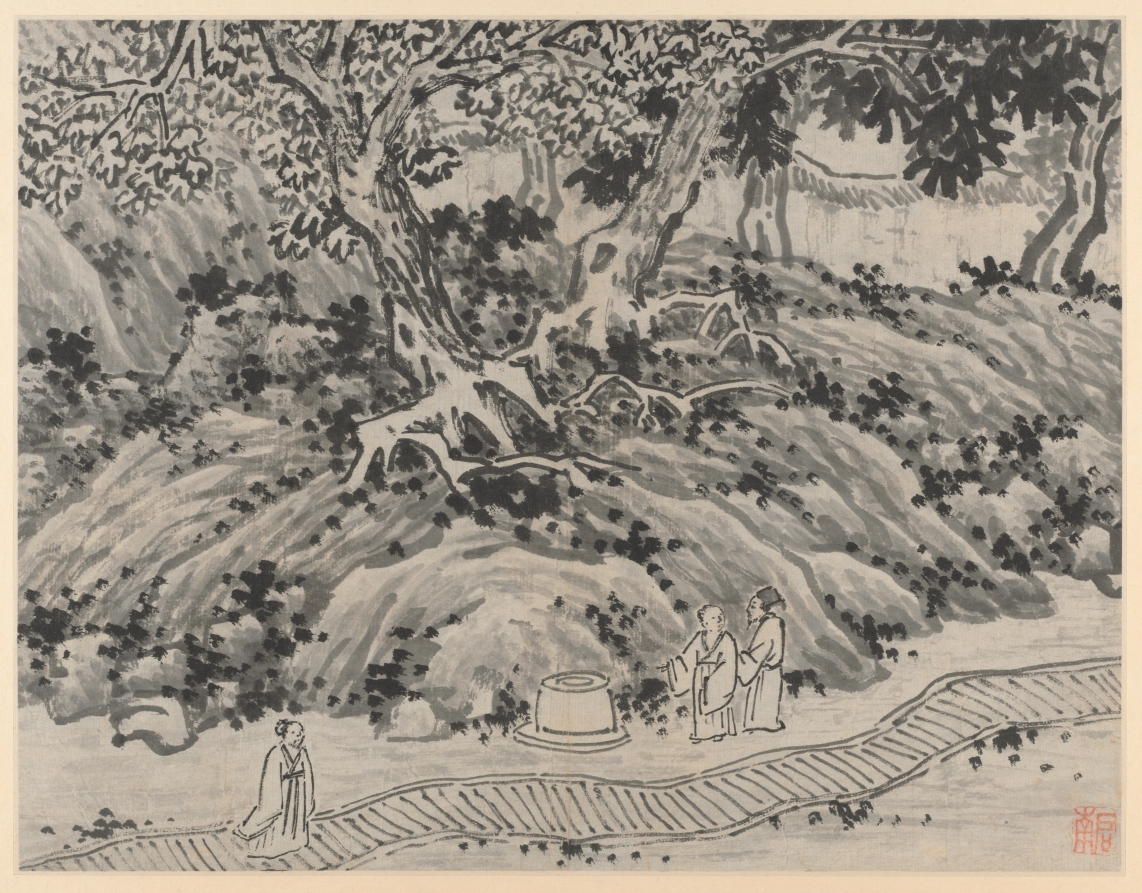
《虎丘十二景·后门虎跑泉》是沈周册页中描绘虎丘后山幽静一景的页面。虎跑泉是虎丘著名的古迹,相传有虎在此跑地出泉而得名。沈周以高远法描绘了这一深山幽泉的景象:古树苍翠,岩壁陡峭,泉水从山石间流出,一位僧人或隐士正在泉边汲水。
这幅画与"泊舟远望"的开阔平远形成鲜明对比:画面取景狭窄而深邃,树石的描绘繁密而细致,营造出一种幽秘隔绝的氛围。沈周在此页中着重表现的是文人隐逸的理想——远离市井喧嚣,在山林泉石间寻得心灵安宁。这种"以小见大"的手法正是文人画的核心美学:一泉一石皆可寄托无限情思。
从技法上看,这一页的皴法更为密集,沈周运用了类似"披麻皴"与"点苔"的技法来表现山石的质感和树木的繁茂。泉水以留白与淡墨线条勾勒,在浓重的山石之间形成视觉呼吸点。整幅画面虽然尺幅不大,但层次丰富,空间感强烈,体现了沈周驾驭复杂构图的高超能力。
Cultural Impact
这一页展示了沈周在册页小品中运用"高远"与"繁密"笔墨的卓越能力。它对山泉幽居的描绘延续了倪瓒、王蒙等元代文人画家的隐逸传统,同时以更贴近自然的写实笔触赋予了传统题材新的生命力。
Why It Matters
这幅"虎跑泉"是《虎丘十二景》中最具文人隐逸情怀的一帧,以繁简对比的笔墨营造出深山幽泉的诗意。它完美体现了中国文人画"可居可游"的理想境界,是沈周晚年笔墨已入化境的明证。