Description
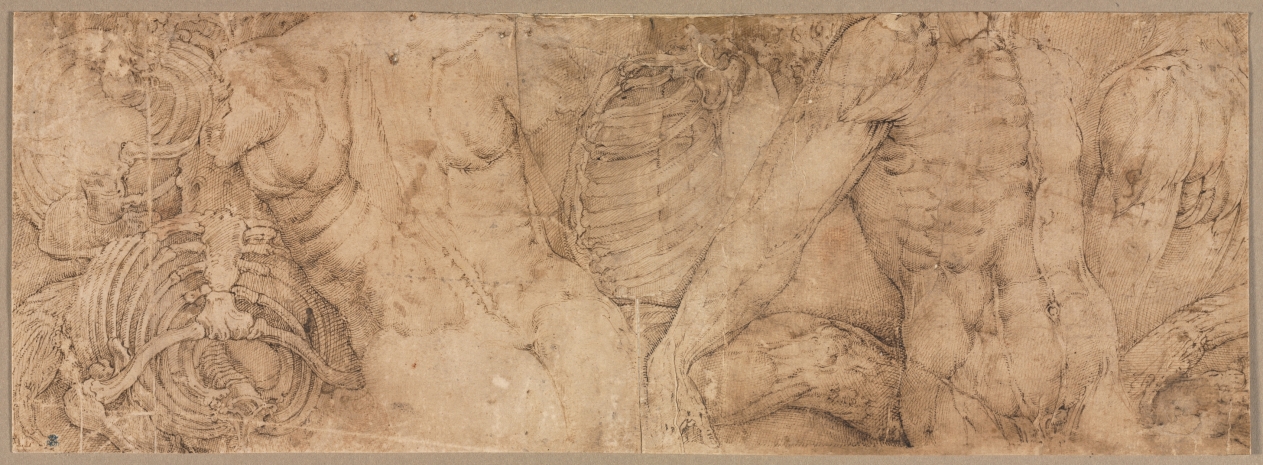
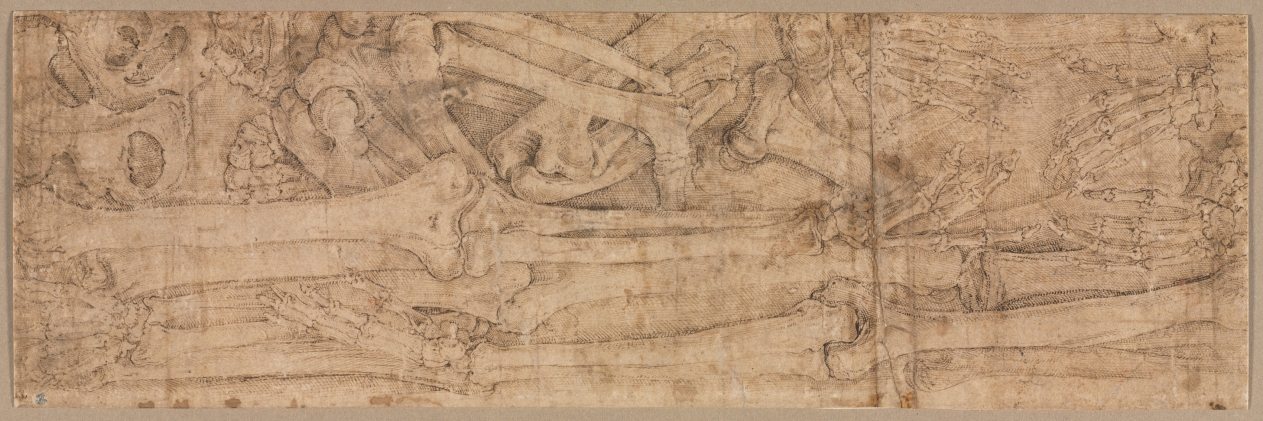
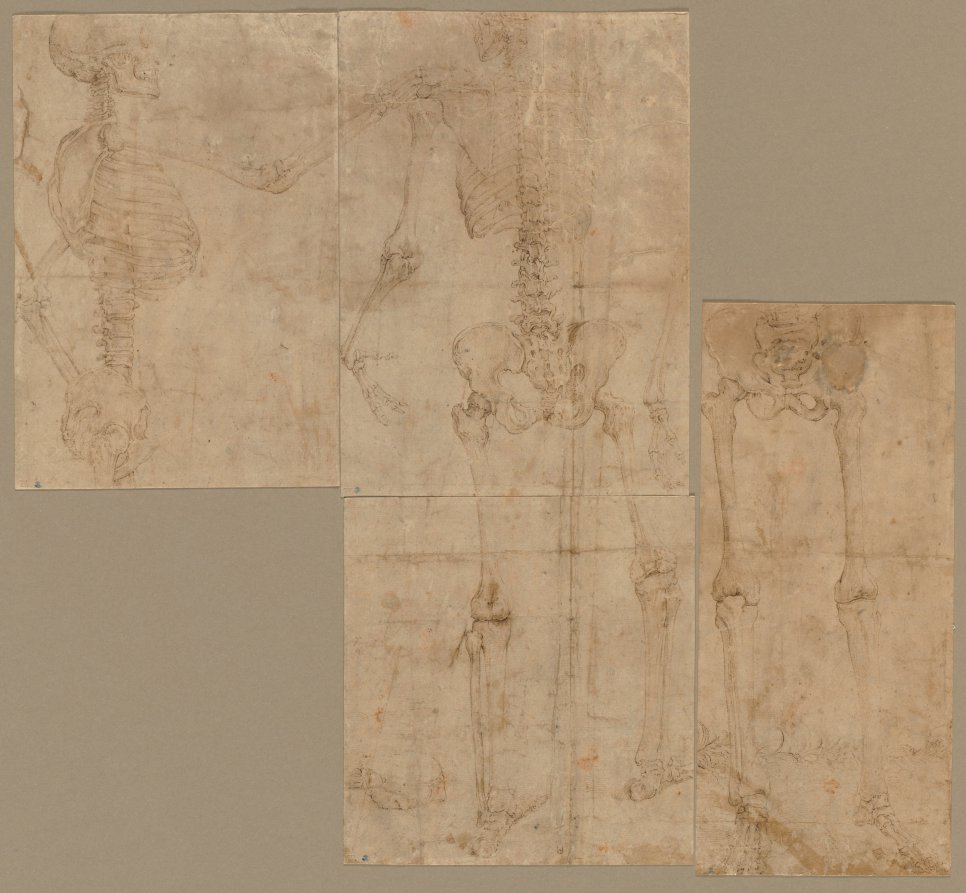
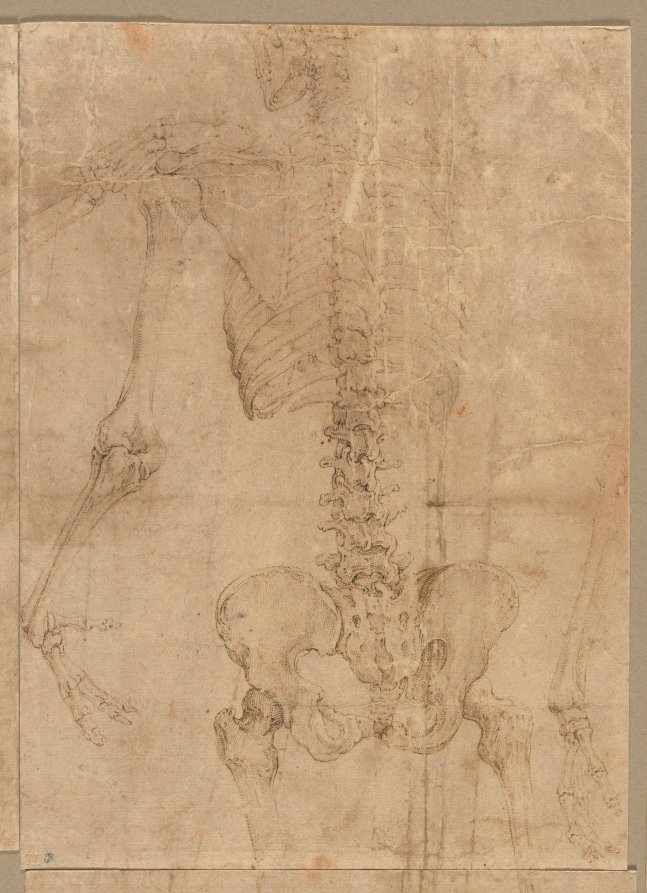
Michelangelo was among the first artists in Europe to attend a human dissection and to adopt anatomical knowledge as a necessity for depicting the human figure. These drawings by Battista Franco reflect the increased—and slightly macabre—interest in the interior workings of the human body inspired in part by Michelangelo’s example. Here, the groupings of rib cages, though rendered accurately, are placed into decorative piles. The odd assembly vacillates between scientific study and a symbolic memento mori, or reminder of death.
Provenance
Sir Thomas Lawrence, London (Lugt 2445, lower left, blind stamped). Samuel Woodburn, London (according to departmental cataloguing sheet, sale 4-8 June 1860, Christie's London; Lugt 2584, not stamped). Boguslaw Jolles, Dresden and Vienna (Lugt 381a, lower left, in blue ink; according to departmental cataloguing sheet, sale 28-31 October 1895, Munich). Prof. Otto Neubauer, Munich and London (according to departmental card). Mr. and Mrs. Claude Cassirer, Cleveland
Accession Number
1964.383
Medium
pen and brown ink
Dimensions
Sheet: 11.6 x 23.8 cm (4 9/16 x 9 3/8 in.); Secondary Support: 11.6 x 23.8 cm (4 9/16 x 9 3/8 in.)
Classification
Drawing
Credit Line
Gift of Mr. and Mrs. Claude Cassirer
Tags
Drawing Renaissance (1400–1599) Ink Italian Color: Orange Color: White Color: Gray
Background & Context
Background Story
Battista Franco (c. 1510-1561) was a Venetian painter and draftsman known for his anatomical drawings after Michelangelo, whose study of Michelangelo's work made him one of the most important transmitters of the Florentine master's style to Venice. Rib Cages from the early 1540s is an anatomical drawing that demonstrates Franco's study of human anatomy in the precise, sculptural manner that he developed from his study of Michelangelo. The early 1540s date places this in Franco's most productive period as a draftsman, when he was producing the anatomical drawings that are his most accomplished works and that demonstrate the importance of anatomical study in 16th-century Italian art.
Cultural Impact
Rib Cages is important in the history of Italian drawing because it demonstrates the anatomical study that was central to 16th-century Italian art practice. Franco's anatomical drawings—combining precise observation with the sculptural manner he developed from Michelangelo—represent an important tradition of anatomical drawing in 16th-century Italy, and Rib Cages shows this tradition at its most precise and accomplished.
Why It Matters
Rib Cages is Franco's anatomical precision: a study of human anatomy rendered in the precise, sculptural manner that he developed from his study of Michelangelo. The early 1540s drawing demonstrates the centrality of anatomical study in 16th-century Italian art, transmitted from Michelangelo to Venice through the drawings of Battista Franco.