Description
In the Qing dynasty (1644–1911), luxury items became more affordable to larger parts of the society, including women, merchants, and literati in non-official positions. Imperial patronage and a growing urban population encouraged consumption of luxury goods and local craftmanship.
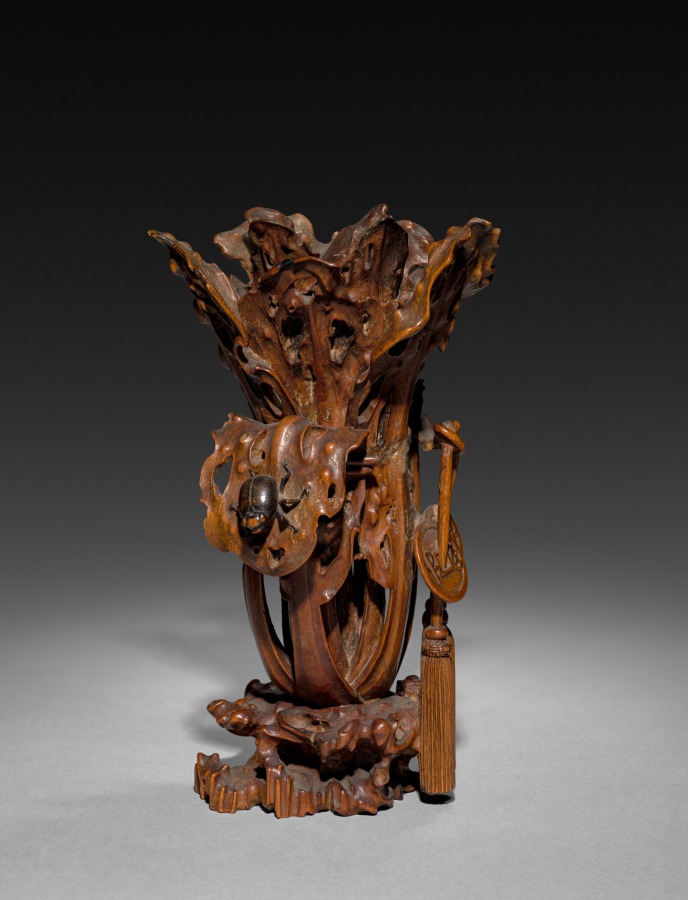
A superbly skilled carver created this small decorative object, reflecting scholarly taste of the period. This cabbage on a gnarled rock was carved from single piece of wood. There are openings between the stems, holes in leaves, and the rock it rests on. A beetle perches on one leaf which curves over the binding cord. The beetle was painted dark brown, while the cabbage and rock were finished overall with lighter tone.
A superbly skilled carver created this small decorative object, reflecting scholarly taste of the period. This cabbage on a gnarled rock was carved from single piece of wood. There are openings between the stems, holes in leaves, and the rock it rests on. A beetle perches on one leaf which curves over the binding cord. The beetle was painted dark brown, while the cabbage and rock were finished overall with lighter tone.
Provenance
(Nagatani Inc., Chicago, IL, sold to the Cleveland Museum of Art) (?–1966); The Cleveland Museum of Art, Cleveland, OH (1966–)
Accession Number
1966.376
Medium
carved wood
Dimensions
Overall: 13.9 cm (5 1/2 in.)
Classification
Wood
Credit Line
Sundry Purchase Fund