Provenance
Städelsches Kunstinstitut (J. F. Staedel); C. Josi; A. Grahl; (Boerner, Düsseldorf); (Colnaghi, London); F. Lugt; H. E. ten Cate; (Boerner, Düsseldorf); ACCORDING TO KEYES 1984 AND DEPARTMENTAL RECORDS: Christian Josi , Amsterdam and London (Lugt 573-575, not stamped) (?); Städelsches Kunstinstitut (J. F. Staedel), Frankfurt (Lugt 2356, verso, lower left, in black ink) (?); August Grahl, Dresden (Lugt 1199, lower left, in black ink); [sold: Sotheby's, London 27-28 April 1885, lot 336]; [sold: Boerner, Leipzig, 28 Nov. 1912, lot 244]; [Colnaghi, London]; Frits Lugt, Maartensdijk (Lugt 1028, not stamped); H. E. ten Cate, Oldenzaal/Almelo (Lugt 533b, verso, lower right, in brown ink); [Boerner, Düsseldorf]; Nathan Chaikin, Italy
Accession Number
1966.7
Medium
black chalk and brush and gray and brown wash (addition, upper left, in white paint and black chalk); framing lines in brown ink
Dimensions
Sheet: 19.6 x 29.2 cm (7 11/16 x 11 1/2 in.)
Classification
Drawing
Credit Line
Dudley P. Allen Fund
Tags
Drawing Baroque (1600–1750) Ink Dutch Color: White Color: Gray
Background & Context
Background Story
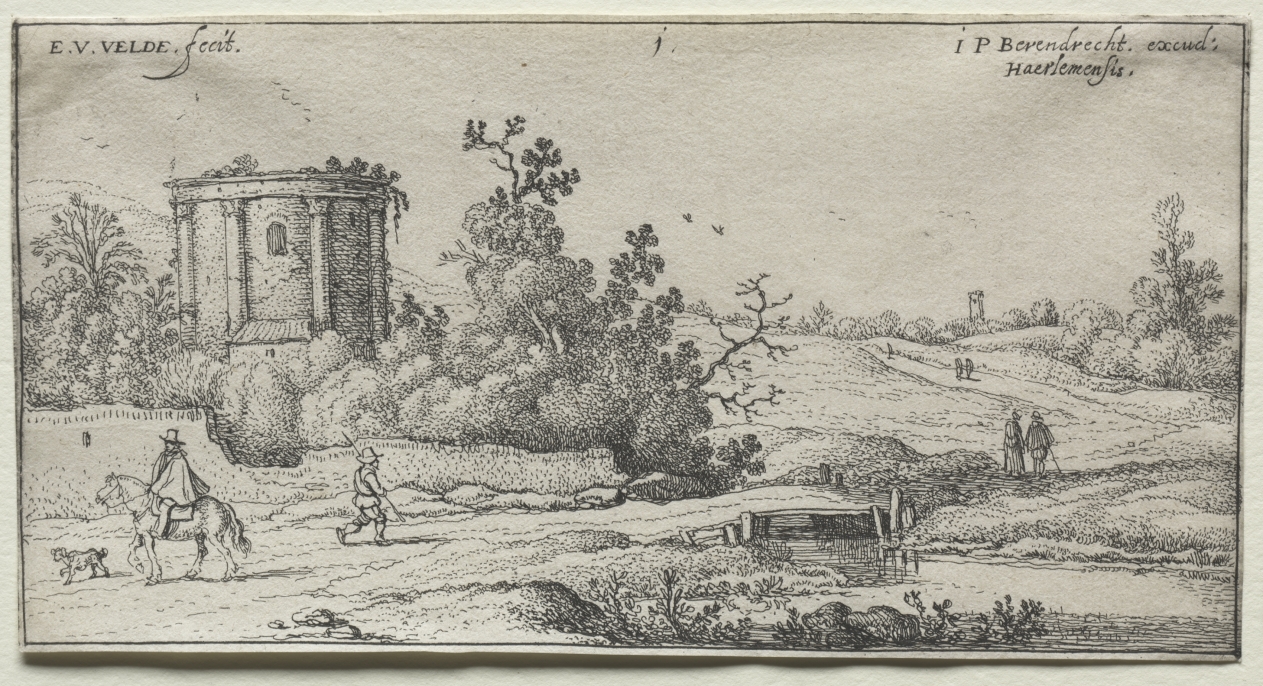
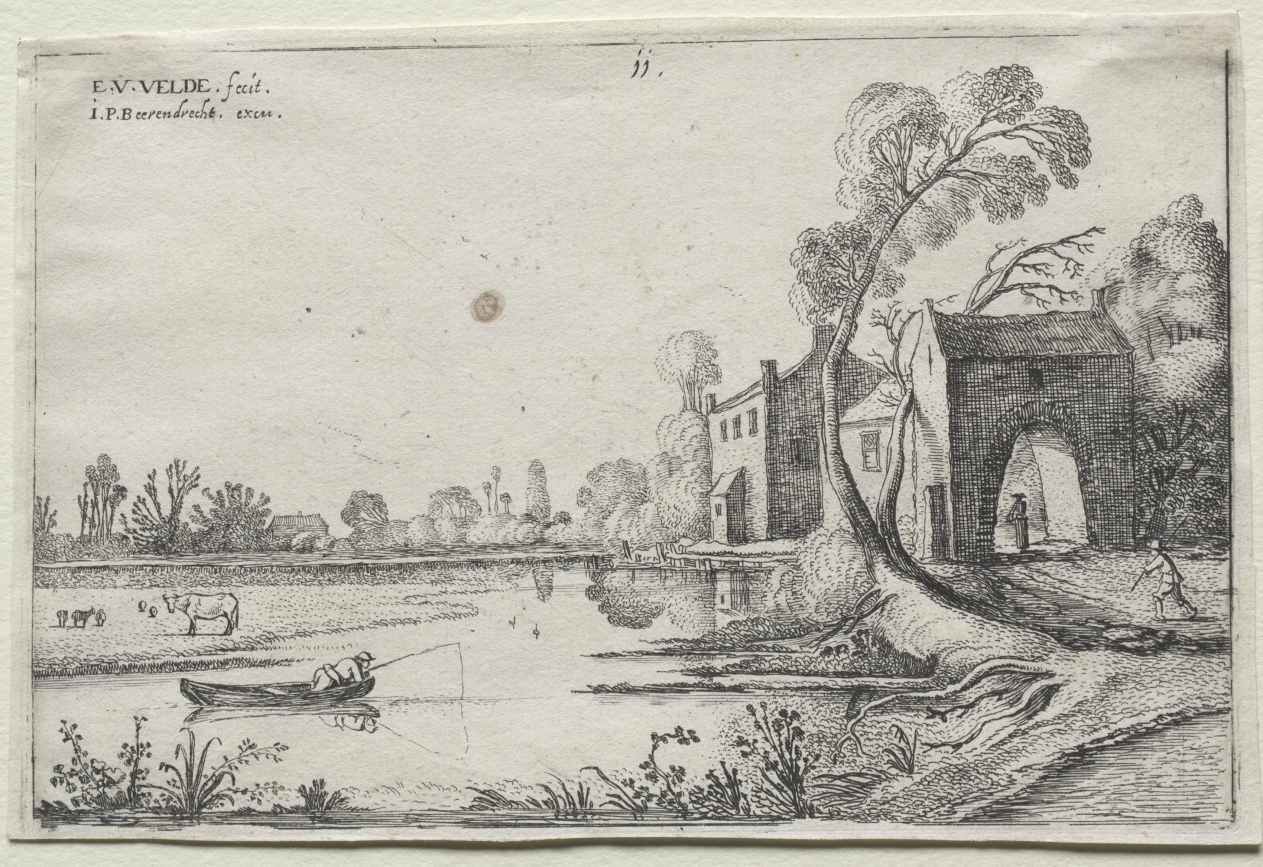
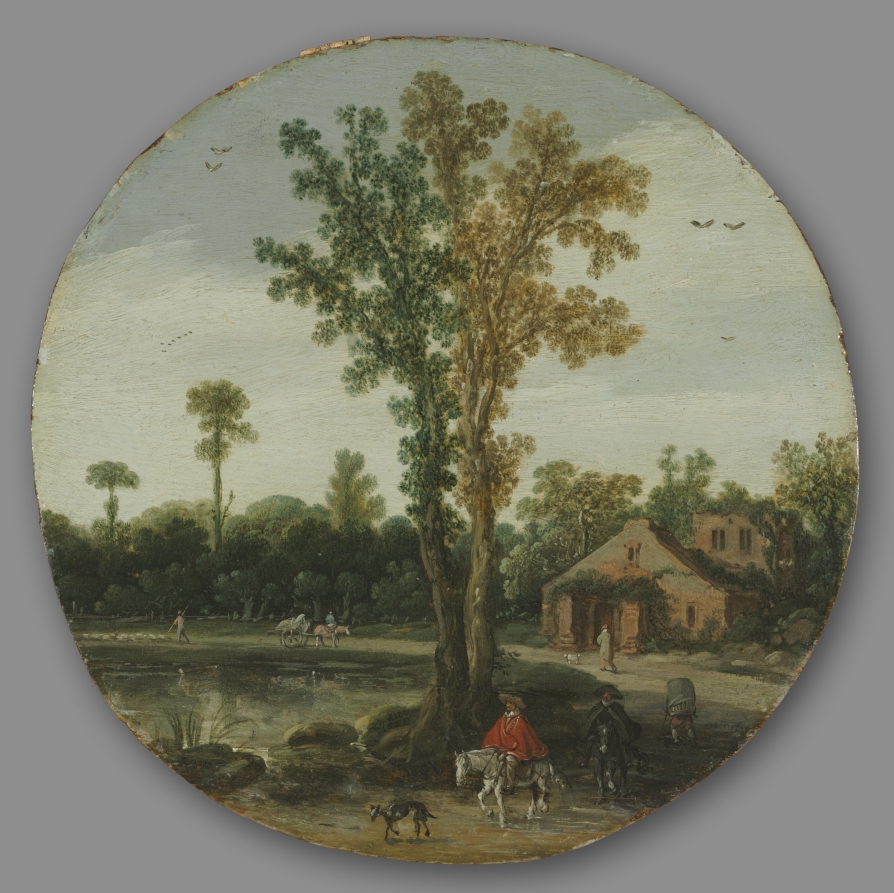
Esaias van de Velde (1587-1630) was a Dutch painter known for the naturalistic, atmospheric landscape paintings that make him one of the most important precursors of the Dutch landscape tradition. Hilly Landscape with Hut Beside a Stream from 1627 depicts a hilly landscape in the naturalistic, atmospheric manner that distinguishes van de Velde's best work from the more mannered landscape painting of his predecessors. The 1627 date places this in van de Velde's most productive period, when he was producing the naturalistic, atmospheric landscape paintings that would influence the development of Dutch landscape painting throughout the 17th century.
Cultural Impact
Hilly Landscape with Hut Beside a Stream is important in the history of Dutch landscape painting because it demonstrates the naturalistic, atmospheric manner that van de Velde brought to landscape as one of the most important precursors of the Dutch landscape tradition. Van de Velde's naturalistic, atmospheric landscapes—combining direct observation of the Dutch landscape with atmospheric effect—represent one of the most important developments in the history of Dutch landscape painting, and the 1627 painting shows this development at its most productive.
Why It Matters
Hilly Landscape with Hut Beside a Stream is van de Velde's naturalistic Dutch landscape: a hilly landscape rendered in the atmospheric manner of one of the most important precursors of the Dutch landscape tradition. The 1627 painting shows the combination of direct observation with atmospheric effect that would influence the development of Dutch landscape painting throughout the 17th century.