Provenance
Private Collection, given to the Cleveland Museum of Art (?–1967); The Cleveland Museum of Art, Cleveland, OH (1967–)
Accession Number
1967.193.e
Medium
album leaf, ink and color on paper
Dimensions
Image: 14.4 x 20.3 cm (5 11/16 x 8 in.); Album, closed: 15 x 10.8 x 3 cm (5 7/8 x 4 1/4 x 1 3/16 in.)
Classification
Painting
Credit Line
Anonymous Gift
Tags
Painting Baroque (1600–1750) Ink Paper Chinese Color: White
Background & Context
Background Story
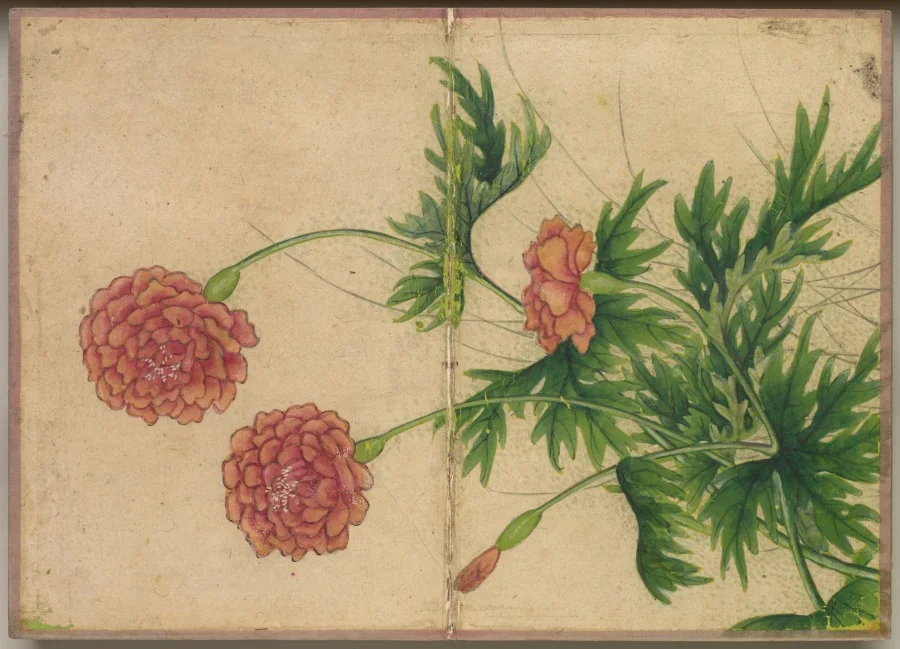
The peony (mudan) is the king of flowers in Chinese culture, symbolizing wealth, honor, and aristocratic beauty. Zhang Ruoai's treatment in this desk album leaf balances the peony's cultural prestige with the intimate scale of the album format. Rather than depicting the flower in full magnificent bloom — a treatment more appropriate to a hanging scroll — Zhang shows it in a more private moment, perhaps with one blossom fully open and others in bud, creating a composition that rewards close viewing rather than distant admiration.
Cultural Impact
No flower in Chinese painting carries more cultural weight than the peony. Known as the 'king of flowers,' it has been associated with wealth, rank, and female beauty since the Tang dynasty. Zhang Ruoai's peony participates in this tradition while adapting it to the intimate format of the desk album, where grandeur must be achieved through refinement rather than scale.
Why It Matters
The peony in desk album format is Zhang Ruoai adjusting the scale of cultural grandeur to fit a private context. Even in a small album, the peony retains its symbolic power — but here that power is tempered by intimacy, as if the king of flowers has consented to be seen up close.
Related Artworks
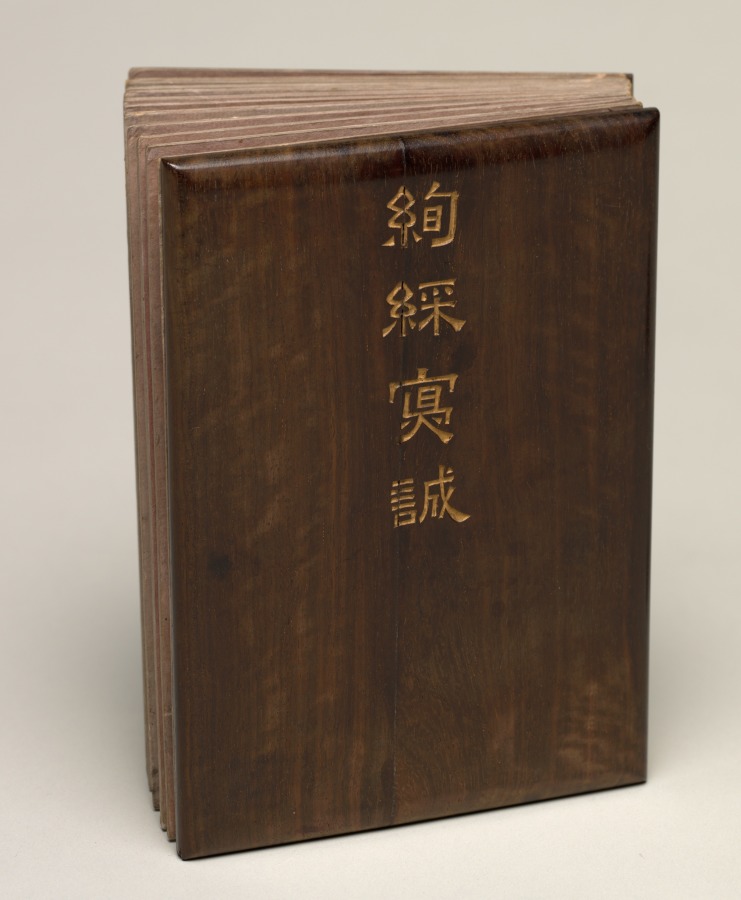
Desk Album: Flower and Bird Paintings
Zhang Ruoai
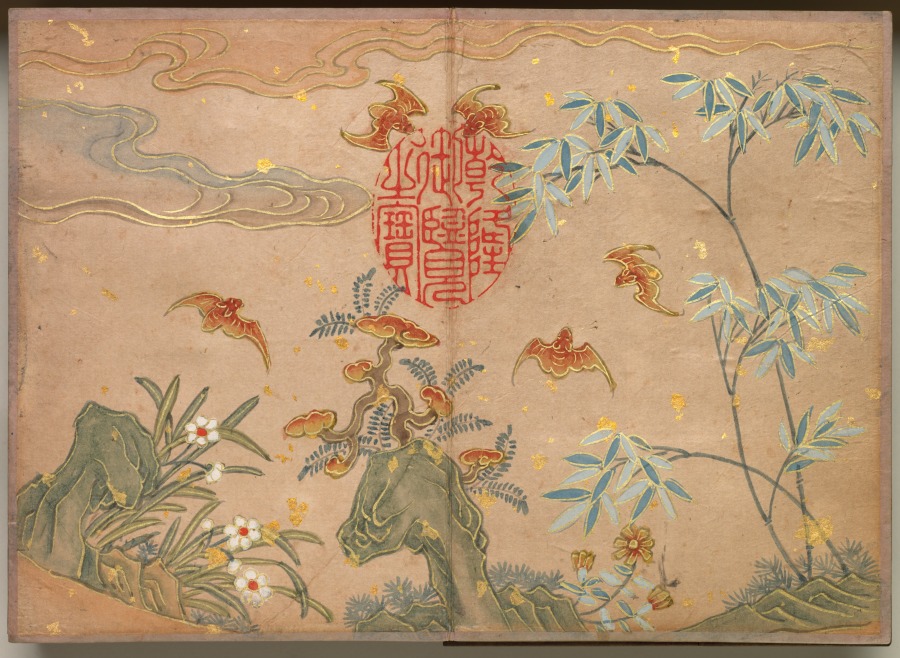
Desk Album: Flower and Bird Paintings (Bats, rocks, flowers oval calligraphy)
Zhang Ruoai
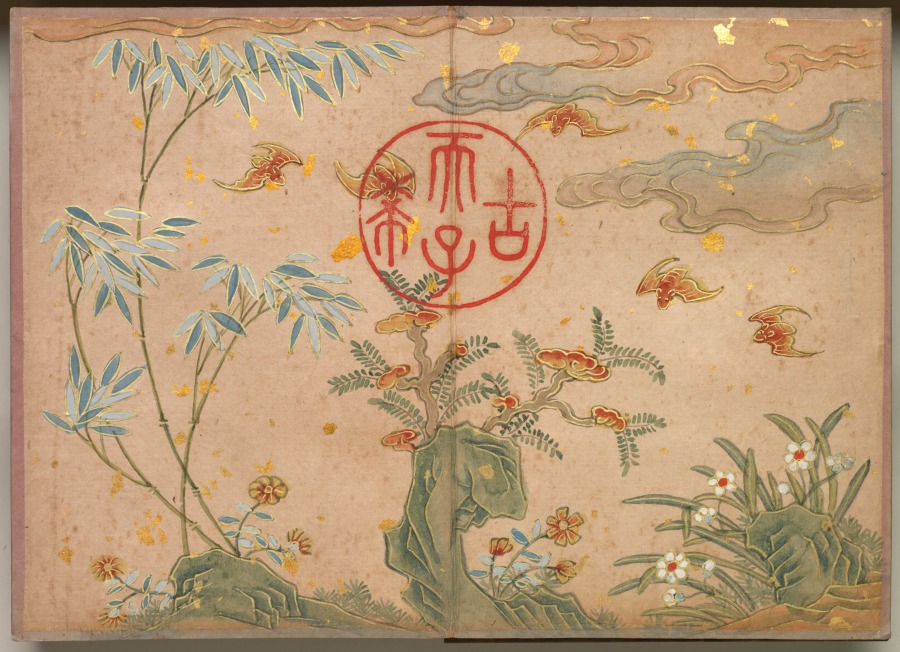
Desk Album: Flower and Bird Paintings (Bats, rocks, flowers circular calligraphy)
Zhang Ruoai
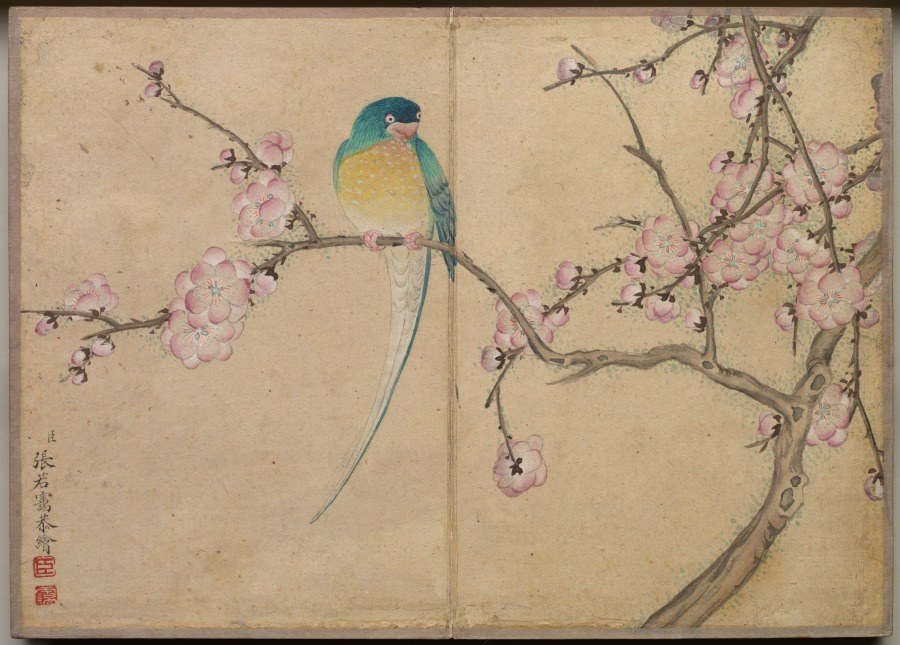
Desk Album: Flower and Bird Paintings (Bird with Plum Blossoms)
Zhang Ruoai