Description
This work has long been called Journey of a Patriarch in the belief that the artist intended no specific subject. Recent research by graduate student Tamara Durn of Case Western Reserve University suggests that the painting instead depicts a moment in the Old Testament book of Genesis. Abraham secures a pledge from his servant to find a wife for Abraham’s son Isaac. The servant wears a zamt, a goatskin cap common in North Africa in the 1600s, here dyed an unusual shade of blue, a color associated with faith and trust, symbolizing his sacred oath.
Provenance
[Pinakos, New York], sold to the Cleveland Museum of Art, 1969. (1969)
Accession Number
1969.1
Medium
oil on canvas
Dimensions
Framed: 71.2 x 94 x 9 cm (28 1/16 x 37 x 3 9/16 in.); Unframed: 56 x 78.4 cm (22 1/16 x 30 7/8 in.)
Classification
Painting
Credit Line
Mr. and Mrs. William H. Marlatt Fund
Tags
Painting Baroque (1600–1750) Oil Painting Canvas Italian Color: Orange Color: Brown
Background & Context
Background Story
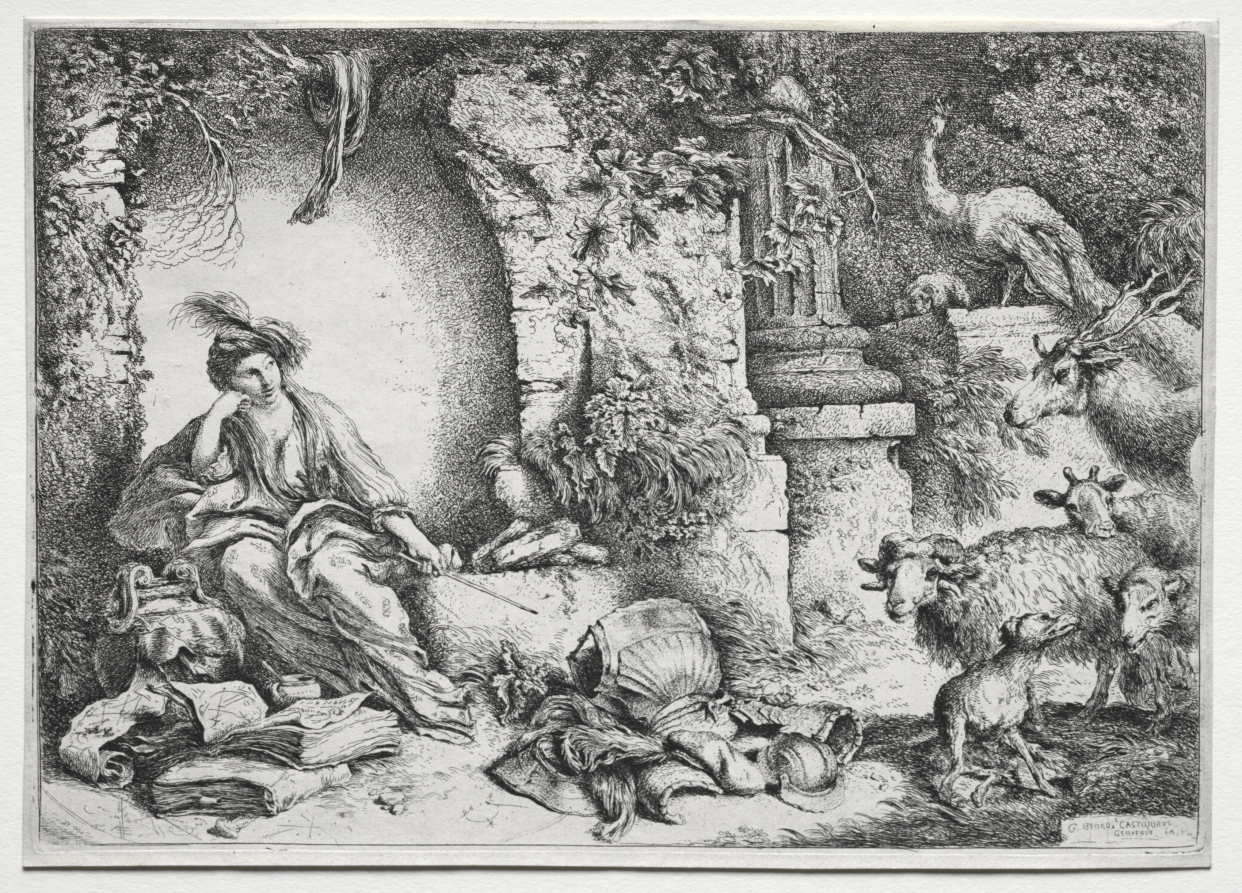
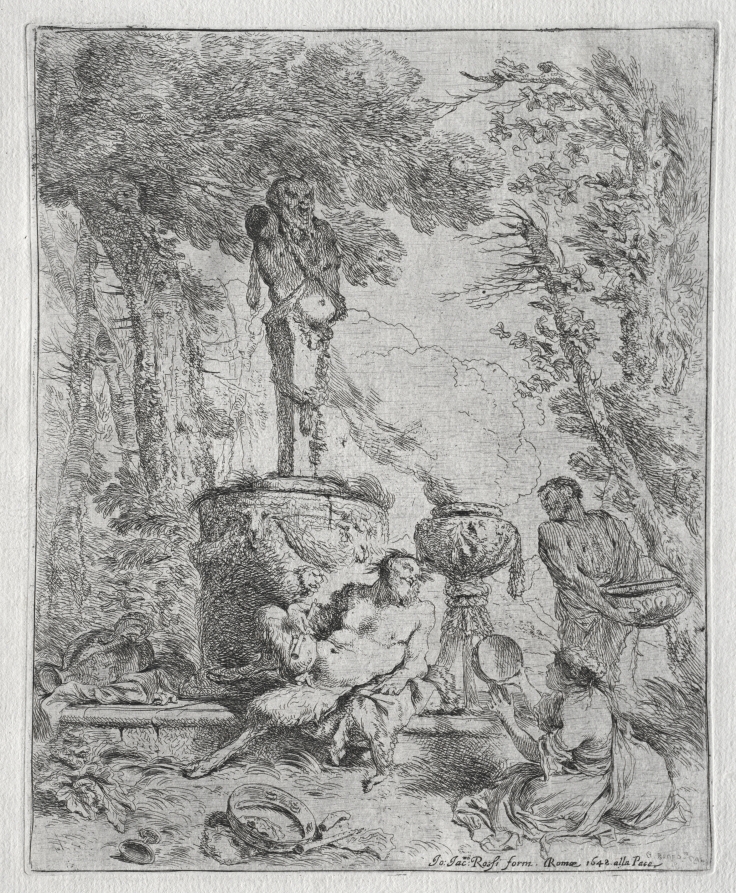
Giovanni Benedetto Castiglione (1609-1664) was a Genoese painter known for the rich, pastoral manner that makes him one of the most original painters of the Italian Baroque, and his invention of the monotype printmaking technique. The Oath of Abraham's Servant from c. 1650-59 depicts the biblical episode in which Abraham's servant swears an oath in the rich, pastoral manner that distinguishes Castiglione's best history paintings from the more severe work of his contemporaries. The c. 1650-59 date places this in Castiglione's mature period, when he was producing the rich, pastoral history paintings and the monotypes that are his most accomplished works.
Cultural Impact
The Oath of Abraham's Servant is important in the history of Italian Baroque painting because it demonstrates the rich, pastoral manner that Castiglione developed as one of the most original painters of the Genoese school. Castiglione's combination of rich coloring with pastoral landscape and his invention of the monotype technique represent some of the most original contributions to 17th-century Italian painting, and the c. 1650-59 painting shows his rich, pastoral manner at its most accomplished.
Why It Matters
The Oath of Abraham's Servant is Castiglione's rich Genoese Baroque: a biblical episode rendered in the pastoral, colorful manner that makes the inventor of the monotype one of the most original painters of the Italian Baroque. The c. 1650-59 painting shows his rich coloring combined with pastoral landscape in one of his most accomplished history paintings.