
Description
This portrait shows the Qianlong emperor at 26, in the first year of his reign. His likeness is followed by portraits of the empress and eleven consorts. Their portraits document the appearances of the court women around the time when they received their respective imperial titles, which occurred at different stages of the emperor's life. The first three portraits were done by the Jesuit (Roman Catholic) missionary artist Giuseppe Castiglione, whereas the later ones were by Chinese court painters.
Formal portraiture contributed to the affirmation of status and construction of role and identity. This scroll served as both familial documentation and a "mind picture" of the Qianlong emperor, suggesting that his constructed image of emperorship was inseparable from concepts of self and family. It was stored in a carved red lacquer box bearing the original painting title Mind Picture of a Well-Governed and Tranquil Reign (see CMA 1969.32).
Formal portraiture contributed to the affirmation of status and construction of role and identity. This scroll served as both familial documentation and a "mind picture" of the Qianlong emperor, suggesting that his constructed image of emperorship was inseparable from concepts of self and family. It was stored in a carved red lacquer box bearing the original painting title Mind Picture of a Well-Governed and Tranquil Reign (see CMA 1969.32).
Provenance
Qing imperial collection (seals of Emperor Qianlong, r. 1736–1795) (1736–?); (Hôtel Drouot, Paris, France. December 17–18, 1928 sale. Lot 329) (December 17–18, 1928); (Spink & Son, Ltd., London, sold to the Cleveland Museum of Art) (by 1966–1969); The Cleveland Museum of Art, Cleveland, OH (1969–)
Accession Number
1969.31
Medium
Handscroll; ink and color on silk
Dimensions
Overall: 53.8 x 1154.5 cm (21 3/16 x 454 1/2 in.); Painting only: 53 x 688.3 cm (20 7/8 x 271 in.)
Classification
Painting
Credit Line
John L. Severance Fund
Tags
Painting Baroque (1600–1750) Ink Silk Painting Italian Color: Yellow
Background & Context
Background Story
Giuseppe Castiglione (1688-1766), known in China as Lang Shining, was an Italian Jesuit painter who served as a court painter to three Qing dynasty emperors, combining European perspective and chiaroscuro with Chinese painting materials and subjects. Portraits of the Qianlong Emperor and His Twelve Consorts from 1736-1770s depicts the Qianlong Emperor with his consorts in the unique Sino-European manner that Castiglione developed at the Qing court—the combination of European perspective and shading with Chinese painting materials and court conventions. The 1736-1770s date spans the reign of the Qianlong Emperor, when Castiglione and his Chinese collaborators were producing the court portraits that combine European and Chinese painting traditions.
Cultural Impact
Portraits of the Qianlong Emperor and His Twelve Consorts is important in the history of Chinese painting because it demonstrates the unique Sino-European manner that Castiglione developed at the Qing court. The combination of European perspective and shading with Chinese painting materials and court conventions created a distinctive type of court portraiture that is simultaneously European in technique and Chinese in convention, and the portraits represent one of the most important cultural exchanges in the history of Chinese painting.
Why It Matters
Portraits of the Qianlong Emperor and His Twelve Consorts is Castiglione's Sino-European court portraiture: the Qing Emperor and consorts rendered in the unique manner that combines European perspective and shading with Chinese painting materials and court conventions. The 1736-1770s portraits represent one of the most important cultural exchanges in the history of Chinese painting.
Related Artworks
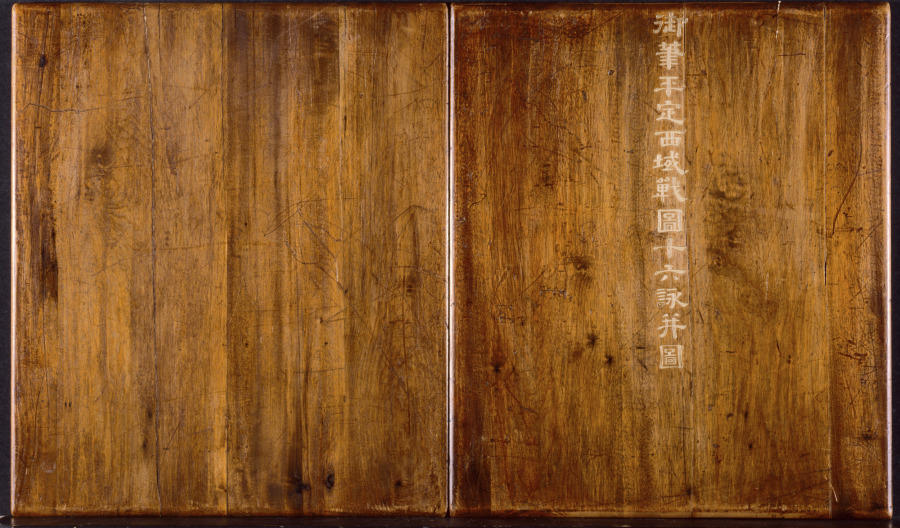
Battle Scenes of the Quelling of Rebellions in the Western Regions, with Imperial Poems
Giuseppe Castiglione
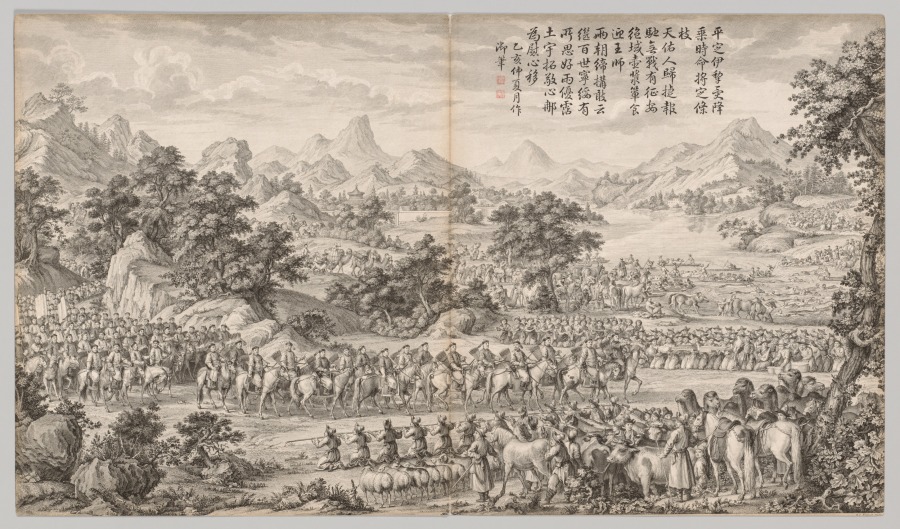
Receiving Surrender from the Eli: from Battle Scenes of the Quelling of Rebellions in the Western Regions, with Imperial Poems
Giuseppe Castiglione
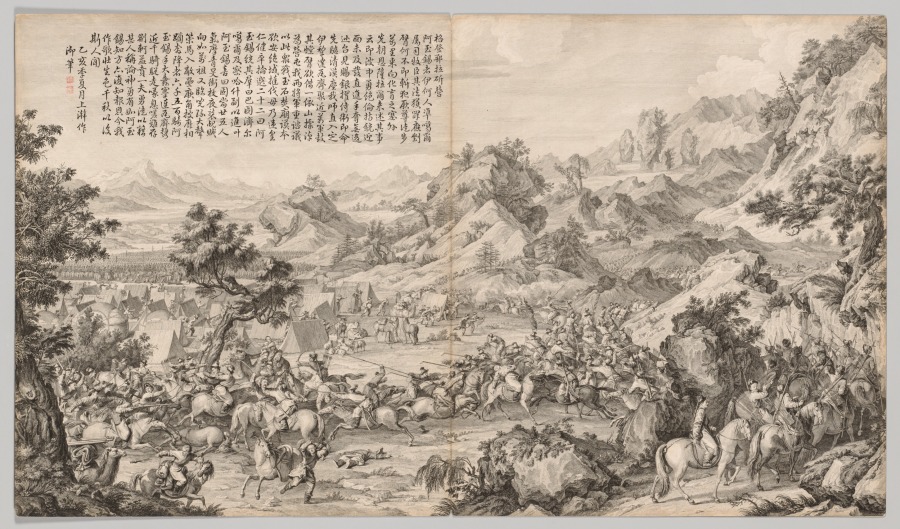
Attacking the Camp at Gatan Ola: from Battle Scenes of the Quelling of Rebellions in the Western Region, with Imperial Poems
Giuseppe Castiglione
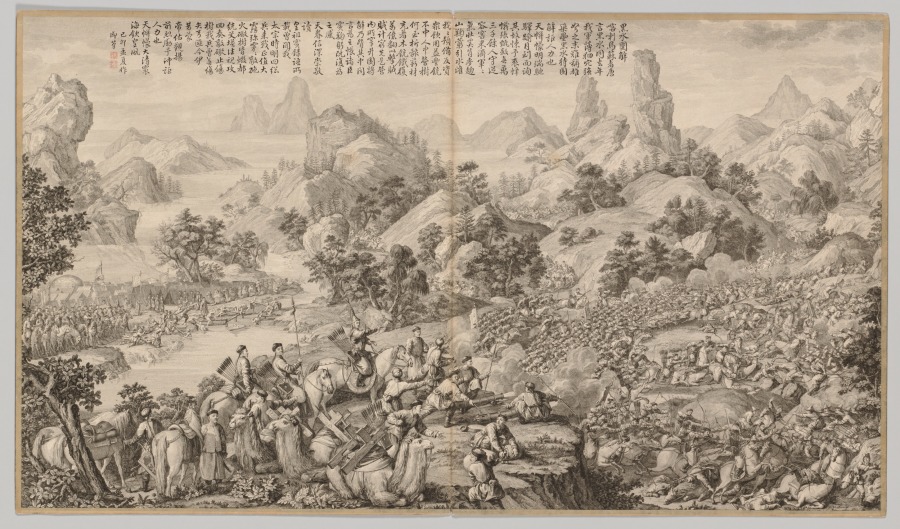
Breaking Through the Siege at Hesui: from Battle Scenes of the Quelling of Rebellions in the Western Regions, with imperial Poems
Giuseppe Castiglione