Accession Number
1972.32
Medium
black chalk with stumping
Dimensions
Sheet: 26.8 x 41.5 cm (10 9/16 x 16 5/16 in.)
Classification
Drawing
Credit Line
Delia E. Holden Fund
Tags
Drawing Neoclassical & Romantic (1751–1850) French Color: Gray
Background & Context
Background Story
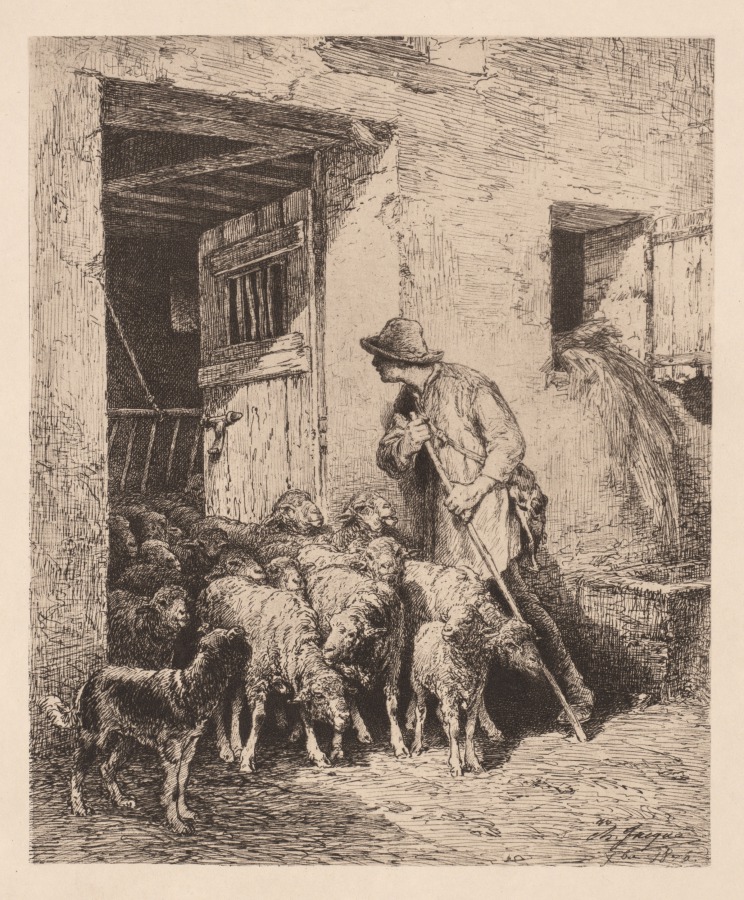
Landscape with a Flock of Sheep (1800s) combines Jacque's two primary subjects—animal painting and landscape—within a composition that demonstrates the Barbizon school's characteristic integration of figure and setting. The sheep flock, with its shepherd, provided Jacque with a subject that connected animal painting to the landscape tradition: the flock required pasture, and the pasture required the specific landscape that the Barbizon painters were documenting. The sheep themselves—Merino or local breeds adapted to the Île-de-France pastures around Barbizon—provided compositional elements that Jacque arranged within landscape settings with the decorative intelligence that distinguished his best work. The flock's movement across the landscape, the shepherd's direction, and the specific quality of pastureland that the Barbizon painters knew so intimately created scenes that were simultaneously genre paintings (documenting rural work) and landscape paintings (recording specific scenery). Jacque's treatment of the sheep—their wool, their characteristic postures, and their social behavior within the flock—demonstrates the animal-painter's specific skill of rendering both individual animals and group dynamics. The landscape setting, rendered with the atmospheric sensitivity that Barbizon painting demanded, provides the pasture with the specific quality of Île-de-France light that Corot and Rousseau had made characteristic of the movement.
Cultural Impact
Jacque's sheep-flock landscapes influenced how the integration of animal painting and landscape was practiced in Barbizon art, establishing compositional approaches that later painters would adopt. The paintings influenced how French pastoral agriculture was visually documented, recording the animal husbandry practices that sustained rural communities. The landscape-with-sheep subject influenced the development of animal painting as a genre that served both aesthetic and documentary purposes.
Why It Matters
This painting matters because it demonstrates the Barbizon school's most characteristic contribution—the integration of animal subject and landscape setting within compositions where neither element dominates, arguing that the working landscape and the animals it sustains are equally significant as artistic subjects.