Description
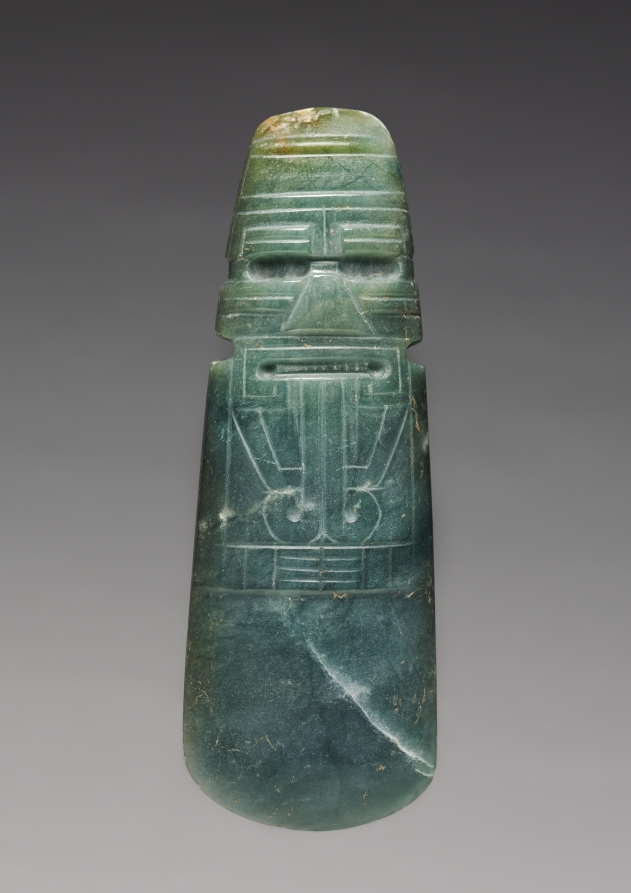
Costa Rican jade pendants may imitate the shape of axe blades (celts) used for agriculture. The pendants often take the form of "axe gods," creatures with human, bird, or animal traits. Jade carving was common in Costa Rica before ad 500, but then declined in importance. Gold eventually replaced jade as the region’s preferred luxury material.
Provenance
Mr. Enrique Vargas Alfaro, Decatur, GA, sold to the Cleveland Museum of Art (-1972); The Cleveland Museum of Art, Cleveland, OH (1972-)
Accession Number
1972.4
Medium
jadeite
Dimensions
Overall: 15.2 x 5.4 cm (6 x 2 1/8 in.)
Classification
Jewelry
Credit Line
James Albert and Mary Gardiner Ford Memorial Fund