Accession Number
1974.234
Medium
black crayon
Dimensions
Sheet: 31.4 x 24.1 cm (12 3/8 x 9 1/2 in.); Secondary Support: 33.4 x 24.9 cm (13 1/8 x 9 13/16 in.)
Classification
Drawing
Credit Line
Gift of Mrs. Lewis B. Williams
Tags
Color: White
Background & Context
Background Story
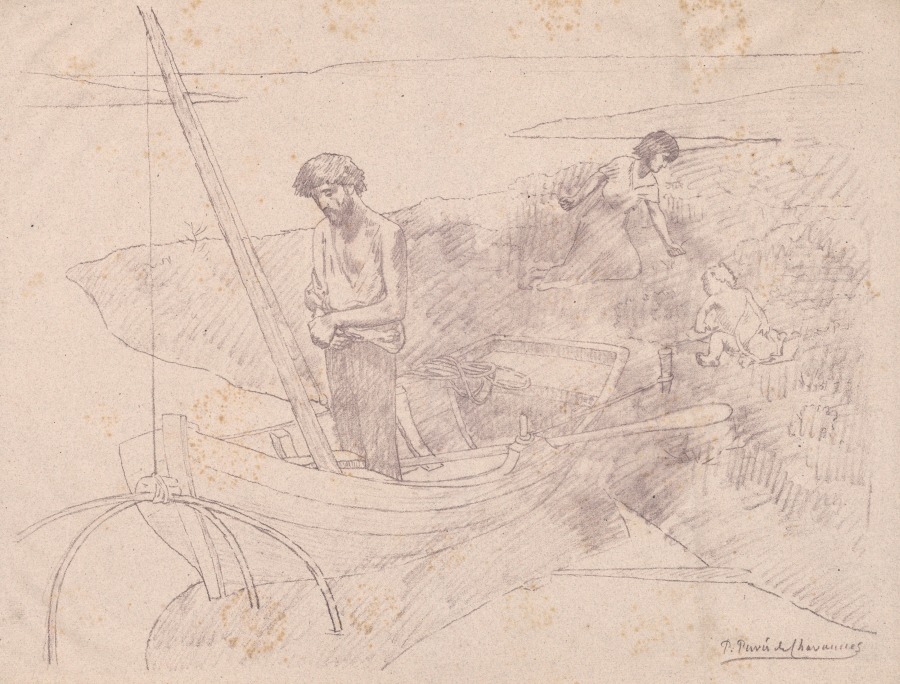
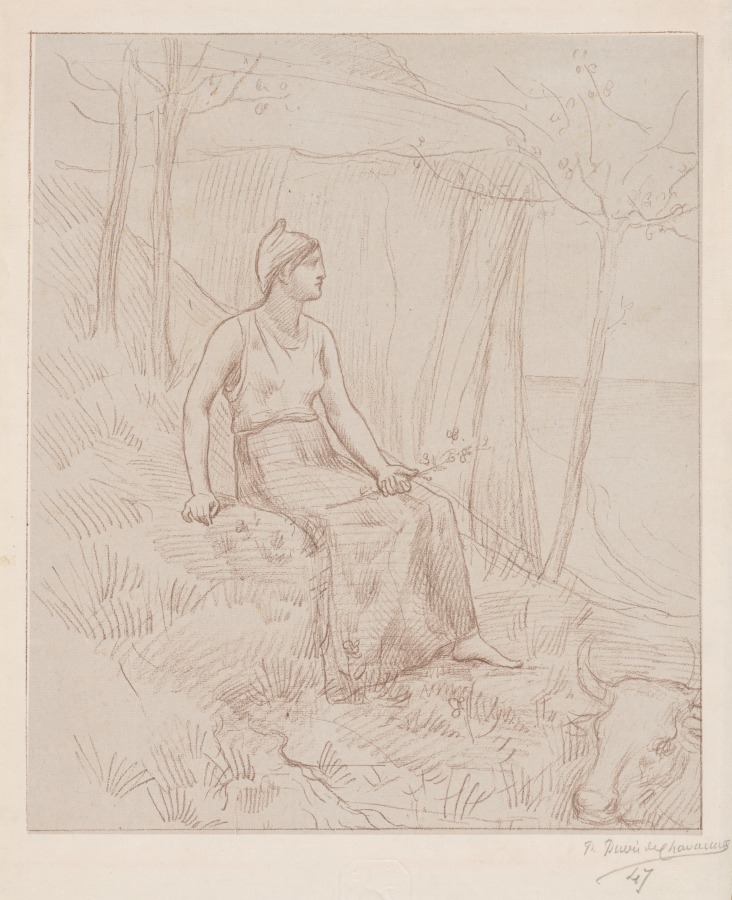
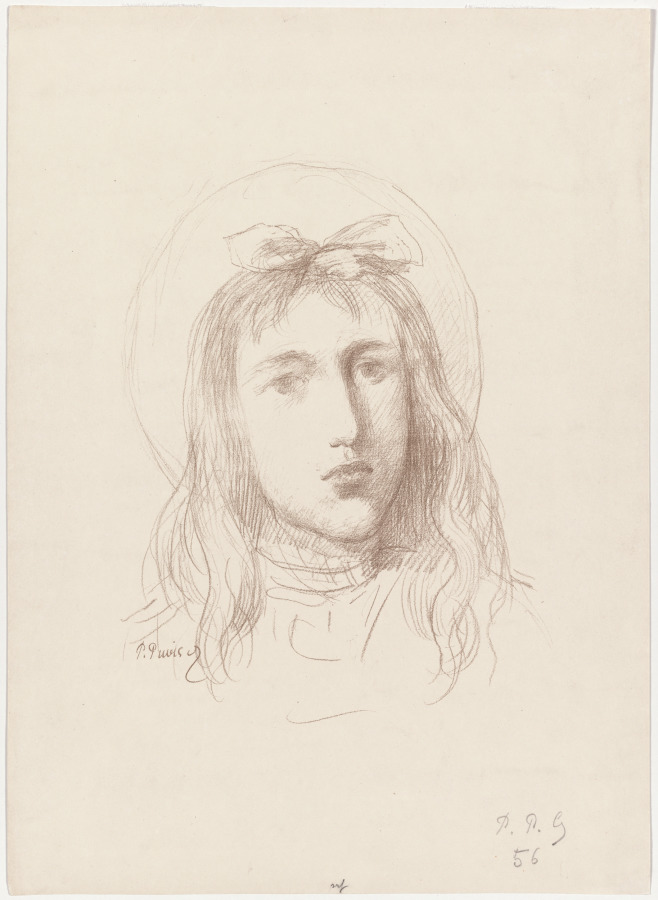
Pierre Puvis de Chavannes (1824–1898), one of the most influential French mural painters of the 19th century, created this drawing of "Carmen" during the latter half of the 1800s. The subject references the iconic protagonist of Prosper Mérimée's 1845 novella and Georges Bizet's 1875 opera—a fiery, independent Romani woman whose passionate nature defied 19th-century social conventions. Puvis, though best known for his monumental allegorical murals, produced a substantial body of drawings that explored literary and mythological subjects with great sensitivity.
Executed in black crayon on paper, the drawing showcases Puvis's characteristic restraint and elegance. Unlike the dramatic, operatic treatments of Carmen common among his contemporaries, Puvis presents a more introspective figure. The spare linework and subtle modeling concentrate attention on the psychological presence of the subject rather than narrative incident. The black crayon medium allows for a range of tonal values from the deepest blacks to delicate grays, achieving a sculptural solidity reminiscent of Puvis's mural figures.
This drawing belongs to a period when Puvis was at the height of his reputation, receiving major mural commissions for the Panthéon, the Sorbonne, and the Boston Public Library. His stylistic synthesis of classical form and modern sensibility—what he called "a return to the primitive spirit of the great epochs"—made him a crucial bridge between academic classicism and the emerging Symbolist movement. Artists as diverse as Georges Seurat, Paul Gauguin, and Pierre Bonnard acknowledged Puvis's profound influence on their work.
Cultural Impact
Puvis de Chavannes played a pivotal role in late 19th-century art, synthesizing classical monumentality with Symbolist introspection. His interpretation of a literary figure like Carmen—typically portrayed with flamboyant passion—in a restrained, almost meditative manner reveals the breadth of his artistic vision.
Why It Matters
This drawing exemplifies Puvis's unique ability to distill narrative to its emotional essence. As a bridge figure between academic tradition and modernist innovation, Puvis's work helps us understand the transformation of French art at the close of the 19th century.