Description
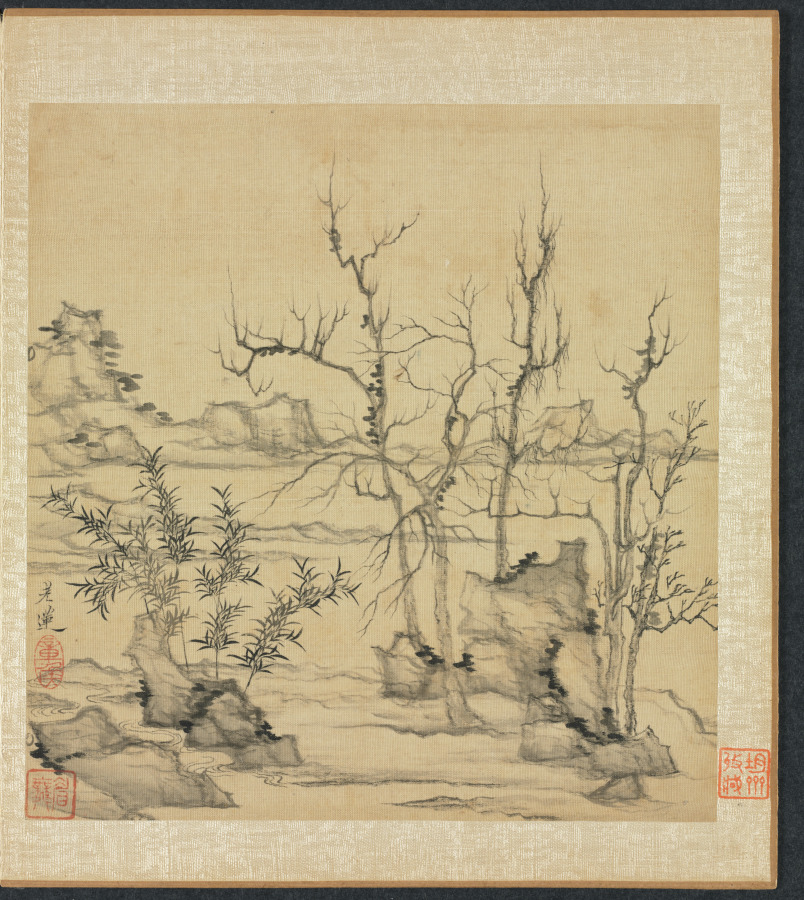
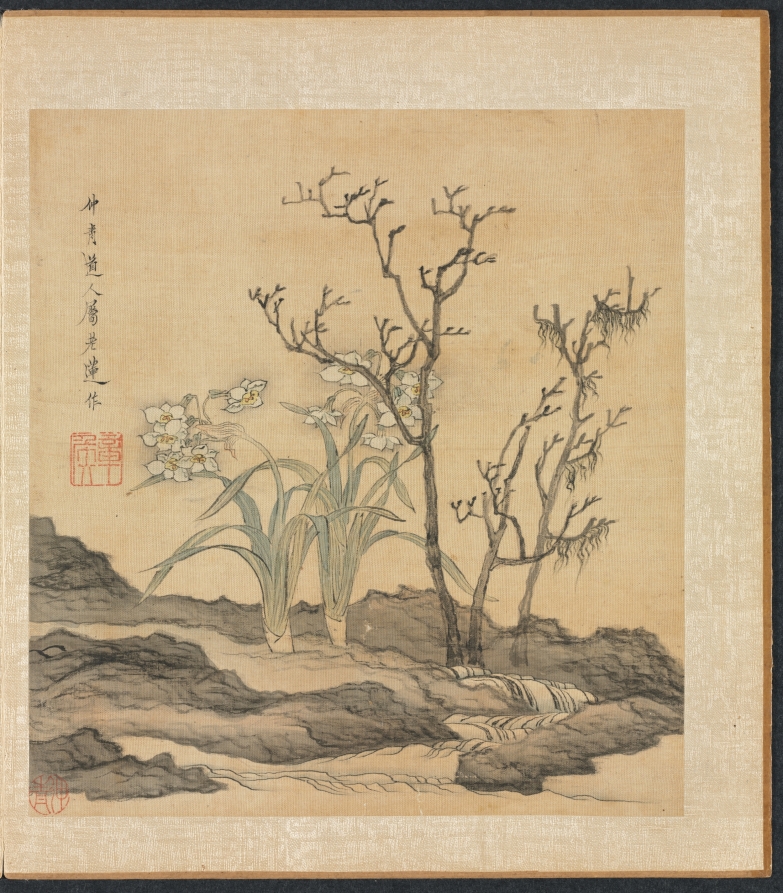
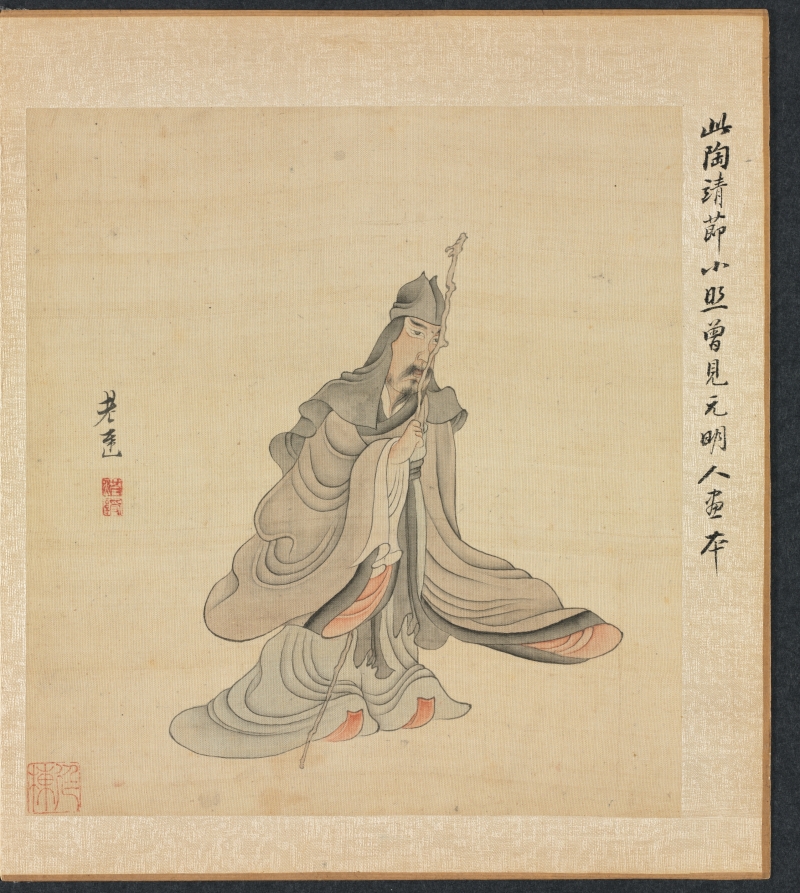
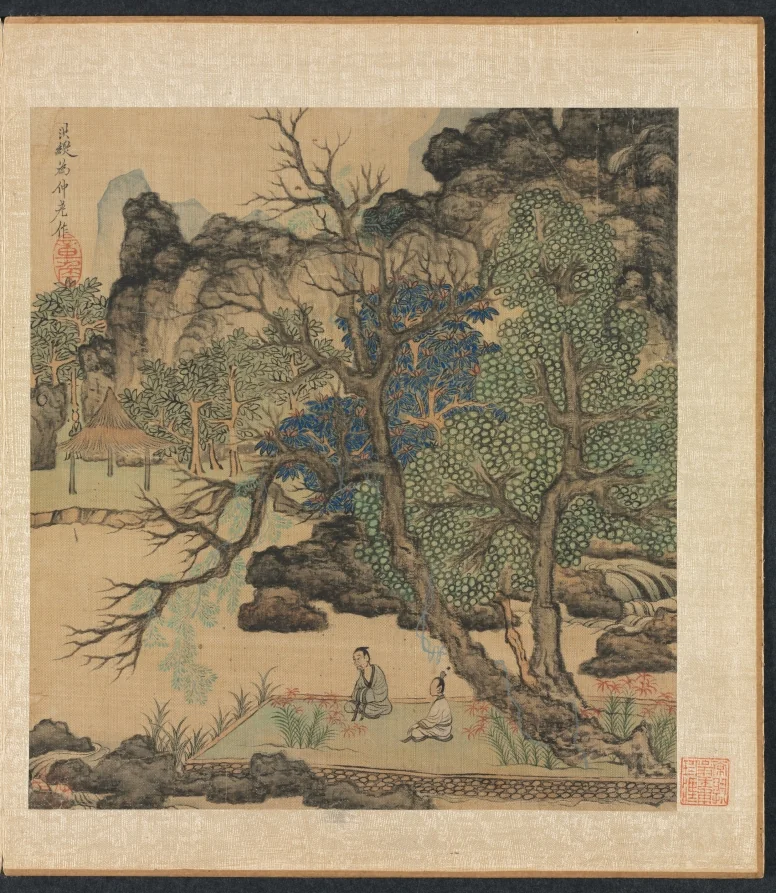
The twenty paintings in this double-album by Chen Hongshou include landscapes, figures, and flowers. It also has one leaf featuring a woman, an often-used subject not found in the other albums from the latter part of his career. His late works are wonderful summations of Chen's peculiar and quirky art--archaistic, hyper-refined--but without accompanying shallowness or sentimentality.
His figures and landscapes in the late albums are miniaturized, not unlike the small Chinese gardens, or the carefully selected small table rocks or old roots used for contemplation to see the world in miniature. This loss of scale is quite deliberate and reflects the psychological situation of a depressed class like the Ming loyalist officials and scholars, deprived of their integrity and honor, and forced to lead a diminished and restricted existence.
His figures and landscapes in the late albums are miniaturized, not unlike the small Chinese gardens, or the carefully selected small table rocks or old roots used for contemplation to see the world in miniature. This loss of scale is quite deliberate and reflects the psychological situation of a depressed class like the Ming loyalist officials and scholars, deprived of their integrity and honor, and forced to lead a diminished and restricted existence.
Provenance
Weng Tonghe 翁同龢 [1830–1904], by descent to Wango H. C. Weng; (Wango H. C. Weng 翁萬戈 [1918–2020], Lyme, NH, sold to the Cleveland Museum of Art) (?–1979); The Cleveland Museum of Art, Cleveland, OH (1979–)
Accession Number
1979.27.1.1
Medium
album leaf; ink and color on silk
Dimensions
Overall: 30.2 x 26.7 cm (11 7/8 x 10 1/2 in.)
Classification
Painting
Credit Line
John L. Severance Fund
Tags
Painting Renaissance (1400–1599) Ink Silk Painting Chinese Color: Brown
Background & Context
Background Story
This album leaf of scholars in a garden belongs to Chen Hongshou's series Paintings after Ancient Masters — a title that signals both reverence for tradition and departure from it. Chen's 'ancient masters' are not literal models but starting points for his own idiosyncratic vision. The scholars in the garden are rendered with his signature distortion: elongated proportions, angular drapery, and expressions that hover between contemplation and vacancy. The garden setting — with its rockery, bamboo, and pine — is rendered with the decorative precision of a master craftsman, but the overall effect is dreamlike and unsettling.
Cultural Impact
The album leaf format was central to Chinese literati culture: a portable, intimate medium for exchanging artistic ideas among educated friends. Chen's after Ancient Masters series uses this intimate format to stage a radical re-evaluation of the classical tradition. Each leaf simultaneously honors and undermines the masters it references, creating a tension between reverence and subversion that is unique to Chen.
Why It Matters
Scholars in a Garden encapsulates Chen Hongshou's relationship with tradition. He is working after the ancient masters — but the result is unmistakably modern. His scholars are not tranquil sages but figures caught in a strange, dreamlike space between tradition and transformation.