Description
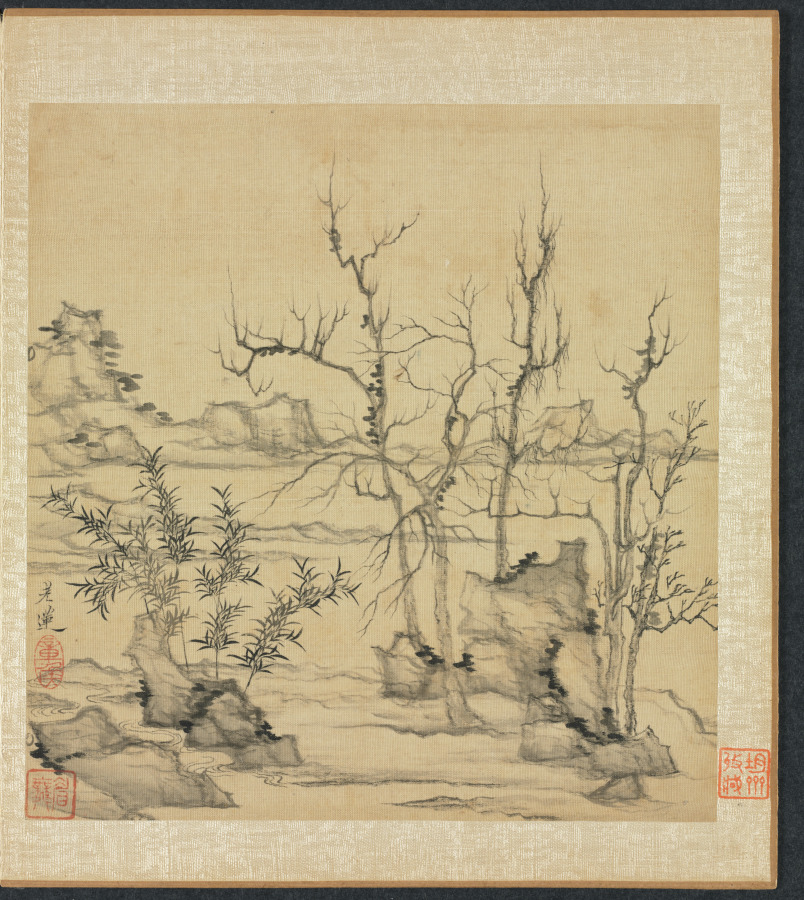
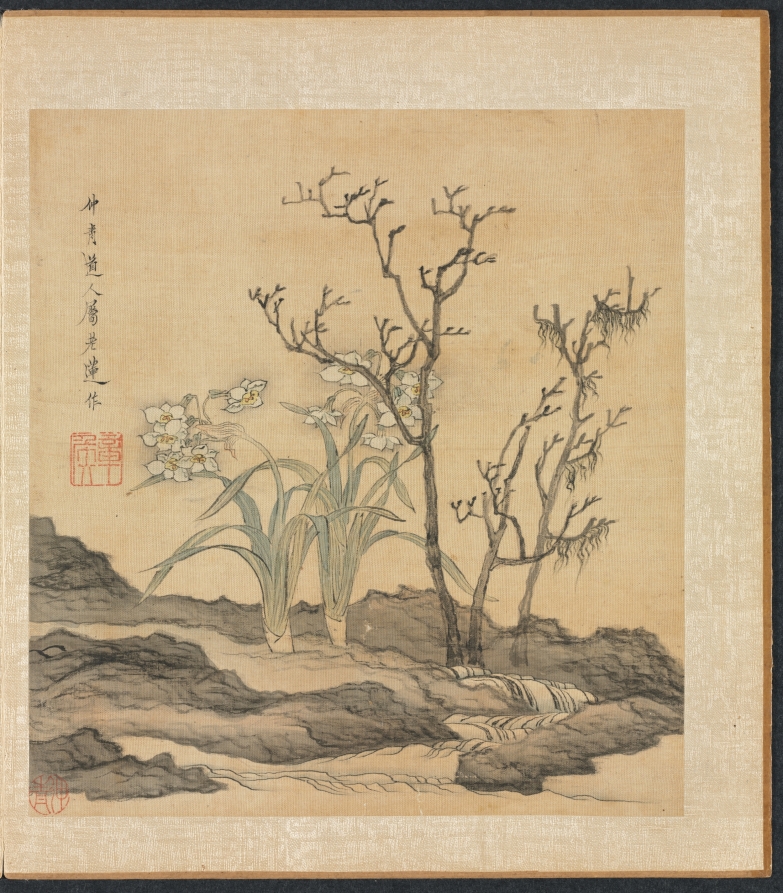
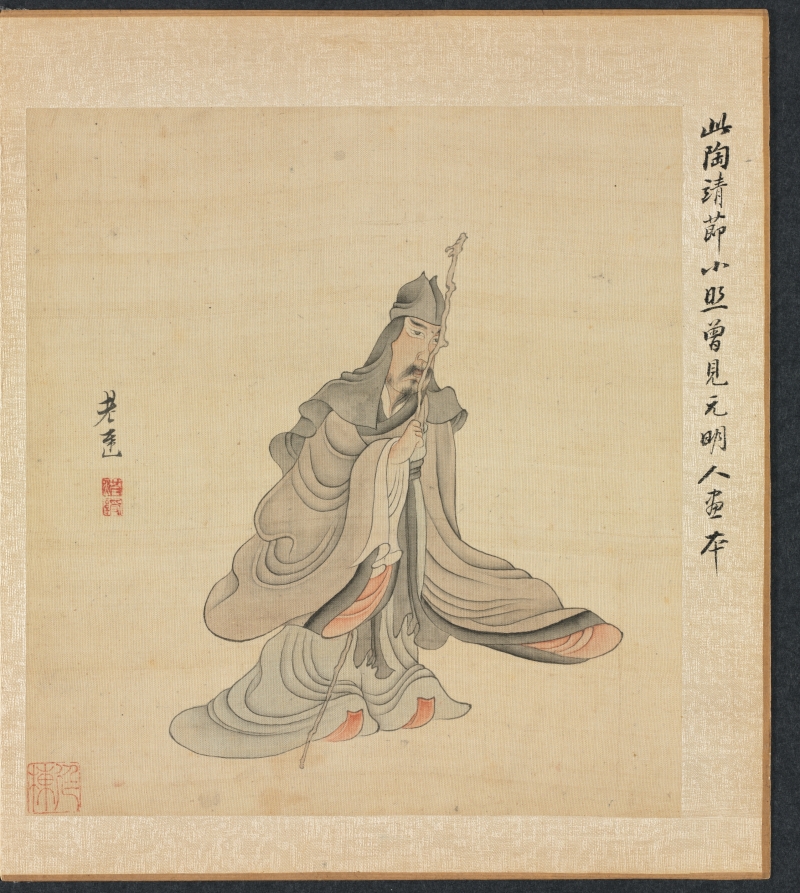
The twenty paintings in this double-album by Chen Hongshou include landscapes, figures, and flowers. It also has one leaf featuring a woman, an often-used subject not found in the other albums from the latter part of his career. His late works are wonderful summations of Chen's peculiar and quirky art--archaistic, hyper-refined--but without accompanying shallowness or sentimentality.
His figures and landscapes in the late albums are miniaturized, not unlike the small Chinese gardens, or the carefully selected small table rocks or old roots used for contemplation to see the world in miniature. This loss of scale is quite deliberate and reflects the psychological situation of a depressed class like the Ming loyalist officials and scholars, deprived of their integrity and honor, and forced to lead a diminished and restricted existence.
His figures and landscapes in the late albums are miniaturized, not unlike the small Chinese gardens, or the carefully selected small table rocks or old roots used for contemplation to see the world in miniature. This loss of scale is quite deliberate and reflects the psychological situation of a depressed class like the Ming loyalist officials and scholars, deprived of their integrity and honor, and forced to lead a diminished and restricted existence.
Provenance
Weng Tonghe 翁同龢 [1830–1904], by descent to Wango H. C. Weng; (Wango H. C. Weng 翁萬戈 [1918–2020], Lyme, NH, sold to the Cleveland Museum of Art) (?–1979); The Cleveland Museum of Art, Cleveland, OH (1979–)
Accession Number
1979.27.1.2
Medium
album leaf; ink and color on silk
Dimensions
Overall: 30.2 x 26.7 cm (11 7/8 x 10 1/2 in.)
Classification
Painting
Credit Line
John L. Severance Fund
Tags
Painting Renaissance (1400–1599) Ink Silk Painting Chinese Color: White
Background & Context
Background Story
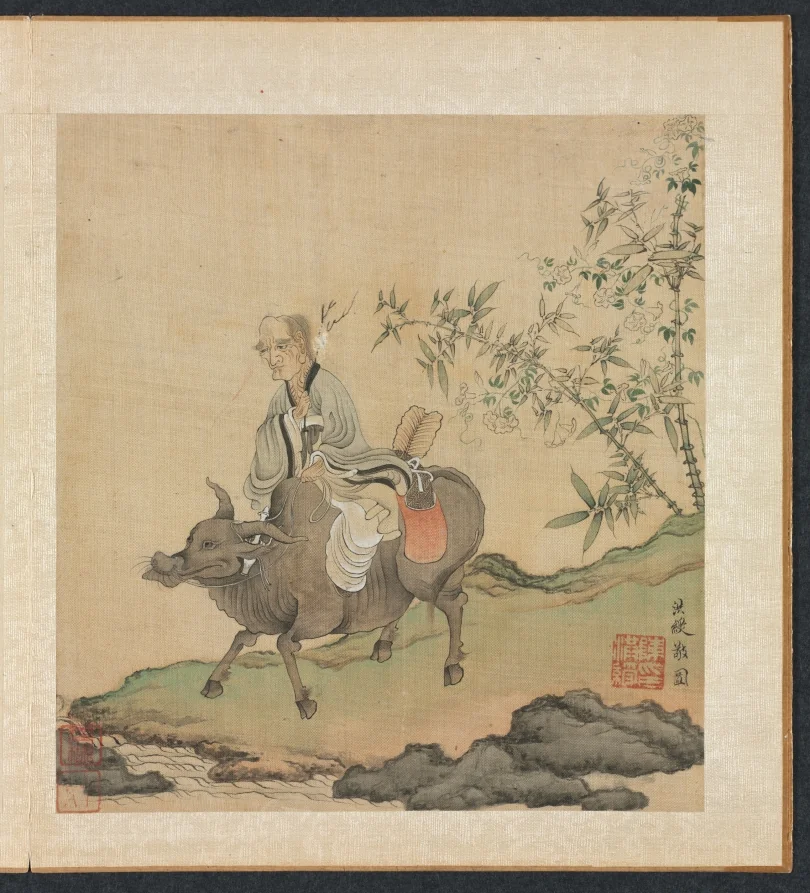
Laozi, the legendary founder of Daoism, rides an ox away from civilization in this album leaf from Chen Hongshou's after Ancient Masters series. The subject is one of the most enduring in Chinese art, symbolizing the Daoist withdrawal from worldly affairs and the pursuit of natural simplicity. But Chen's treatment is anything but simple: Laozi's figure is contorted into an angular pose, the ox is rendered with exaggerated musculature, and the landscape is compressed into a decorative backdrop that denies the spatial depth conventional in Chinese painting. The result is simultaneously reverent and ironic — a Daoist icon painted in a style that refuses Daoist naturalism.
Cultural Impact
Chen Hongshou's Laozi is a painting about withdrawal painted by a man who could not withdraw. Living through the collapse of the Ming dynasty, Chen witnessed the failure of every political and social system he had been trained to serve. His paintings of Daoist subjects are not escapist fantasies but meditations on the impossibility of escape — Laozi may ride away, but the painter is still here.
Why It Matters
Laozi Riding an Ox is Chen Hongshou's most personal statement: the desire for withdrawal expressed in a style that refuses to let the viewer escape into conventional beauty. The angular distortion is not a flaw but a moral position — a refusal to pretend that withdrawal is simple.