Description
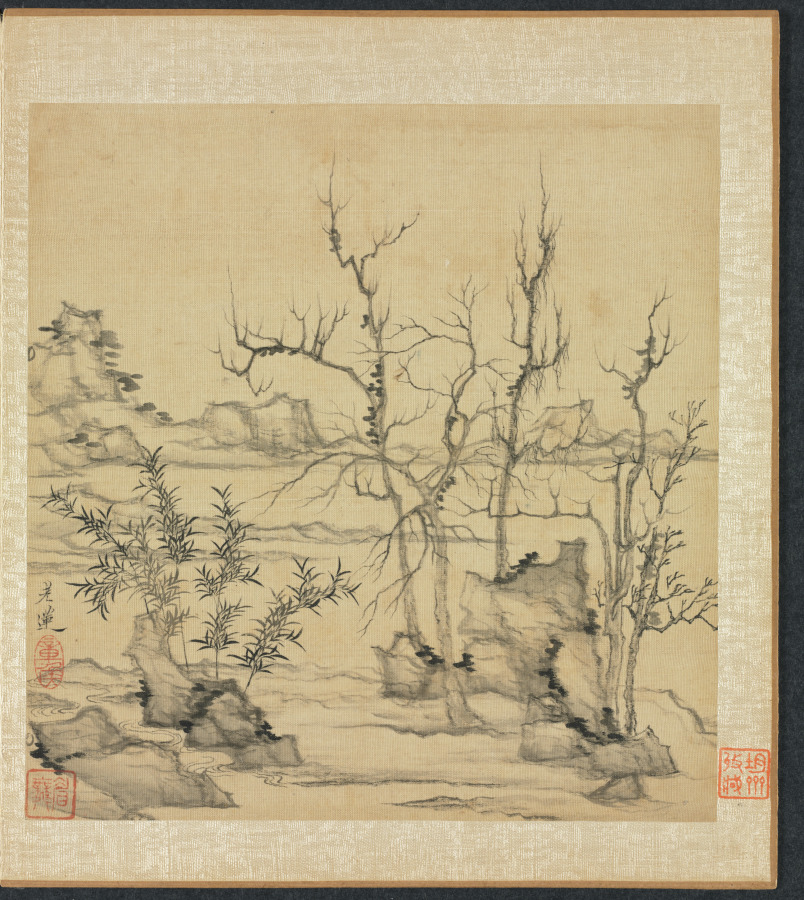
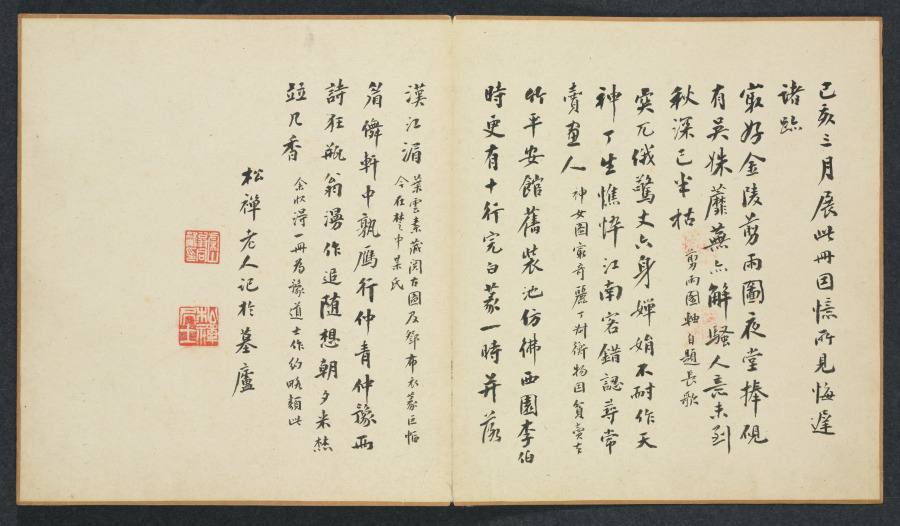
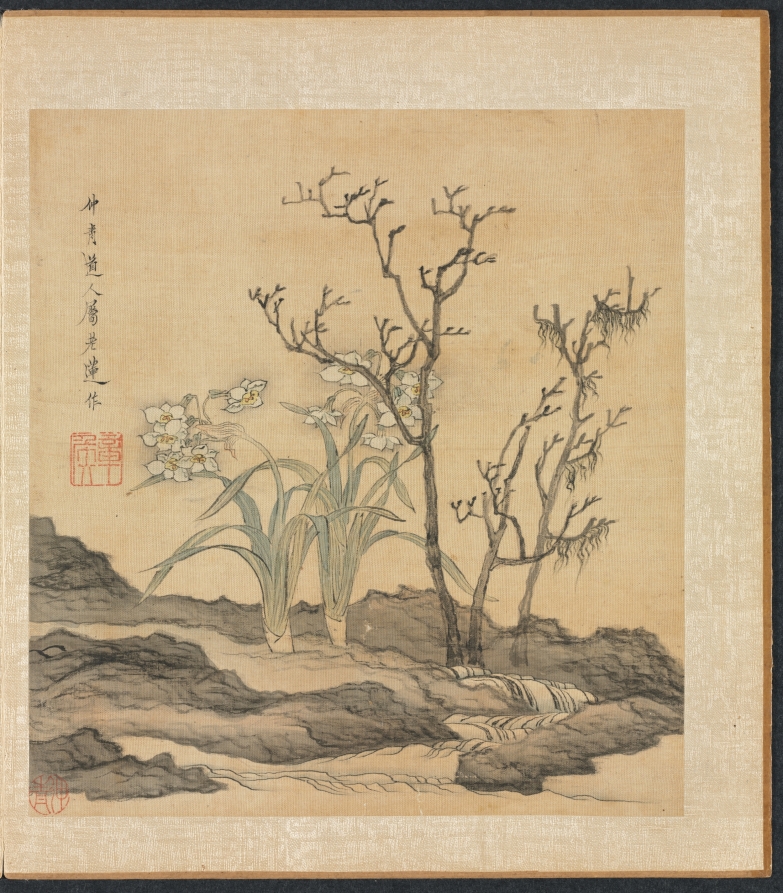
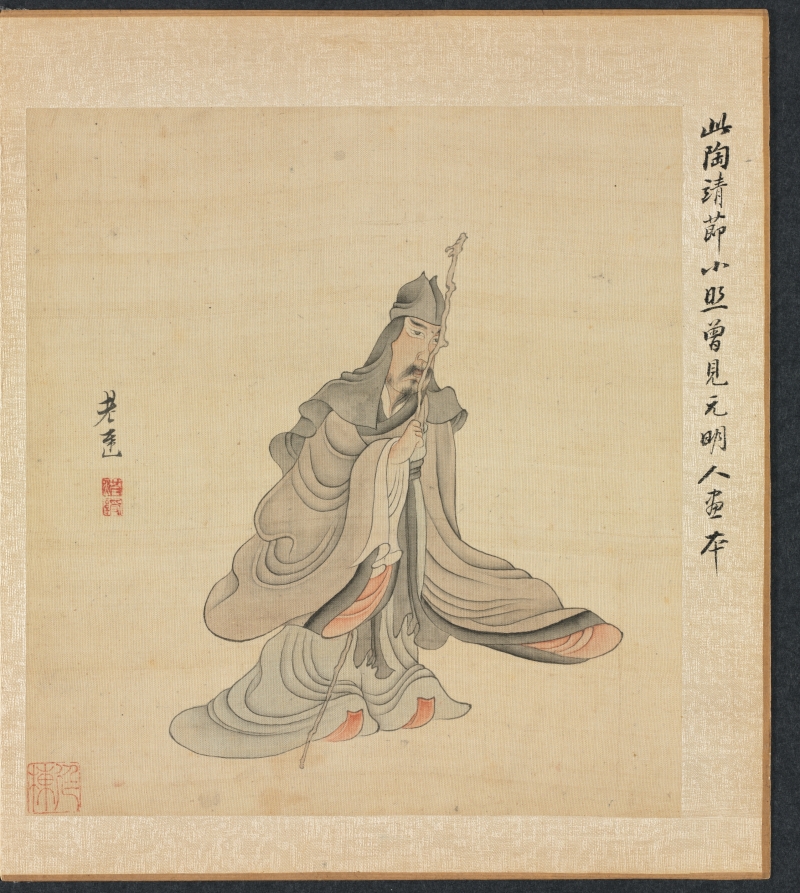
The twenty paintings in this double album by Chen Hongshou include landscapes, figures, and flowers. It also has one leaf featuring a woman, an often-used subject not found in the other albums from the latter part of his career. His late works are wonderful summations of Chen's peculiar and quirky art—archaistic, hyper-refined—but without accompanying shallowness or sentimentality.
His figures and landscapes in the late albums are miniaturized, not unlike the small Chinese gardens, or the carefully selected small table rocks or old roots used for contemplation to see the world in miniature. This loss of scale is quite deliberate and reflects the psychological situation of a depressed class like the Ming loyalist officials and scholars, deprived of their integrity and honor, and forced to lead a diminished and restricted existence.
His figures and landscapes in the late albums are miniaturized, not unlike the small Chinese gardens, or the carefully selected small table rocks or old roots used for contemplation to see the world in miniature. This loss of scale is quite deliberate and reflects the psychological situation of a depressed class like the Ming loyalist officials and scholars, deprived of their integrity and honor, and forced to lead a diminished and restricted existence.
Provenance
Weng Tonghe 翁同龢 [1830–1904], by descent to Wango H. C. Weng; (Wango H. C. Weng 翁萬戈 [1918–2020], Lyme, NH, sold to the Cleveland Museum of Art) (?–1979); The Cleveland Museum of Art, Cleveland, OH (1979–)
Accession Number
1979.27.1.4
Medium
album leaf; ink and color on silk
Dimensions
Overall: 30.2 x 26.7 cm (11 7/8 x 10 1/2 in.)
Classification
Painting
Credit Line
John L. Severance Fund
Tags
Painting Renaissance (1400–1599) Ink Silk Painting Chinese Color: Orange Color: Gray
Background & Context
Background Story
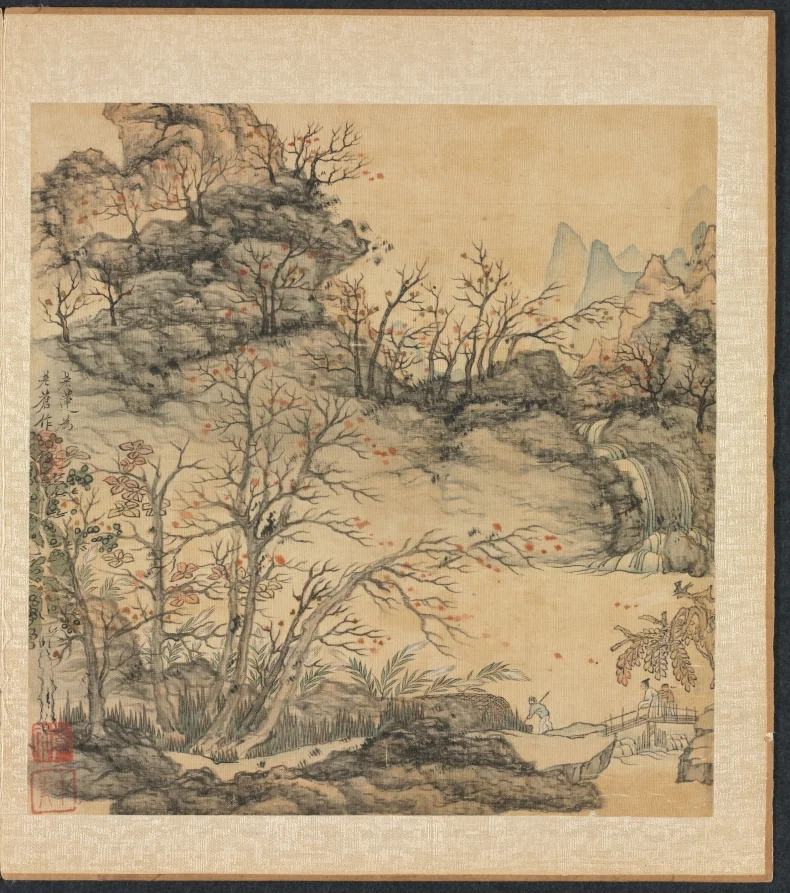
This autumn landscape from the Paintings after Ancient Masters series demonstrates Chen Hongshou's ability to work in landscape as well as figural subjects. The composition is deliberately archaic, referencing the landscape conventions of Song and Yuan dynasty masters while subverting them through Chen's characteristic distortion. Mountains are compressed into near-vertical stacks, trees are twisted into calligraphic gestures, and the overall space is so flattened that it reads more as decorative pattern than as naturalistic representation. The autumn palette — golds, russets, and deep greens — is applied with the intensity of enamel work.
Cultural Impact
Autumn in Chinese painting tradition symbolizes decline, harvest, and the transition between fullness and emptiness. For a late-Ming painter, autumn had a specific political resonance: the dynasty was in its autumn, and the harvest — such as it was — would be bitter. Chen's autumn landscapes are never merely seasonal; they carry the weight of historical consciousness.
Why It Matters
Autumn Landscape is Chen Hongshow's landscape style at its most concentrated. The compression of space, the intensification of color, and the deliberate archaism create a landscape that is simultaneously a tribute to the masters and a declaration that their world is ending.