Description
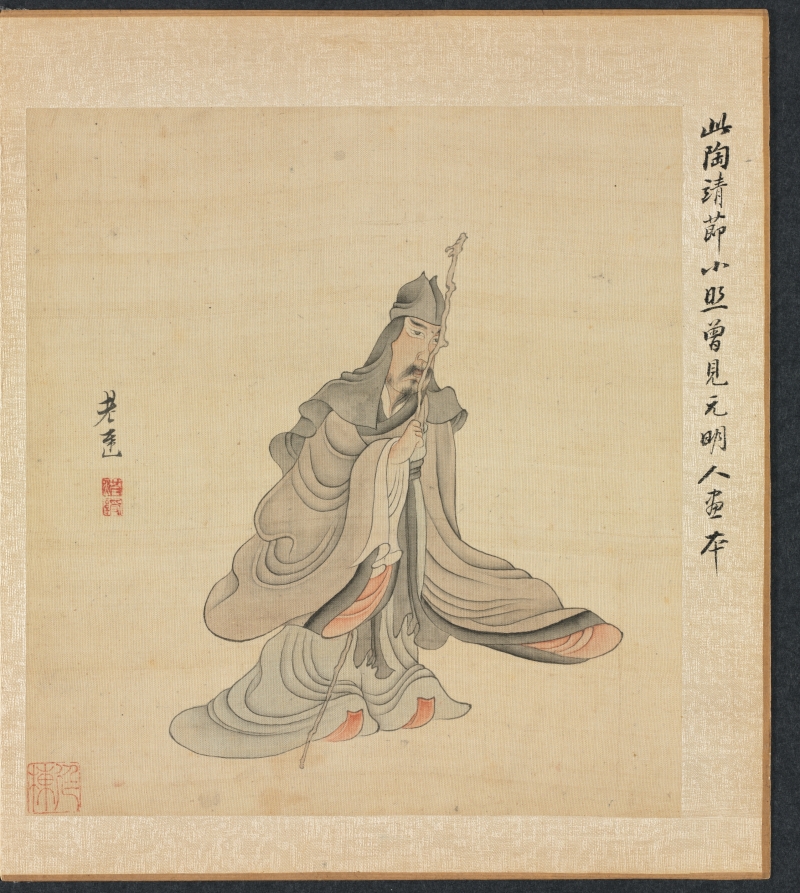
Poet Tao Yuanming (365–427 CE) turned down a career as an official in politically turbulent times to return to his home estate, northwest of Mount Lu, to write poetry and enjoy his garden and wine. As he grew chrysanthemums, Tao is associated with this flower.
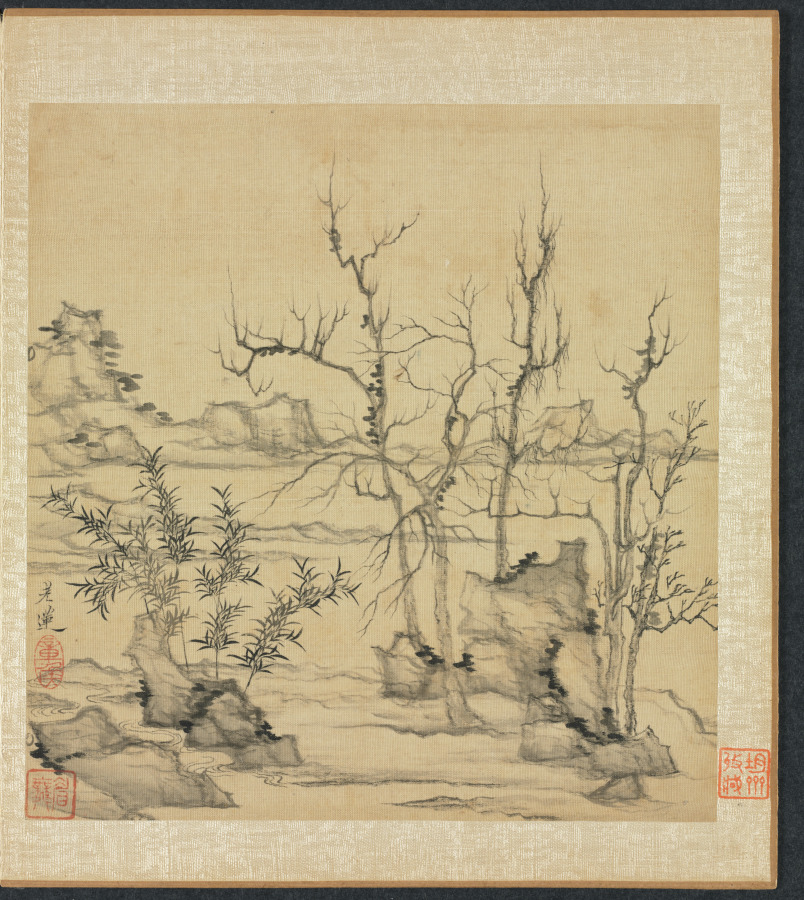
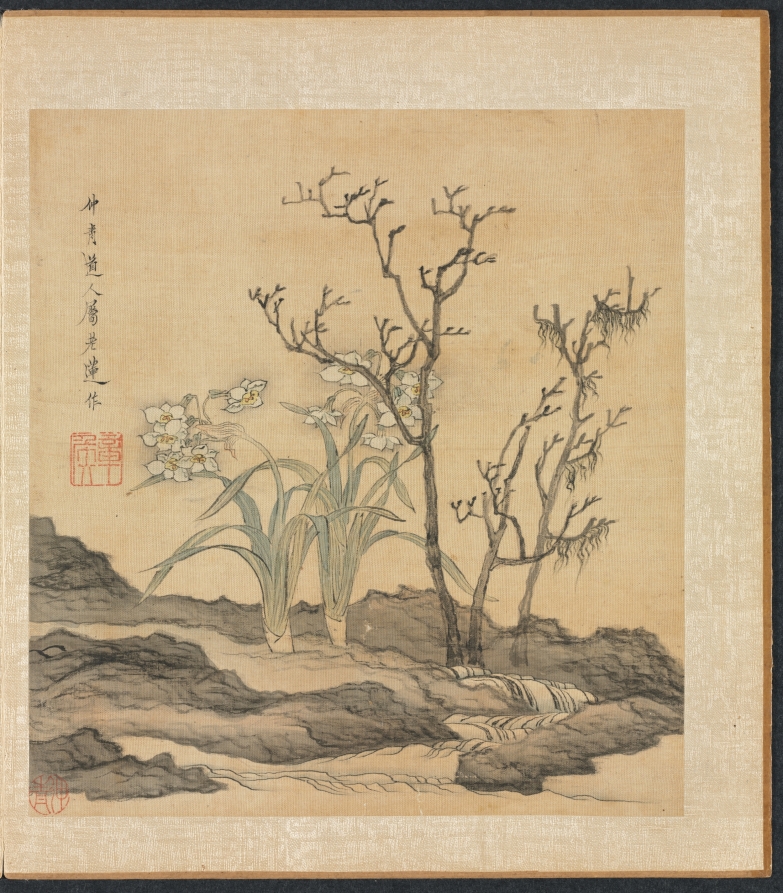
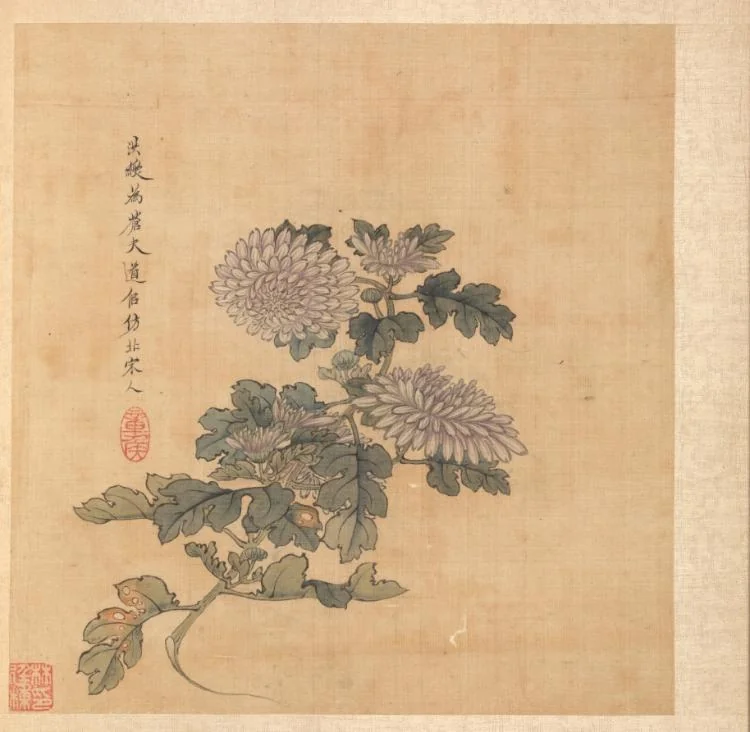
The artist Chen Hongshou, active in Zhejiang province, suffered through the violent transition from the Ming to the Qing dynasty around 1644. This painting of chrysanthemums alludes to the poet who lived a millennium earlier during similarly fraught times.
The artist Chen Hongshou, active in Zhejiang province, suffered through the violent transition from the Ming to the Qing dynasty around 1644. This painting of chrysanthemums alludes to the poet who lived a millennium earlier during similarly fraught times.
Provenance
Weng Tonghe 翁同龢 [1830–1904], by descent to Wango H. C. Weng; (Wango H. C. Weng 翁萬戈 [1918–2020], Lyme, NH, sold to the Cleveland Museum of Art) (?–1979); The Cleveland Museum of Art, Cleveland, OH (1979–)
Accession Number
1979.27.2.17
Medium
Album leaf; ink and color on silk
Dimensions
Overall: 30.2 x 26.7 cm (11 7/8 x 10 1/2 in.)
Classification
Painting
Credit Line
John L. Severance Fund
Tags
Painting Renaissance (1400–1599) Ink Silk Painting Chinese Color: Orange
Background & Context
Background Story
The chrysanthemum is one of the Four Gentlemen of Chinese painting — along with plum blossom, orchid, and bamboo — symbolizing autumn, endurance, and the scholar's ability to maintain integrity in adversity. Chen Hongshou's treatment of this classic subject is characteristically provocative: where traditional chrysanthemum paintings emphasize the flower's modest beauty and structural simplicity, Chen renders his chrysanthemum with the exaggeration and decorative intensity that mark all his work. The petals are angular, the leaves are twisted, and the overall effect is more Baroque than classically Chinese.
Cultural Impact
The chrysanthemum had a specific political meaning in late-Ming culture. It was the flower of Tao Yuanming, the poet who withdrew from government service to tend his garden — a powerful symbol for scholars faced with the impossibility of serving a dying dynasty. Chen's distorted chrysanthemum is a commentary on this tradition: even withdrawal has become distorted, even the symbol of integrity has been warped by the pressures of the times.
Why It Matters
Chen Hongshou's chrysanthemum is not a flower but a question: what does integrity look like in a world that has lost its way? The distortion of the petals is the distortion of every value the chrysanthemum is supposed to represent.