Description
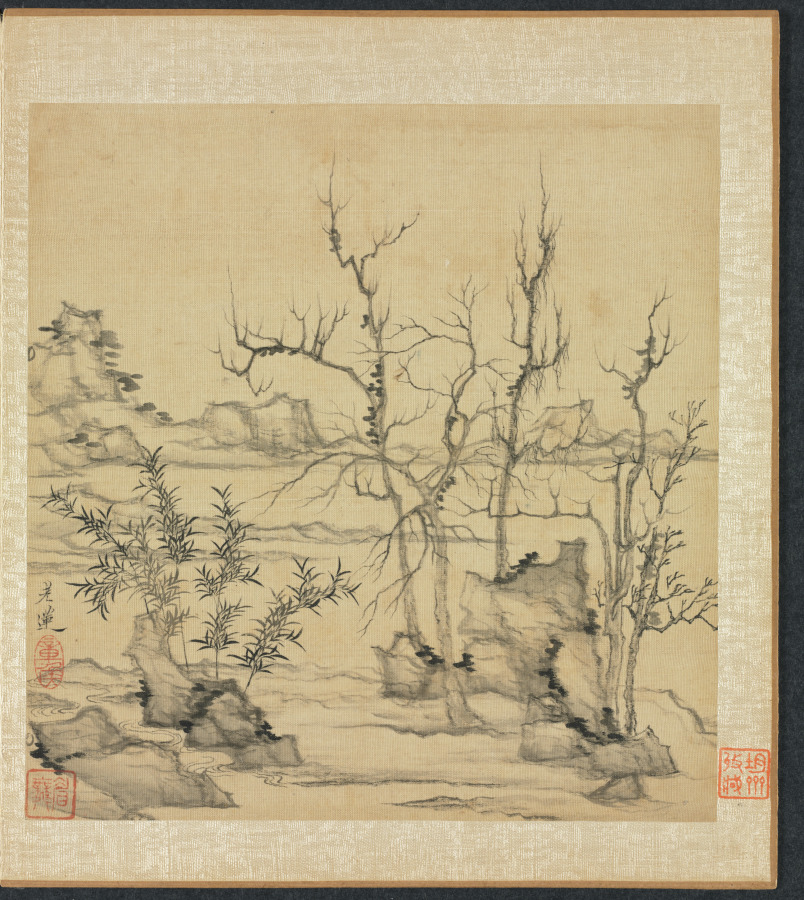
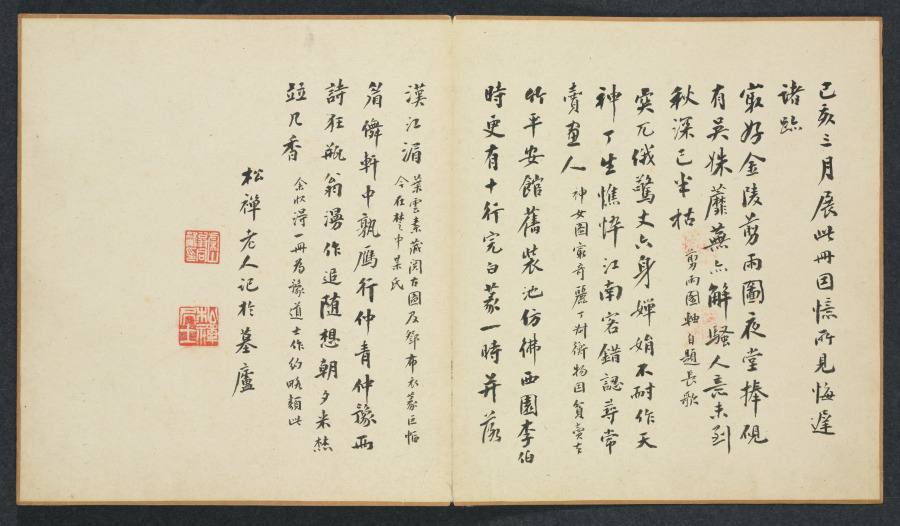
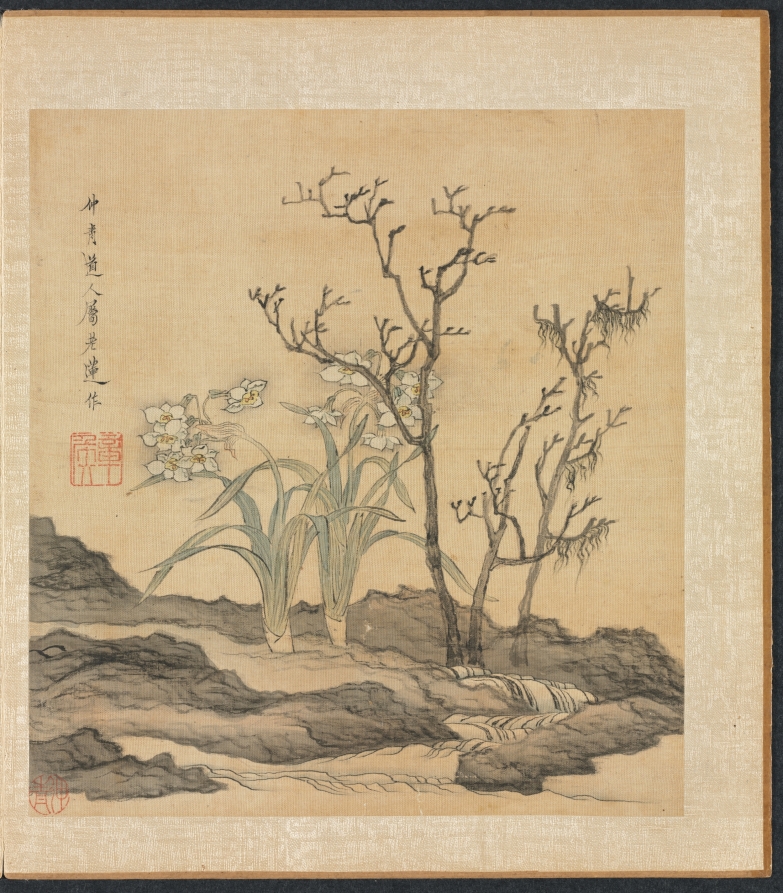
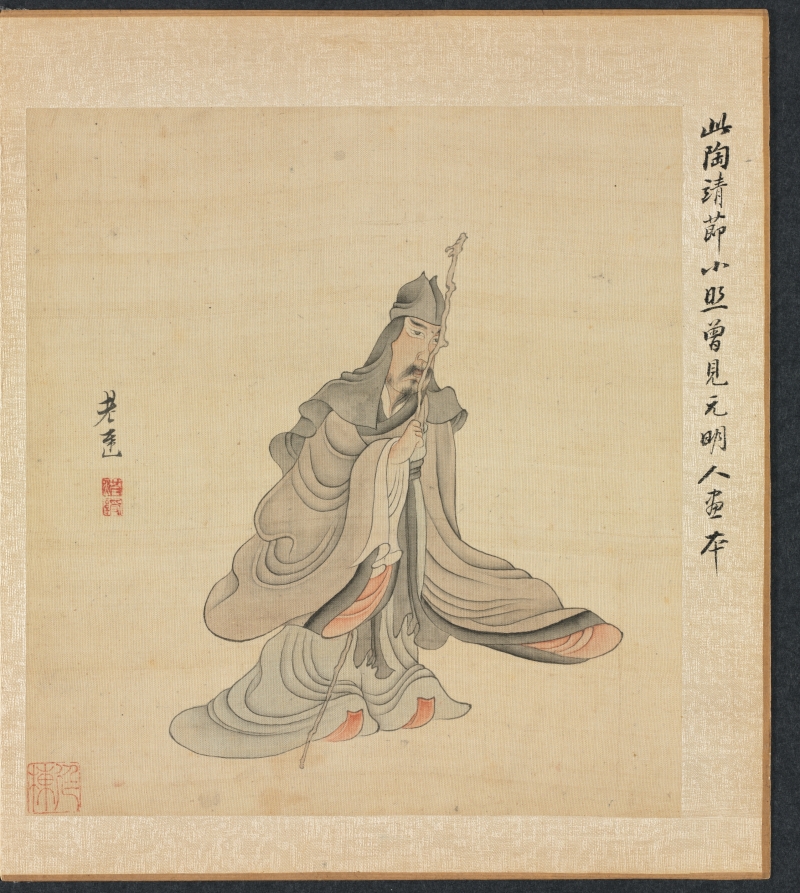
The twenty paintings in this double-album by Chen Hongshou include landscapes, figures, and flowers. It also has one leaf featuring a woman, an often-used subject not found in the other albums from the latter part of his career. His late works are wonderful summations of Chen's peculiar and quirky art--archaistic, hyper-refined--but without accompanying shallowness or sentimentality.
His figures and landscapes in the late albums are miniaturized, not unlike the small Chinese gardens, or the carefully selected small table rocks or old roots used for contemplation to see the world in miniature. This loss of scale is quite deliberate and reflects the psychological situation of a depressed class like the Ming loyalist officials and scholars, deprived of their integrity and honor, and forced to lead a diminished and restricted existence.
His figures and landscapes in the late albums are miniaturized, not unlike the small Chinese gardens, or the carefully selected small table rocks or old roots used for contemplation to see the world in miniature. This loss of scale is quite deliberate and reflects the psychological situation of a depressed class like the Ming loyalist officials and scholars, deprived of their integrity and honor, and forced to lead a diminished and restricted existence.
Provenance
Weng Tonghe 翁同龢 [1830–1904], by descent to Wango H. C. Weng; (Wango H. C. Weng 翁萬戈 [1918–2020], Lyme, NH, sold to the Cleveland Museum of Art) (?–1979); The Cleveland Museum of Art, Cleveland, OH (1979–)
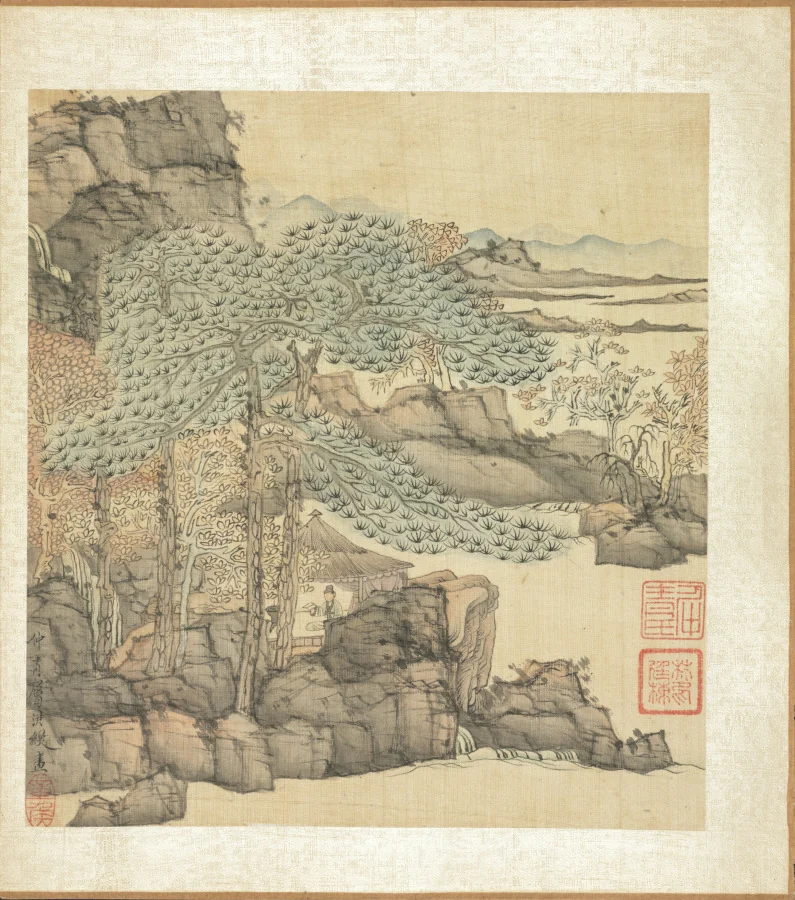
Paintings after Ancient Masters: Scholar Reading in a Thatched Hut by a Waterfall
1598–1652
Accession Number
1979.27.2.18
Medium
album leaf; ink and color on silk
Dimensions
Overall: 30.2 x 26.7 cm (11 7/8 x 10 1/2 in.)
Classification
Painting
Credit Line
John L. Severance Fund
Tags
Painting Renaissance (1400–1599) Ink Silk Painting Chinese Color: White Color: Gray
Background & Context
Background Story
The scholar reading in a thatched hut by a waterfall is one of the most iconic subjects in Chinese painting, representing the ideal of scholarly withdrawal from worldly affairs into nature and study. Chen Hongshou's version of this classic theme is characteristic: the scholar is rendered with the exaggerated proportions and mask-like face that distinguish his figural style, the waterfall is compressed into a decorative cascade rather than a naturalistic phenomenon, and the thatched hut is more ornamental than rustic. The result is an image that simultaneously invokes the hermit ideal and questions its viability.
Cultural Impact
Chen Hongshou painted this subject repeatedly throughout his career, each time questioning whether the hermit's withdrawal was still possible in a world of political chaos. The 'after Ancient Masters' framing makes this question explicit: the ancient masters could retreat to their huts; can we? The waterfall, a symbol of the Daoist natural order, continues to flow regardless of human affairs — but in Chen's rendering, even nature seems affected by the distortion of the times.
Why It Matters
Scholar Reading in a Thatched Hut is Chen Hongshou's most repeated subject and his most persistent question. In a world of dynastic collapse, can the scholar still retreat to nature? The painting's deliberate distortion of both figure and landscape suggests that the answer is no — or at least, not in the way the ancient masters meant.