Provenance
Possibly, Lyons sale, 29 March 1973, Chioggia, 28.2 x 45 cm, ff 4,400 (same dimensions as Cleveland painting). Claude Marumo, Paris. Sold in 1977 to Noah L. Butkin, Cleveland. Bequeathed to the cma on 19 December 1980.
Accession Number
1980.227
Medium
oil on fabric
Dimensions
Unframed: 28.2 x 45 cm (11 1/8 x 17 11/16 in.)
Classification
Painting
Credit Line
Bequest of Noah L. Butkin
Tags
Painting Impressionist & Modern (1851–1900) Oil Painting French Color: Orange Color: Gold
Background & Context
Background Story
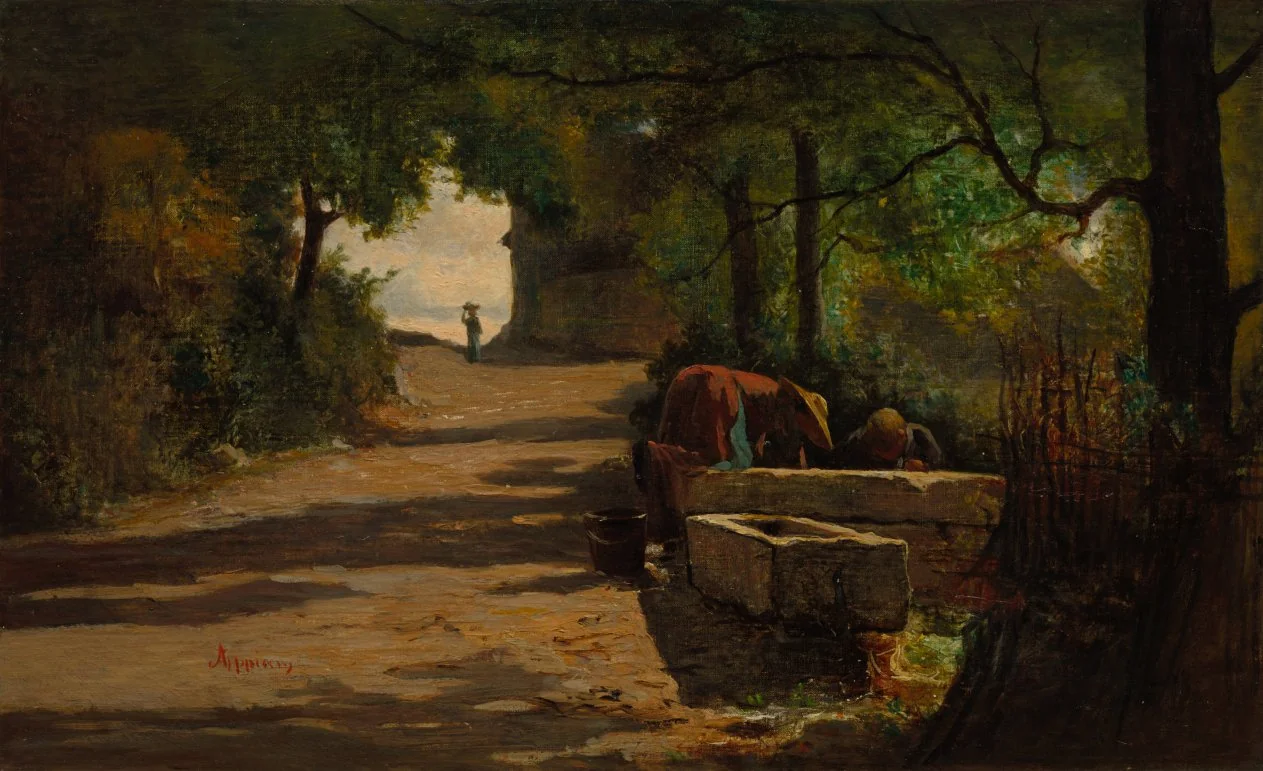
Adolphe Appian's "Well at the Side of a Road" exemplifies the quiet poetry of the Barbizon-influenced landscape tradition that flourished in mid-nineteenth-century France. The painting depicts a simple roadside well — the kind of modest, functional structure that dotted the French countryside — surrounded by verdant foliage and steeped in the dappled light that Appian mastered throughout his career.
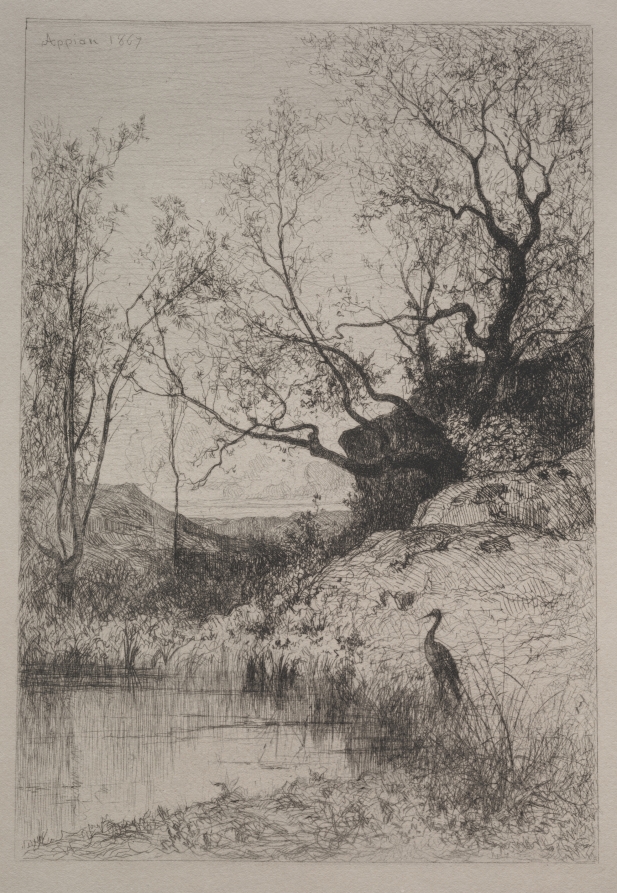
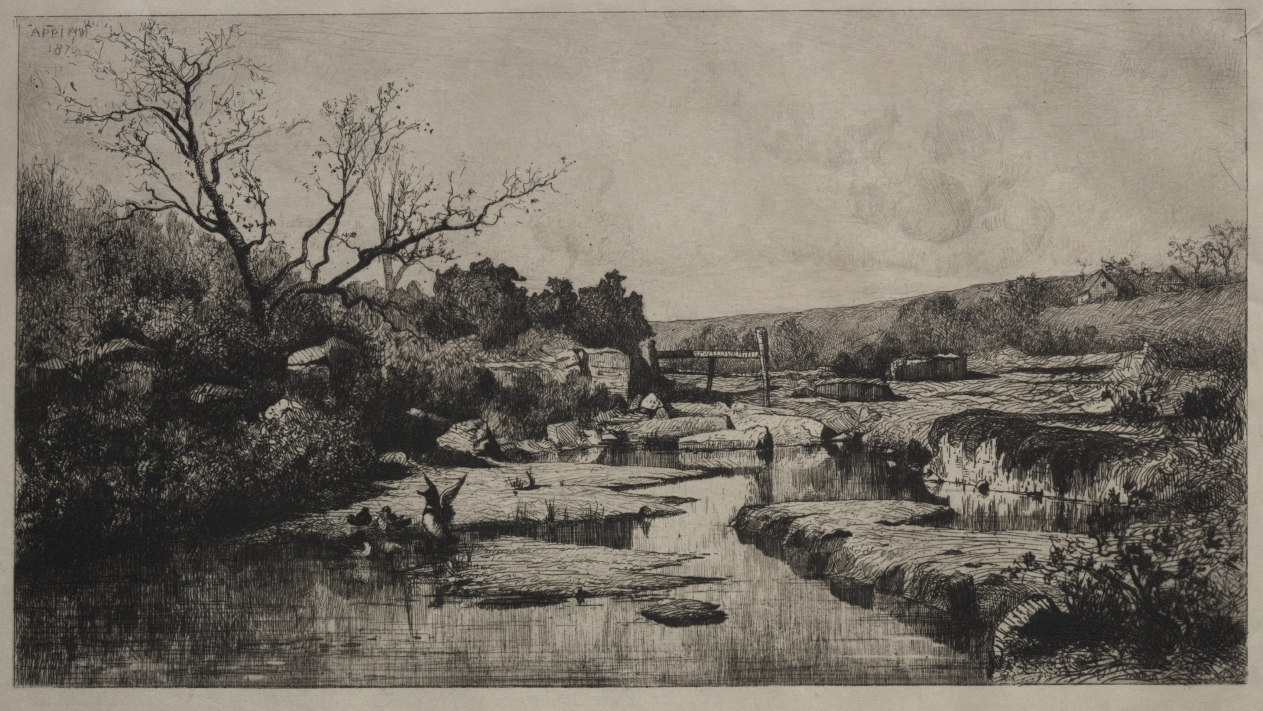
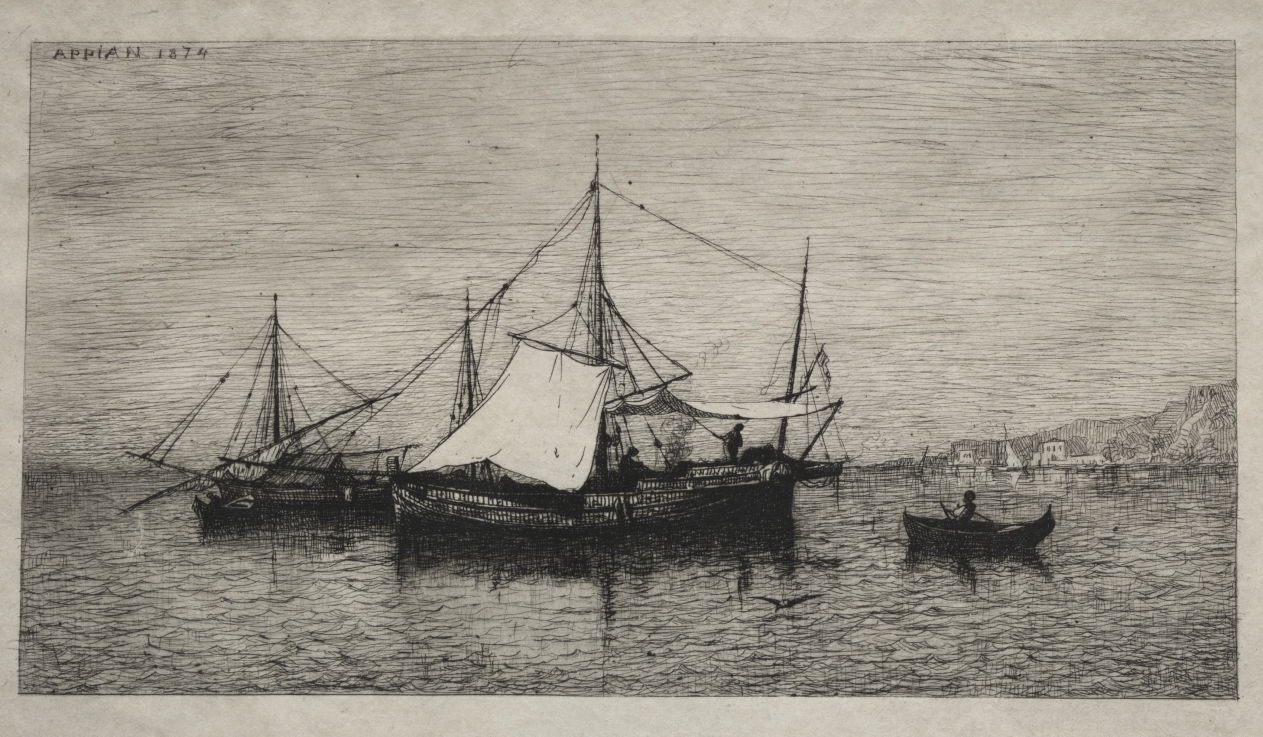
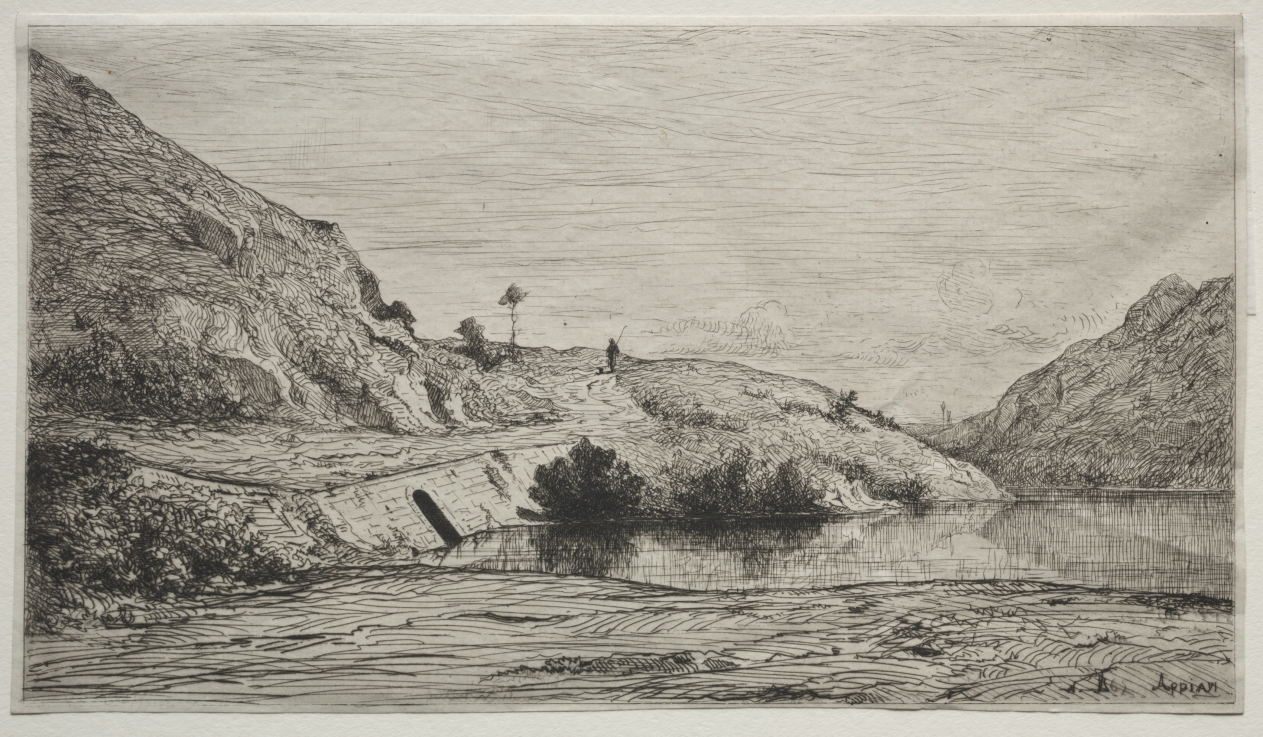
Appian (1818–1888) was a Lyon-based painter and etcher whose work occupied a distinctive position between the Barbizon School's realism and the emerging Impressionist sensibility. While he exhibited alongside Monet and Renoir at the first Impressionist exhibition in 1874, his style remained more tonal and atmospheric than the high-keyed color that defined his younger colleagues. He was particularly drawn to the play of light across water and foliage, often selecting quiet, unassuming subjects — wells, streams, woodland paths — that other painters might overlook.
The painting's mood of tranquil solitude reflects Appian's deep engagement with the French countryside around Lyon and the Dauphiné region. Unlike the dramatic, sublime landscapes favored by Romantic painters, Appian sought out the understated beauty of ordinary rural scenes. His wells, bridges, and streams are never merely picturesque — they are meditations on the intimate connection between human habitation and the natural world. The well in this painting serves as both a functional object and a symbol of rural life, a meeting point where human necessity and natural abundance converge.
Appian was also a highly accomplished etcher, and his prints were widely admired during his lifetime. The graphic sensibility evident in his etchings — sure lines, decisive tonal contrasts, careful compositional framing — carries over into his paintings, which often possess a subtle structural clarity beneath their atmospheric surfaces. In "Well at the Side of a Road," the well itself serves as an anchor for the composition, around which Appian builds a symphony of green, gold, and shadow.
Cultural Impact
Appian's work bridges the Barbizon tradition and Impressionism, demonstrating that there were multiple paths to modern landscape painting in nineteenth-century France. His emphasis on tonal harmony and understated subject matter offered an alternative to both academic grandeur and Impressionist brilliance.
Why It Matters
"Well at the Side of a Road" reveals how a master of atmospheric landscape painting could find profound visual poetry in the most modest rural subjects — a simple well becomes a meditation on light, water, and the quiet beauty of the French countryside.