Provenance
Galerie Claude Marumo, Paris. Bought by Mr. and Mrs. Noah L. Butkin, Cleveland, in 1977. Bequeathed to the CMA in 1980.
Accession Number
1980.259
Medium
oil on fabric
Dimensions
Unframed: 29.8 x 46.1 cm (11 3/4 x 18 1/8 in.)
Classification
Painting
Credit Line
Bequest of Noah L. Butkin
Tags
Painting Neoclassical & Romantic (1751–1850) Oil Painting French Color: Yellow Color: Gray
Background & Context
Background Story
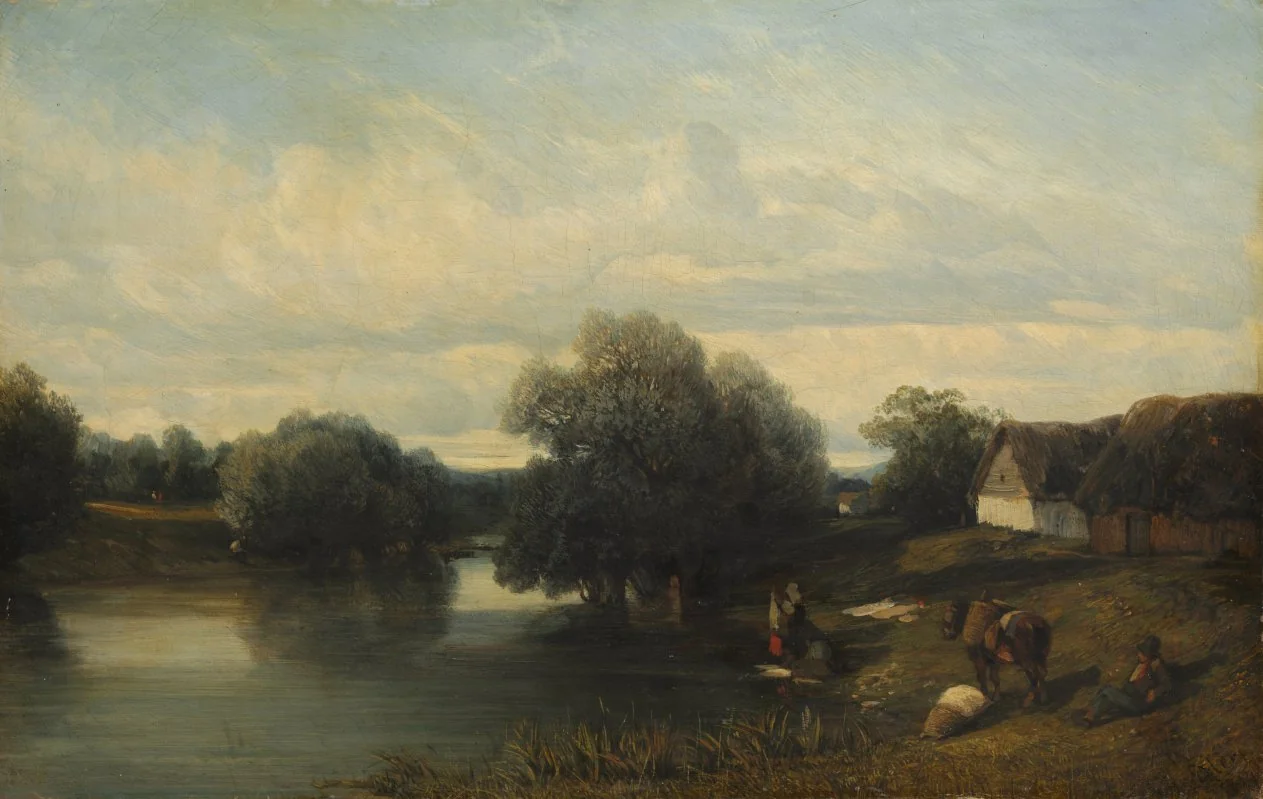
Camille Flers (1805-1868) was a French painter known for the atmospheric, precisely observed landscape paintings of rural France that make him one of the most important precursors of the Barbizon School. Cottage by the River with Washerwomen from 1835 depicts a cottage by a river with washerwomen in the atmospheric, precisely observed manner that distinguishes Flers's best work from the more idealized landscape painting of his predecessors. The 1835 date places this in Flers's most productive period, when he was producing the atmospheric, precisely observed landscape paintings that would anticipate the Barbizon School, and the cottage and washerwomen subject shows his talent for depicting rural French life with both atmosphere and precise observation.
Cultural Impact
Cottage by the River with Washerwomen is important in the history of French landscape painting because it demonstrates the atmospheric, precisely observed manner that Flers brought to rural landscape as one of the most important precursors of the Barbizon School. Flers's atmospheric, precisely observed rural landscapes—painted directly from nature rather than from idealized memory—anticipate the Barbizon School that would become one of the most important movements in French landscape painting, and the 1835 painting shows this anticipation at its most atmospheric.
Why It Matters
Cottage by the River with Washerwomen is Flers's atmospheric precursor to the Barbizon School: a cottage by a river with washerwomen rendered in the precisely observed manner of one of the most important precursors of the Barbizon School. The 1835 painting shows the practice of painting directly from nature that would become the hallmark of the Barbizon School.


![Saint Bernard and Saint Catherine of Alexandria with the Virgin of the Annunciation [right panel]](https://api.nga.gov/iiif/e6890364-4d99-4684-a62b-5060ee3c3446/full/400,/0/default.jpg)