Provenance
Legueltel. Arnoldi-Livie, Munich. Noah L. Butkin, Cleveland. Bequeathed to the CMA in 1980.; References
Accession Number
1980.277
Medium
oil on fabric
Dimensions
Unframed: 24.2 x 29.3 cm (9 1/2 x 11 9/16 in.)
Classification
Painting
Credit Line
Bequest of Noah L. Butkin
Tags
Painting Neoclassical & Romantic (1751–1850) Oil Painting French Color: Green
Background & Context
Background Story
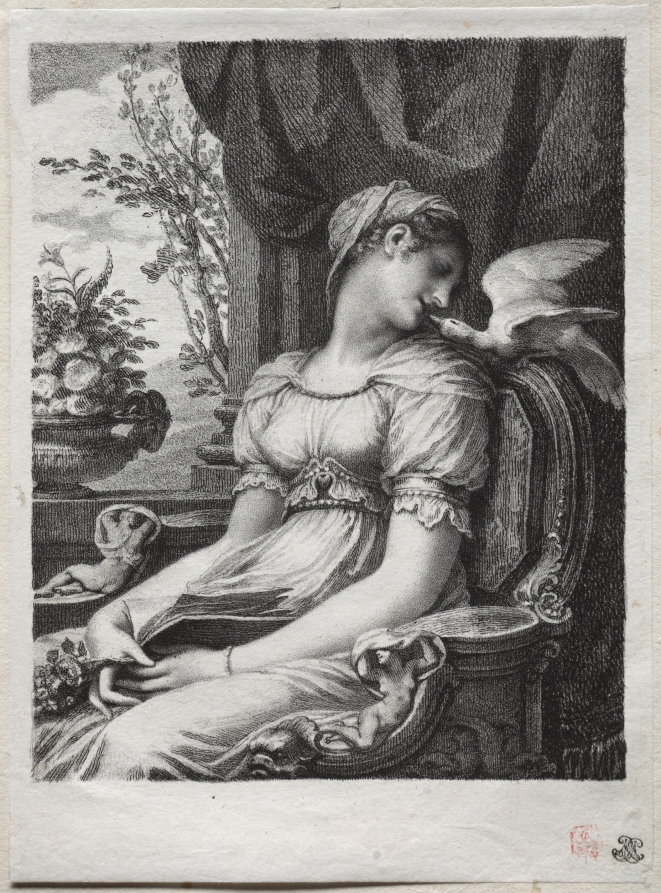
Pierre-Paul Prud'hon (1758-1823) was a French painter known for the soft, sfumato manner that makes him the most important painter of the French transition from Neoclassicism to Romanticism. The Dream of Happiness from after 1819 depicts an allegorical subject in the soft, sfumato manner that distinguishes Prud'hon's best allegorical paintings from the more severe Neoclassical work of David and his followers. The after 1819 date places this in Prud'hon's final years (he died in 1823), when he was still producing the soft, sfumato allegorical paintings that represent the most important alternative to Neoclassicism in French painting.
Cultural Impact
The Dream of Happiness is important in the history of French painting because it demonstrates the soft, sfumato manner that Prud'hon developed as the most important alternative to Neoclassicism in French painting. Prud'hon's allegorical paintings—combining the sfumato of Leonardo with the elegance of the French tradition in subjects of love and happiness—represent an alternative to David's severe Neoclassicism that would influence the development of Romanticism, and The Dream of Happiness shows this alternative at its most characteristic.
Why It Matters
The Dream of Happiness is Prud'hon's soft alternative to Neoclassicism: an allegorical subject rendered in the sfumato manner that represents the most important alternative to David's severe Neoclassicism. The after 1819 painting shows Prud'hon's alternative—soft, dreamlike, and elegant—developing into the Romanticism that would follow.