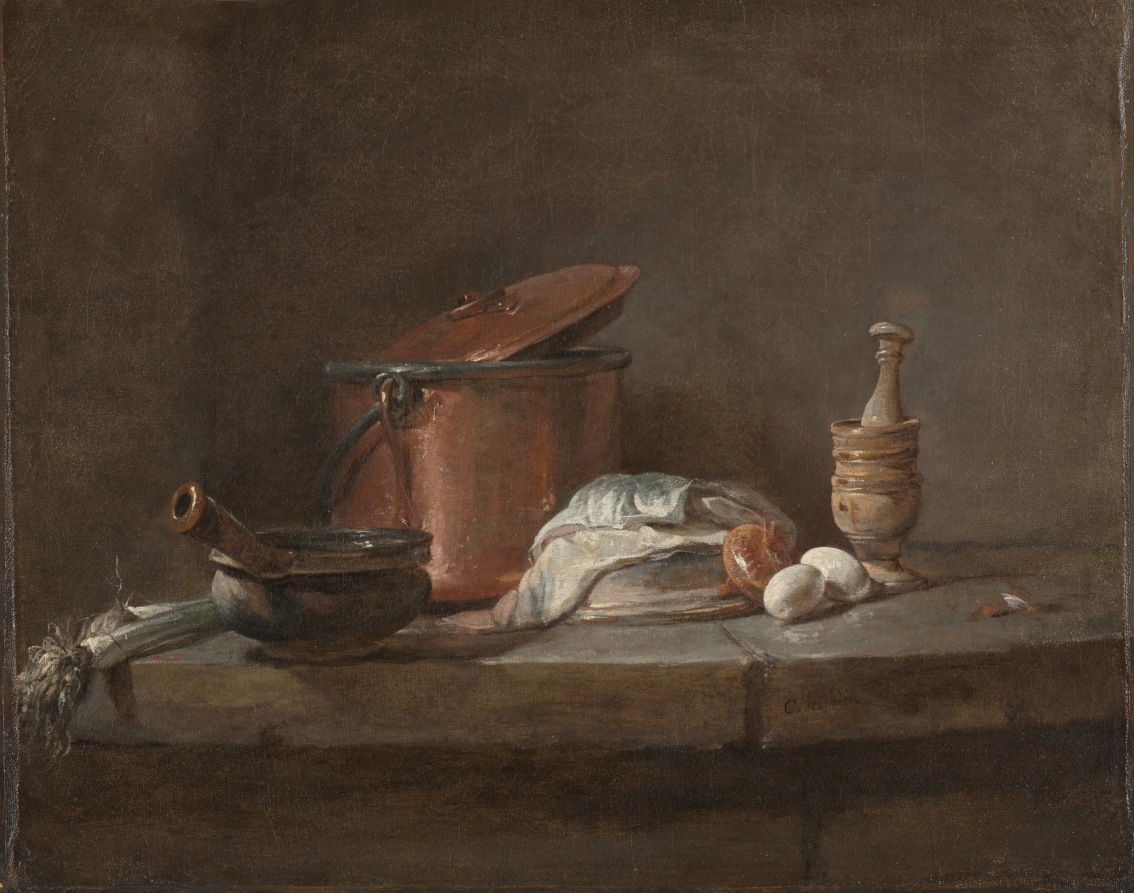
Description
Chardin was already famous by 1730, when he began to paint small, sparse still lifes of kitchen utensils. He often used the same elements in his compositions, varying slightly the position of the objects and adding or subtracting a utensil—always carefully placing each in relation to the rest to achieve a balanced design. Chardin was the contemporary of François Boucher (1703–1770) and he taught Jean-Honoré Fragonard (1732–1806), but his work is a contrast to theirs, representing the naturalistic tendency that persisted alongside the more fashionable lightness, grace, and playfulness of the Rococo. Chardin discovered a hidden poetry in even the most humble objects, bringing the viewer into an earthly world experienced with directness and simplicity.
Provenance
Probably Baron Maurice Sigismund Sulzbach [1853-1922], Paris, France (Possibly until 1922); Charlotte de Castellan, Comtesse de Forges (-1979); (David Carritt, Ltd., London, sold to the Cleveland Museum of Art) (1980); The Cleveland Museum of Art, Cleveland, Ohio (1980-)
Accession Number
1980.37
Medium
oil on canvas
Dimensions
Framed: 52.5 x 60.5 x 7.5 cm (20 11/16 x 23 13/16 x 2 15/16 in.); Unframed: 32.2 x 40.7 cm (12 11/16 x 16 in.)
Classification
Painting
Credit Line
Leonard C. Hanna Jr. Fund

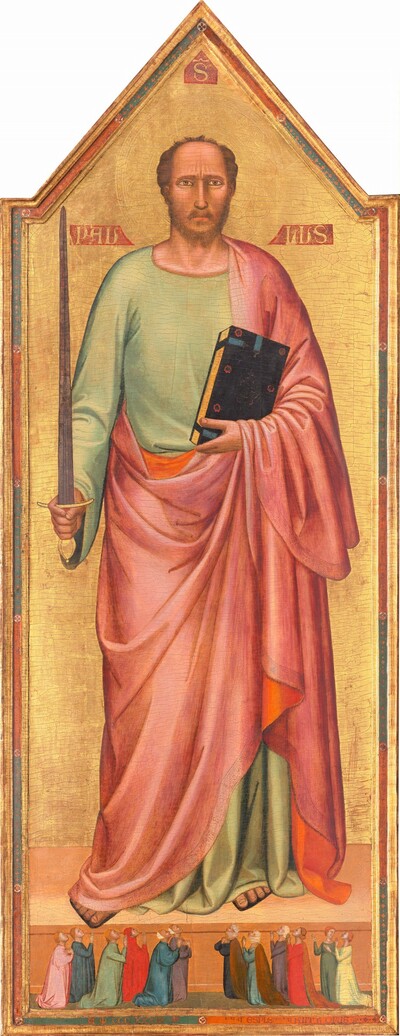
![Saint Bernard and Saint Catherine of Alexandria with the Virgin of the Annunciation [right panel]](https://api.nga.gov/iiif/e6890364-4d99-4684-a62b-5060ee3c3446/full/400,/0/default.jpg)