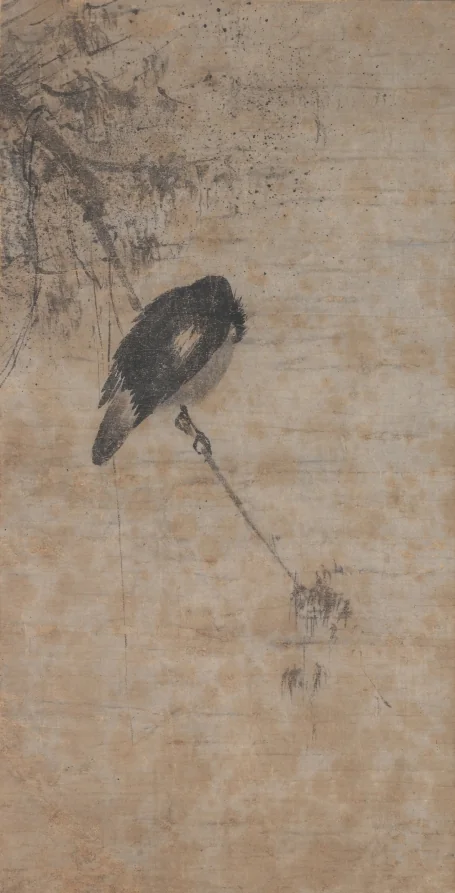
Description
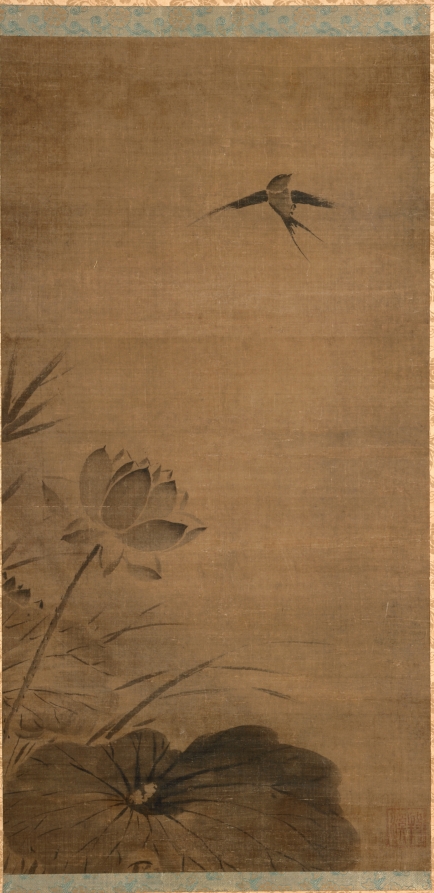
The Willow and Magpie is the product of a mindset that combines knowledgeable observation of birds in general and magpies in particular with an image-making process using a sophisticated ink technique to suggest the nature of the bird, the general characteristics of willow, and the visual effect of rain and mist. These are not trivial accomplishments but of equal importance with Southern Song period achievements in lyrical poetry or canal building.
Provenance
(Mayuyama and Company, Tokyo, Japan, sold to the Cleveland Museum of Art) (?–1982); The Cleveland Museum of Art, Cleveland, OH (1982–)
Accession Number
1982.53
Medium
hanging scroll; ink on paper
Dimensions
Image: 60.4 x 30.9 cm (23 3/4 x 12 3/16 in.); Overall: 137.2 x 48.3 cm (54 x 19 in.)
Classification
Painting
Credit Line
John L. Severance Fund
Tags
Painting Medieval (500–1399) Ink Paper Chinese Color: Brown Color: Gray
Background & Context
Background Story
Fachang Muqi (active mid-1200s) was a Chinese painter known for the expressive, minimalist ink paintings that make him one of the most important and distinctive painters in the history of Chinese art. Willow and Magpie from the mid-1200s depicts a willow and a magpie in the expressive, minimalist ink manner that distinguishes Muqi's best work from the more formal painting of his contemporaries. Muqi's expressive ink paintings were enormously influential in both China and Japan, where they were collected by Zen Buddhist temples, and the willow and magpie subject shows his talent for creating maximum expressiveness with minimum brushwork.
Cultural Impact
Willow and Magpie is important in the history of Chinese painting because it demonstrates the expressive, minimalist ink manner that Muqi brought to painting as one of the most important and distinctive painters in the history of Chinese art. Muqi's expressive ink paintings—creating maximum expressiveness with minimum brushwork—were enormously influential in both China and Japan, where they were collected by Zen Buddhist temples, and the mid-1200s painting shows this influence at its most expressive and minimalist.
Why It Matters
Willow and Magpie is Muqi's minimalist ink masterpiece: a willow and magpie rendered in the expressive ink manner of one of the most important and distinctive painters in the history of Chinese art. The mid-1200s painting shows the combination of maximum expressiveness with minimum brushwork that was enormously influential in both China and Japan.