Description
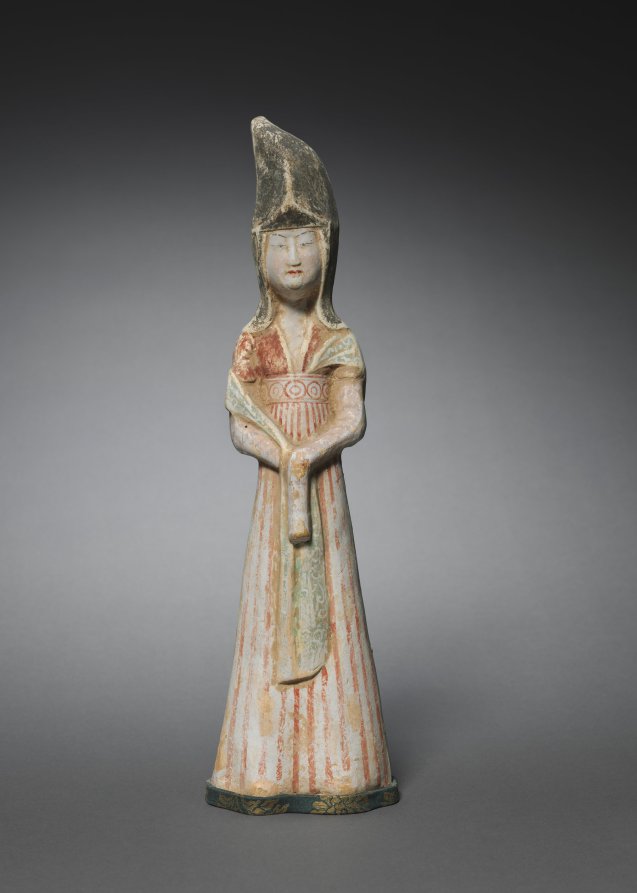
There was prosperity and flourishing culture in the Tang dynasty. Their capital was at Chang’an, which is present-day Xi’an. There was great interaction with other cultures through trade, diplomacy, and artistic exchange along the Silk Road. Archaeological discoveries of earthenware figures, like this slender woman with a tall headdress, give a vivid picture of everyday life in 8th-century China.
Aristocratic women had a high degree of freedom during the Tang dynasty, especially in contrast with the Neo-Confucianism of the later Song dynasty. Women were well educated and active; paintings exist of Tang women riding horses and participating in hunts and warfare, in addition to doing more courtly, traditionally feminine activities like dancing or making music.
Aristocratic women had a high degree of freedom during the Tang dynasty, especially in contrast with the Neo-Confucianism of the later Song dynasty. Women were well educated and active; paintings exist of Tang women riding horses and participating in hunts and warfare, in addition to doing more courtly, traditionally feminine activities like dancing or making music.
Provenance
(Osborne I. Hauge [1913–2004] and Victor Lloyd Hauge [1919–2013], Falls Church, VA, sold to the Cleveland Museum of Art) (?–1983); The Cleveland Museum of Art, Cleveland, OH (1983–)
Accession Number
1983.24
Medium
earthenware with polychromy
Dimensions
Overall: 30.8 cm (12 1/8 in.)
Classification
Sculpture
Credit Line
Severance and Greta Millikin Purchase Fund