Description
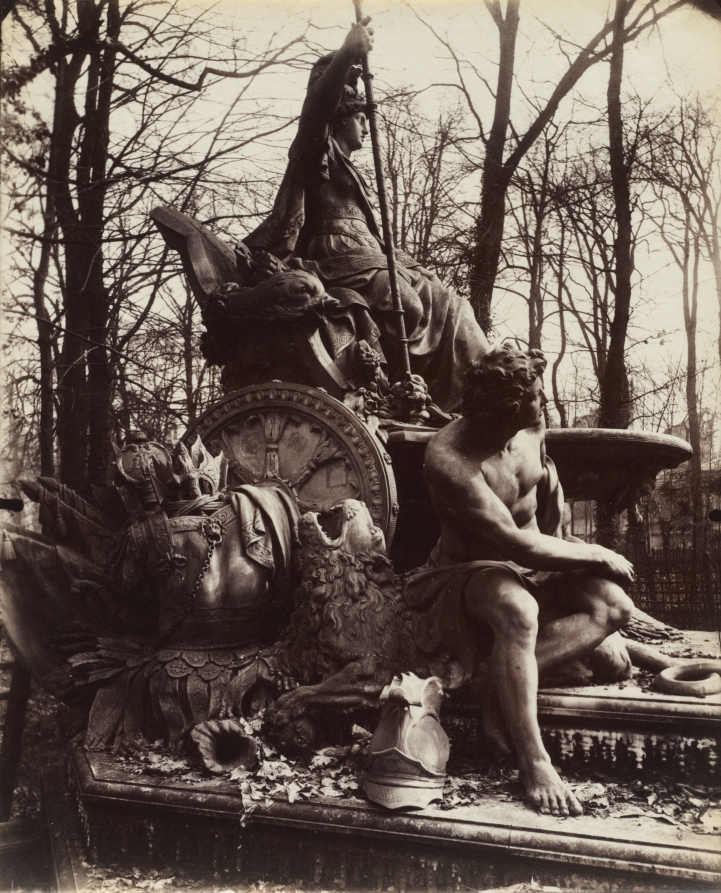
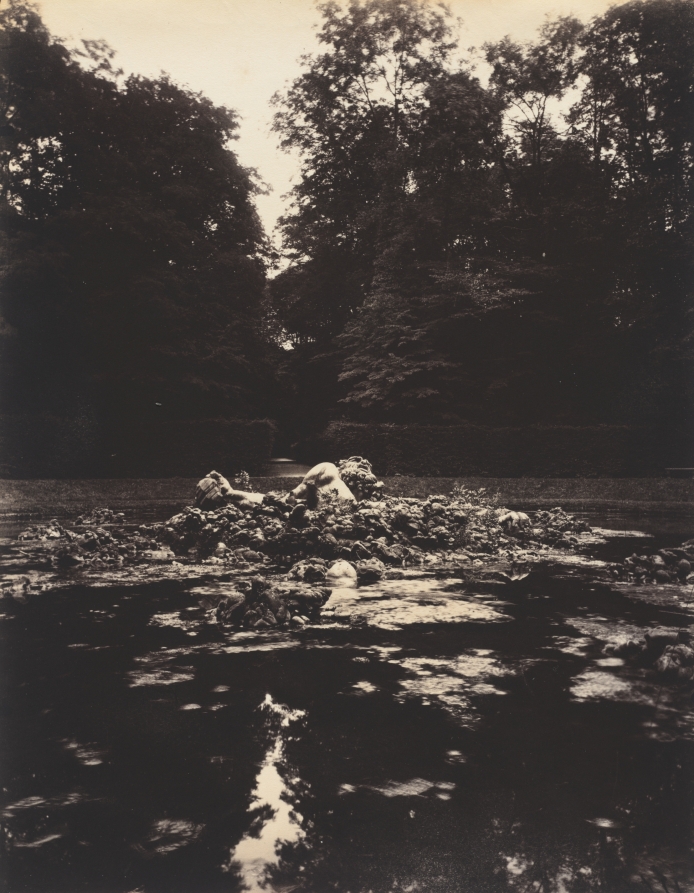
Taken in his later campaign of photographing at Versailles during the 1920s, Atget magically--through his ingenuous composition and use of light and shade--captured the pathos and expressive vigor of Gaspard Marsy’s 1675-77 sculpture from a sketch provided by the painter Charles Le Brun. This baroque, gilded metalwork depicts Enceladus, the mightiest of the giants in Roman mythology. Jupiter cast down and crushed the giant under a mound of rock after he dared to attack Mount Olympus to dethrone the gods. Enceladus, vanquished by his temerity and pride, clings to the stones with all the strength of his half-buried body.
Provenance
[]
Accession Number
1985.117
Medium
albumen print, gold toned
Dimensions
Image: 22.5 x 17.8 cm (8 7/8 x 7 in.); Matted: 45.7 x 35.6 cm (18 x 14 in.)
Classification
Photograph
Credit Line
John L. Severance Fund
Background & Context
Background Story
The Tub (1886) is one of Degas's most celebrated pastels, depicting a woman bathing in a shallow tub—a subject that allowed Degas to combine figure drawing with still-life precision and interior observation within an innovative compositional framework. The tub itself—.zinc or copper vessel that was common in 19th-century Parisian bathrooms—provided a circular form that organized the composition and created the unusual overhead viewpoint that distinguishes this work. The 1886 date places this during Degas's most accomplished pastel period, when he was building form through layers of colored strokes that created surfaces of extraordinary chromatic richness. The bathing woman—seen from above, her body foreshortened—provided Degas with a figure problem of considerable difficulty, and his solution demonstrates the spatial intelligence that characterized his best work. The body's foreshortening—the legs extending toward the viewer, the torso receding—creates a spatial dynamic that makes the viewer's position an element of the composition. Degas's treatment of the tub's circular form interacting with the figure's curved body creates a dialogue between geometry and anatomy that gives the pastel its formal power. The painting's intimate viewpoint—the bather observed as if from above—establishes an observational position that Degas explored throughout The Tub series.
Cultural Impact
Degas's Tub series influenced how the female nude was represented in modern art, introducing everyday realism and unusual viewpoints that challenged the Academic nude's conventions. The paintings influenced later modernist painters from Bonnard to Picasso who similarly depicted bathing women with observational rather than idealizing attention. The pastel technique influenced how the medium was used in figure painting, establishing pastel as capable of the most ambitious figurative work.
Why It Matters
This painting matters because it represents one of the most successful challenges to the Academic nude tradition—replacing the idealized figure with an observed one, and the classical viewpoint with an innovative overhead perspective. The Tub demonstrates that modern art's revision of the past could produce images more powerful than the conventions they replaced, arguing that truth of observation serves art better than truth of tradition.