Provenance
(Bunzo Nakanishi, Kyoto, Japan, sold to Mr. and Mrs. Kelvin Smith); The Kelvin Smith Collection, Cleveland, OH, given by Mrs. Kelvin [Eleanor Armstrong] Smith [1899–1998] to the Cleveland Museum of Art (?–1985); The Cleveland Museum of Art, Cleveland, OH (1985–)
Accession Number
1985.270
Medium
hanging scroll; ink and color on silk
Dimensions
Overall: 151.1 x 92.1 cm (59 1/2 x 36 1/4 in.); Painting only: 40 x 68.3 cm (15 3/4 x 26 7/8 in.)
Classification
Painting
Credit Line
The Kelvin Smith Collection, given by Mrs. Kelvin Smith
Tags
Painting Baroque (1600–1750) Ink Silk Painting Japanese Color: Gold
Background & Context
Background Story
Hishikawa Moronobu (c. 1618-1694) is widely regarded as the first true master of ukiyo-e, whose single-sheet woodblock prints and paintings established the ukiyo-e tradition as a distinct genre of Japanese art. Spring Dance Scene from the mid- to late 1600s depicts a dance scene in the bold, linear manner that distinguishes Moronobu's best work from the more ornate painting of the court tradition. Moronobu's establishment of the ukiyo-e tradition—combining bold outlines with popular subjects from the pleasure quarters of Edo—represents one of the most important developments in Japanese art.
Cultural Impact
Spring Dance Scene is important in the history of Japanese art because it demonstrates the bold, linear manner that Moronobu established as the foundation of the ukiyo-e tradition. Moronobu's single-sheet prints and paintings—combining bold outlines with popular subjects—established ukiyo-e as a distinct genre of Japanese art, and Spring Dance Scene shows the foundation of the tradition that would produce Hiroshige, Hokusai, and Utamaro.
Why It Matters
Spring Dance Scene is Moronobu founding ukiyo-e: a dance scene rendered in the bold, linear manner of the first master of the ukiyo-e tradition. The mid- to late 1600s painting shows the foundation of the tradition that would become one of the most important genres of Japanese art.
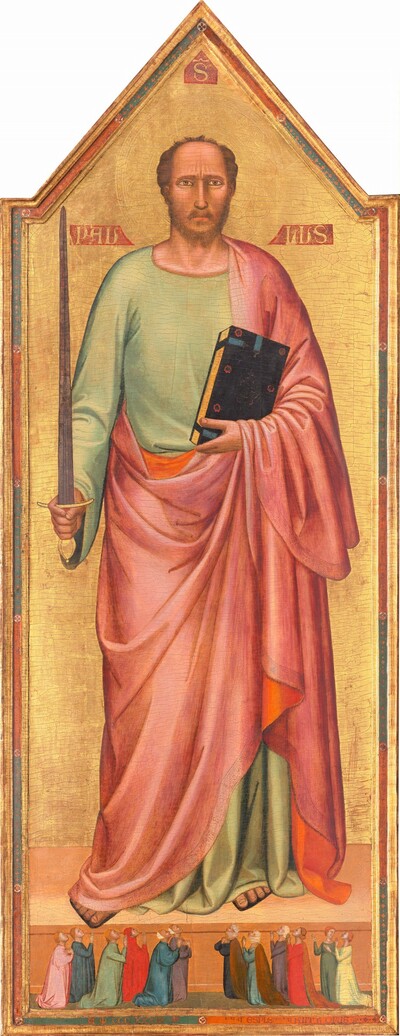
![Saint Bernard and Saint Catherine of Alexandria with the Virgin of the Annunciation [right panel]](https://api.nga.gov/iiif/e6890364-4d99-4684-a62b-5060ee3c3446/full/400,/0/default.jpg)