Description
This celebrated work by Tamura Suio was acquired from Osaka in 1976, donated to the museum in 1985, and was included in the 1998 exhibition Highlights of Asian Paintings at the Nara National Museum and the Suntory Museum of Art in Japan. It depicts four women of fashion at leisure who are interrupted by the arrival of a young man, the lover of one of the women. Former director Sherman Lee remarked on the pictorial design of such paintings of beautiful women, explaining that "the placement of the figures and their interrelations, psychological and aesthetic, show a calculation and subtlety worthy of the great decorative masters."
Provenance
Takeoka Toyota 武岡豐太 [1864–1931], Kobe, Japan (? by 1923–?); (Hosomi Ryo 細見良 [1901–1978], Osaka, Japan, sold to Mr. and Mrs. Kelvin Smith) (?–1976); The Kelvin Smith Collection, Cleveland, OH, given by Mrs. Kelvin [Eleanor Armstrong] Smith [1899–1998] to the Cleveland Museum of Art (1976–1985); The Cleveland Museum of Art, Cleveland, OH (1985–)
Accession Number
1985.275
Medium
Hanging scroll; ink and color on silk
Dimensions
Painting: 50.4 x 82.2 cm (19 13/16 x 32 3/8 in.); Mounted: 155.2 x 97.7 cm (61 1/8 x 38 7/16 in.)
Classification
Painting
Credit Line
The Kelvin Smith Collection, given by Mrs. Kelvin Smith
Tags
Painting Baroque (1600–1750) Ink Silk Painting Japanese Color: Gold
Background & Context
Background Story
Tamura Suio (active late 1600s-early 1700s) was a Japanese painter known for the elegantly composed paintings of beautiful women (bijinga) that make him one of the accomplished painters of the early Edo period. Beauty Receiving a Visitor from the late 1600s-early 1700s depicts a beauty receiving a visitor in the elegantly composed, characterful manner that distinguishes Suio's best work from the more general bijinga of his contemporaries. Bijinga—paintings of beautiful women—was one of the most important genres in Japanese painting, and Suio's elegantly composed treatment shows the genre at its most refined in the early Edo period.
Cultural Impact
Beauty Receiving a Visitor is important in the history of Japanese painting because it demonstrates the elegantly composed, characterful manner of the early Edo period bijinga tradition. Bijinga—paintings of beautiful women—was one of the most important genres in Japanese painting, and Suio's elegantly composed treatment represents one of the most accomplished traditions in early Edo period painting. The late 1600s-early 1700s painting shows this tradition at its most elegantly composed.
Why It Matters
Beauty Receiving a Visitor is Suio's elegantly composed early Edo bijinga: a beauty receiving a visitor rendered in the characterful manner of one of the accomplished painters of the early Edo period. The late 1600s-early 1700s painting shows the bijinga genre—one of the most important genres in Japanese painting—at its most elegantly composed.

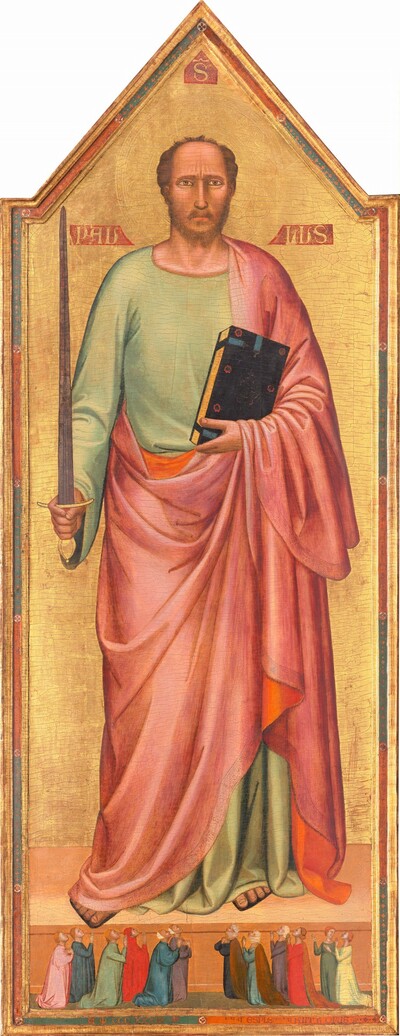
![Saint Bernard and Saint Catherine of Alexandria with the Virgin of the Annunciation [right panel]](https://api.nga.gov/iiif/e6890364-4d99-4684-a62b-5060ee3c3446/full/400,/0/default.jpg)