
Description
Here, a woman dressed as a man replaces Fugen, a bodhisattva—a being among those considered enlightened in Buddhism—who symbolizes learning as a path to awakening and typically rides an elephant. The painting teaches the lesson of impermanence through the petals falling from the lotus flower the woman holds. It also alludes to the legend of Eguchi, a 12th-century courtesan who, following an encounter with a Buddhist monk-poet called Saigyō, revealed herself to be a manifestation of Fugen.
Provenance
(Nathan Chaikin, Switzerland, sold to Mr. and Mrs. Kelvin Smith); The Kelvin Smith Collection, Cleveland, OH, given by Mrs. Kelvin [Eleanor Armstrong] Smith [1899–1998] to the Cleveland Museum of Art (?–1985); The Cleveland Museum of Art, Cleveland, OH (1985–)
Accession Number
1985.277
Medium
hanging scroll; ink and color on silk
Dimensions
Painting only: 114.3 x 56.2 cm (45 x 22 1/8 in.); Including mounting: 186.7 x 76.2 cm (73 1/2 x 30 in.)
Classification
Painting
Credit Line
The Kelvin Smith Collection, given by Mrs. Kelvin Smith
Tags
Painting Neoclassical & Romantic (1751–1850) Ink Silk Painting Japanese Color: White
Background & Context
Background Story
Kitao Masayoshi (1764-1824) was a Japanese painter and printmaker known for the elegantly composed paintings of Buddhist and secular subjects that make him one of the accomplished painters of the late Edo period. Stand-in Fugen from the late 1700s-early 1800s depicts a stand-in for Fugen (Samantabhadra)—one of the most important bodhisattvas in Buddhism—in the elegantly composed manner that distinguishes Masayoshi's best work from the more general painting of his contemporaries. Fugen (Samantabhadra) is the bodhisattva of practice and meditation, and Masayoshi's elegantly composed treatment shows the Buddhist painting tradition at its most refined in the late Edo period.
Cultural Impact
Stand-in Fugen is important in the history of Japanese painting because it demonstrates the elegantly composed manner of the late Edo period painting tradition as applied to one of the most important bodhisattvas in Buddhism. Fugen (Samantabhadra)—the bodhisattva of practice and meditation—is one of the most important bodhisattvas in Buddhism, and paintings depicting Fugen represent one of the most accomplished traditions in Japanese Buddhist painting. The late 1700s-early 1800s painting shows this tradition at its most elegantly composed.
Why It Matters
Stand-in Fugen is Masayoshi's elegantly composed Edo Buddhist painting: a stand-in for Fugen (Samantabhadra) rendered in the composed manner of one of the accomplished painters of the late Edo period. The late 1700s-early 1800s painting shows the Buddhist painting tradition at its most elegantly composed.
Related Artworks
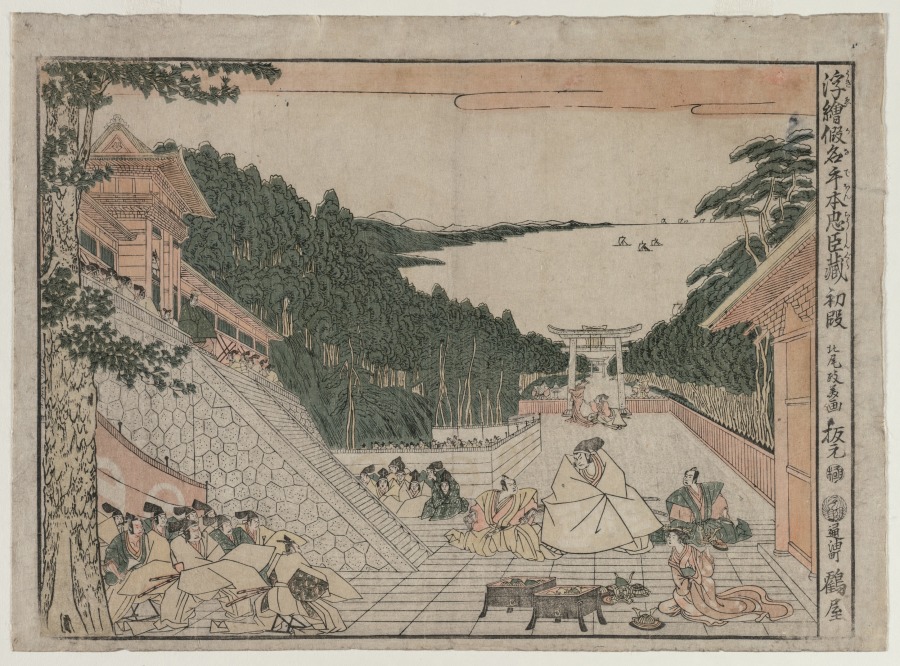
Perspective Pictures for The Treasure House of Loyalty
Kitao Masayoshi
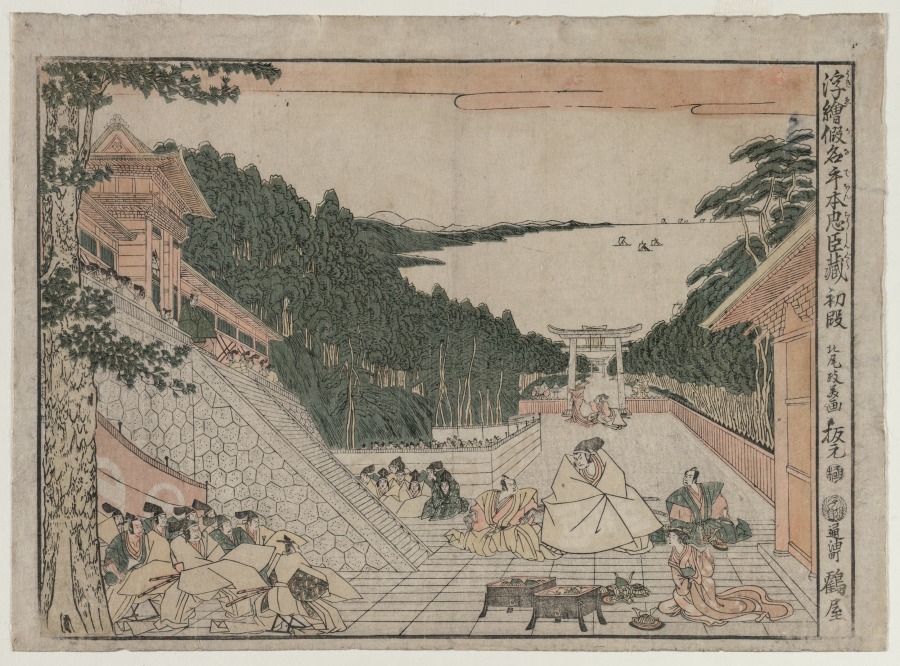
Chushingura: Act I (from the series Perspective Pictures for The Treasure House of Loyalty)
Kitao Masayoshi
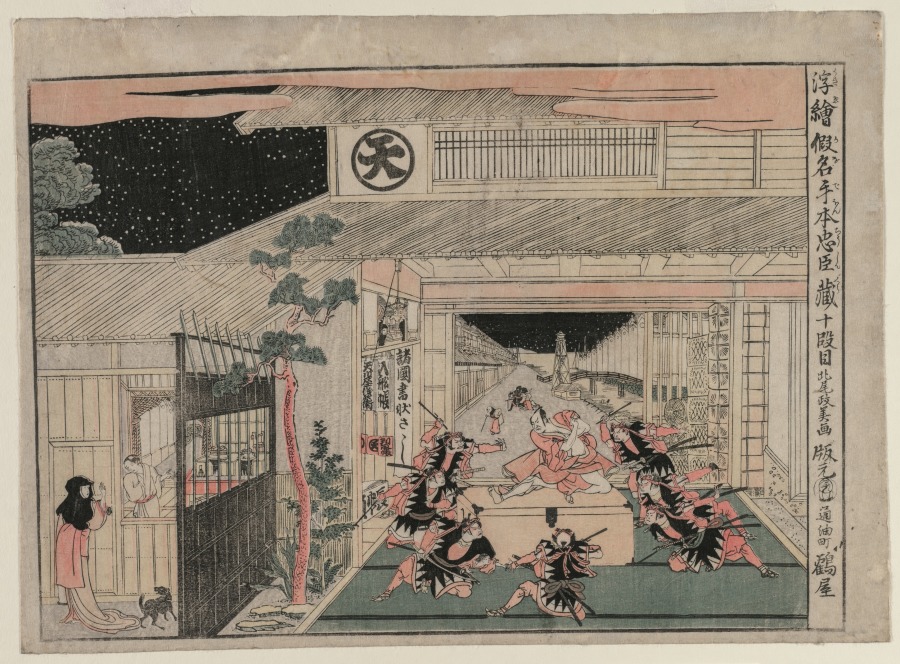
Chushingura: Act X (from the series Perspective Pictures for The Treasure House of Loyalty)
Kitao Masayoshi
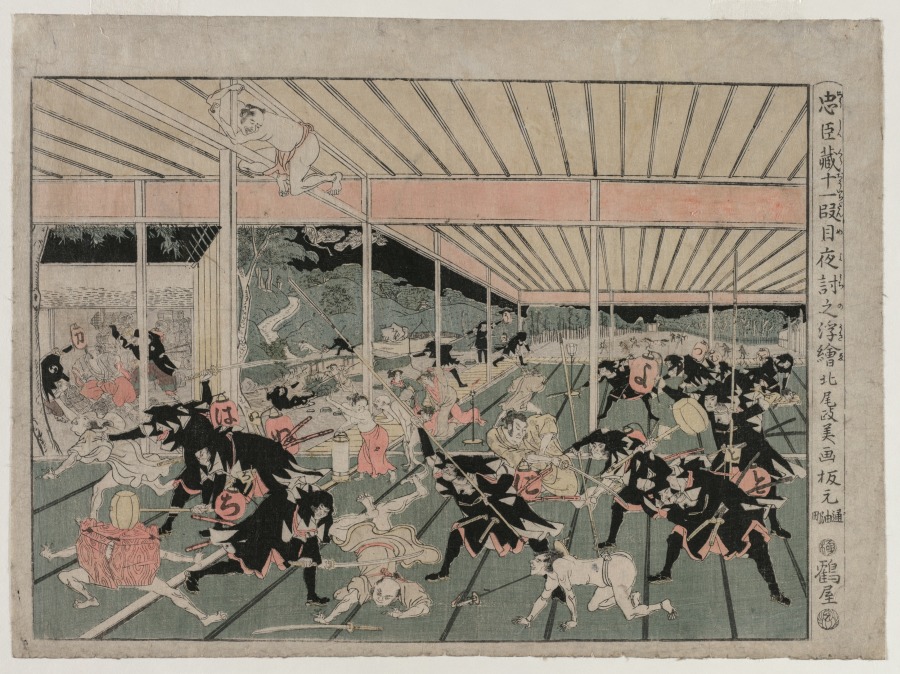
Chushingura: Act XI (from the series Perspective Pictures for The Treasure House of Loyalty)
Kitao Masayoshi