Accession Number
1985.292
Medium
Ink and color on paper
Dimensions
Sheet: 28 x 34.4 cm (11 x 13 9/16 in.)
Classification
Drawing
Credit Line
The Kelvin Smith Collection, given by Mrs. Kelvin Smith
Tags
Drawing Neoclassical & Romantic (1751–1850) Ink Paper Japanese Color: White
Background & Context
Background Story
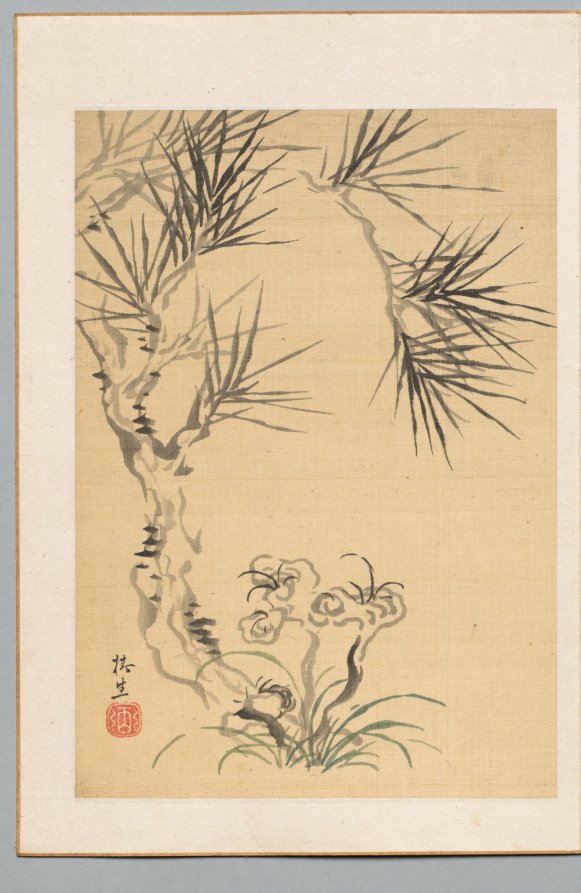
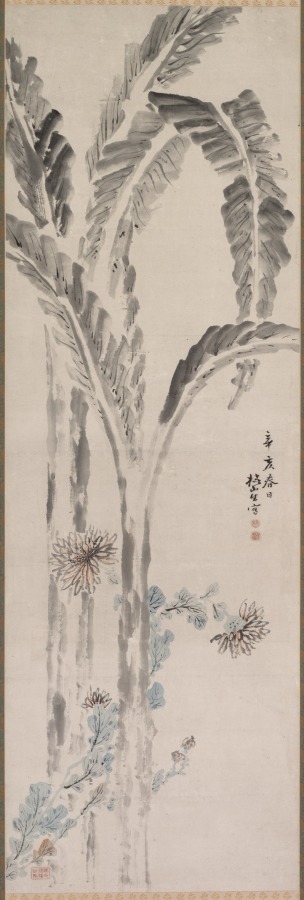
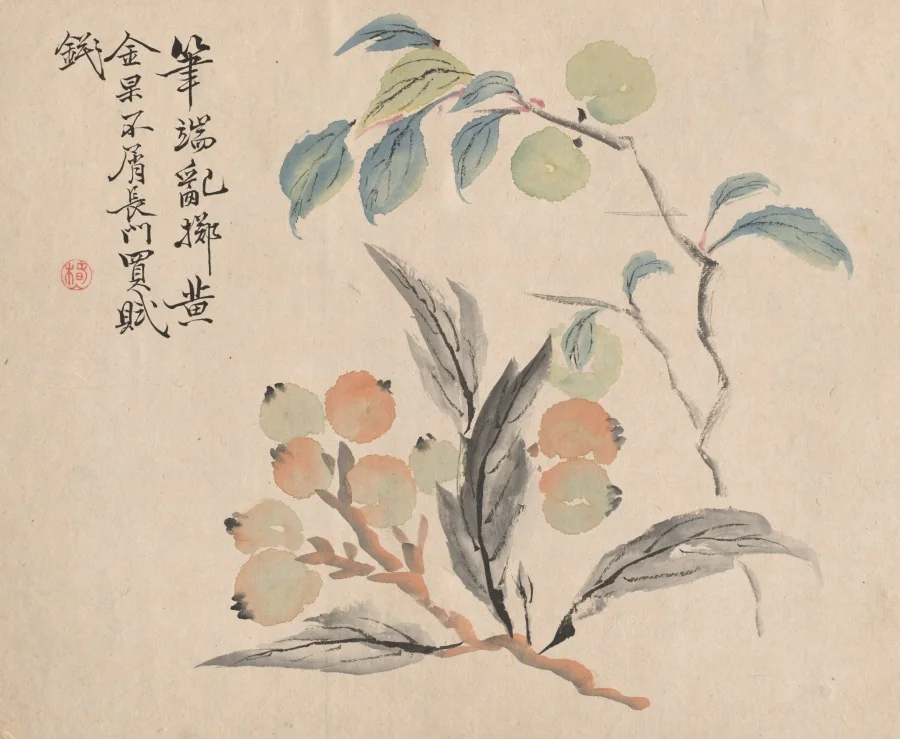
The Loquat Tree of Japan (Biwa no ki) depicts the Japanese loquat—a tree that produces small golden fruits in early summer and is prized in both Chinese and Japanese art for its association with the transition from spring to summer. Chinzan's treatment combines the Chinese brush technique of the Nanga tradition with the Japanese attention to seasonal change that distinguishes the best Japanese plant paintings. The loquat's broad, dark green leaves and clusters of small golden fruits are rendered with the precision of a botanist and the compositional elegance of a poet—each leaf and fruit placed with the care that the literati tradition demanded.
Cultural Impact
Chinzan's plant paintings were produced for the growing market of Edo-period collectors who wanted Chinese-style paintings with Japanese decorative elegance, and the Loquat Tree of Japan exemplifies this combination perfectly: the brush technique is Chinese, the seasonal sensitivity is Japanese, and the decorative elegance is Chinzan's own contribution. The loquat itself is a subject that bridges the two traditions—a Japanese tree with Chinese associations, painted by an artist who was equally fluent in both.
Why It Matters
Loquat Tree of Japan is Chinzan bridging Chinese and Japanese traditions: a Japanese tree with Chinese associations, painted with Chinese brush technique and Japanese decorative elegance. The loquat's golden fruit in broad dark leaves is both a botanical study and a seasonal poem—the literati tradition adapted to Japanese taste.