Accession Number
1985.293
Medium
watercolor on paper
Dimensions
Sheet: 28 x 34.4 cm (11 x 13 9/16 in.)
Classification
Drawing
Credit Line
The Kelvin Smith Collection, given by Mrs. Kelvin Smith
Tags
Drawing Neoclassical & Romantic (1751–1850) Watercolor Paper Japanese Color: White
Background & Context
Background Story
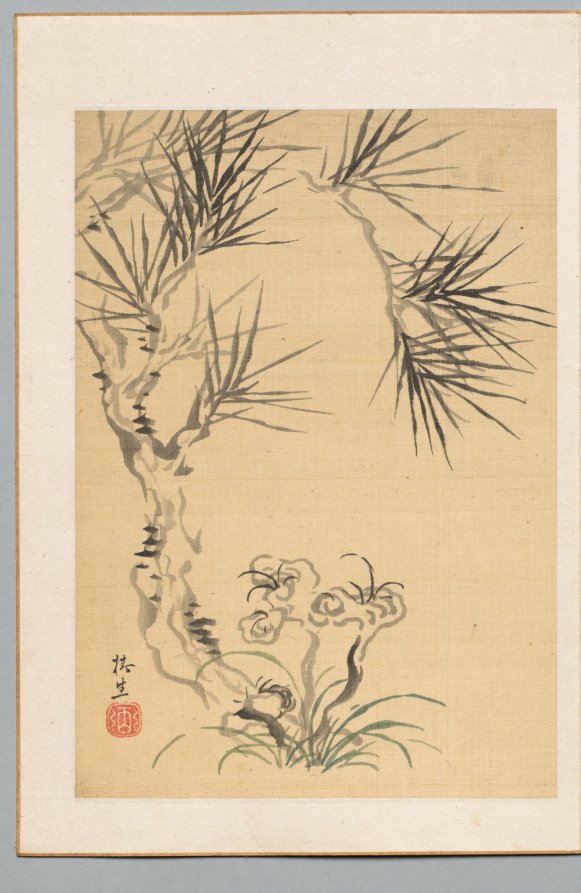
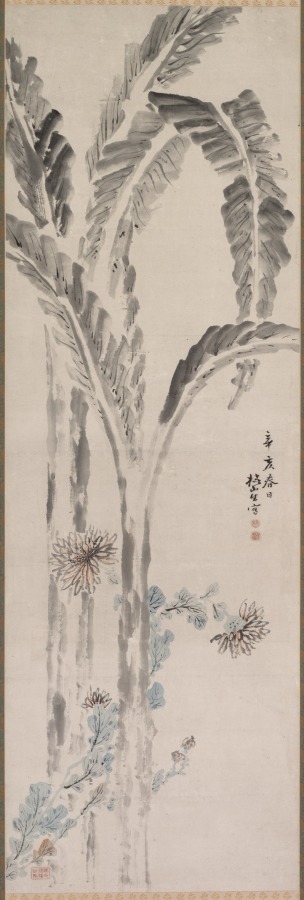
Lotus Root and Adder's Tongue is a watercolor on paper by Tsubaki Chinzan, depicting two plants that carry symbolic meaning in the Chinese and Japanese literati traditions. The lotus root (renkon) is a symbol of purity in Buddhist tradition because the lotus grows in mud but produces a pristine flower, and its root—which is eaten in Japanese cuisine—represents the connection between the impure world and the pure mind. The adder's tongue fern (hoshi-kuza) is a humble plant valued in the literati tradition for its modesty and persistence. Chinzan's watercolor treatment gives both plants the lightness and transparency that watercolor on paper allows, creating a painting that is simultaneously a botanical study and a meditation on purity and humility.
Cultural Impact
Chinzan's watercolor plant paintings represent a more intimate and domestic side of the Nanga tradition than his larger ink paintings. The watercolor medium allows a transparency and luminosity that ink on silk cannot achieve, and the domestic scale of the plants—lotus root as food, adder's tongue as a humble garden fern—reflects the literati tradition's interest in finding philosophical meaning in the smallest and most modest natural objects.
Why It Matters
Lotus Root and Adder's Tongue is Chinzan's literati philosophy in watercolor: two humble plants carrying deep symbolic meaning—a lotus root that connects purity to the mucky world, an adder's tongue that persists in modesty. The watercolor medium makes both plants luminous and transparent, and the philosophical meaning makes both plants worthy of a poet's brush.