Description
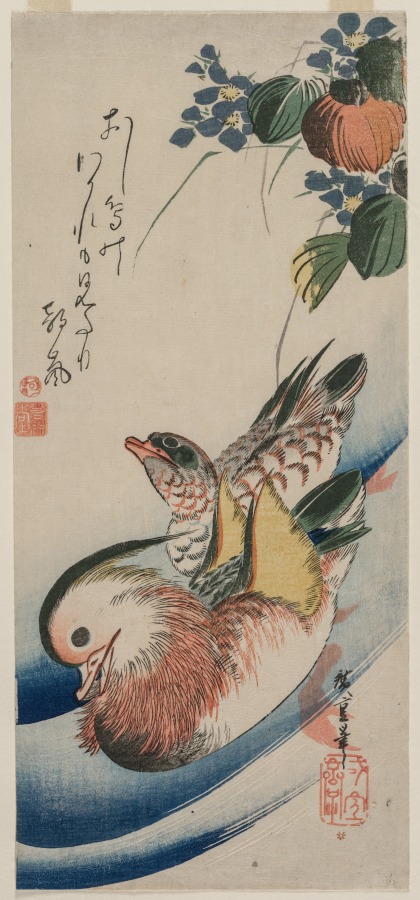
In Asian painting, ducks are usually shown in pairs because a male and female mate for life. They symbolize fidelity and tranquility. The presence of another duck is suggested here by the gesture of the bird's head. Notice the variety of brushstrokes and ink tones used to depict the duck's plumage.
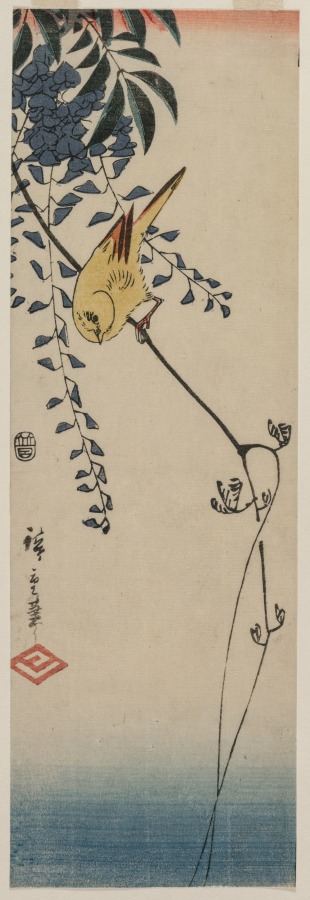
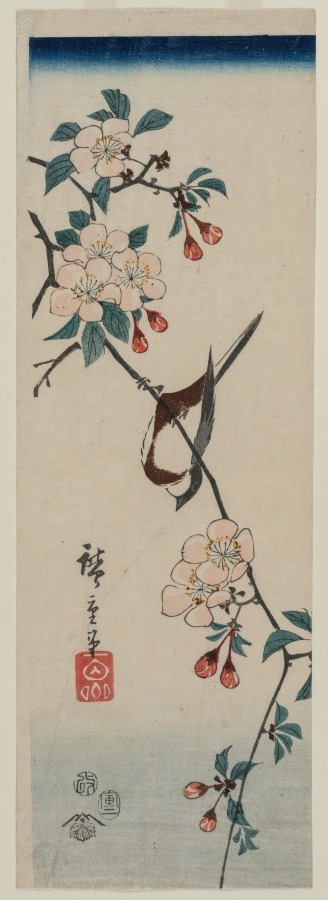
The bird and flower genre is a popular theme in the paintings and prints of the Kelvin Smith Collection. Kachoga, or bird and flower pictures, became popular among collectors in Japan during the 19th century, due in large part to Hiroshige. Although better known for his landscape prints, Hiroshige made several exceptional prints of birds, plants, and animals that reveal his keen observation of nature.
The bird and flower genre is a popular theme in the paintings and prints of the Kelvin Smith Collection. Kachoga, or bird and flower pictures, became popular among collectors in Japan during the 19th century, due in large part to Hiroshige. Although better known for his landscape prints, Hiroshige made several exceptional prints of birds, plants, and animals that reveal his keen observation of nature.
Provenance
Henri Vever [1854–1942], France (?-1942); (Sotheby & Co., London, UK, March 26, 1975, lot 362) (March 26, 1975); (R. E. Lewis, Inc., California, sold to Mr. and Mrs. Kelvin Smith) (1975-?); The Kelvin Smith Collection, Cleveland, OH, given by Mrs. Kelvin [Eleanor Armstrong] Smith [1899-1998] given to the Cleveland Museum of Art (?-1985); The Cleveland Museum of Art, Cleveland, OH (1985-)
Accession Number
1985.314
Medium
color woodblock print
Dimensions
Overall: 38.2 x 17.1 cm (15 1/16 x 6 3/4 in.)
Classification
Credit Line
The Kelvin Smith Collection, given by Mrs. Kelvin Smith