Description
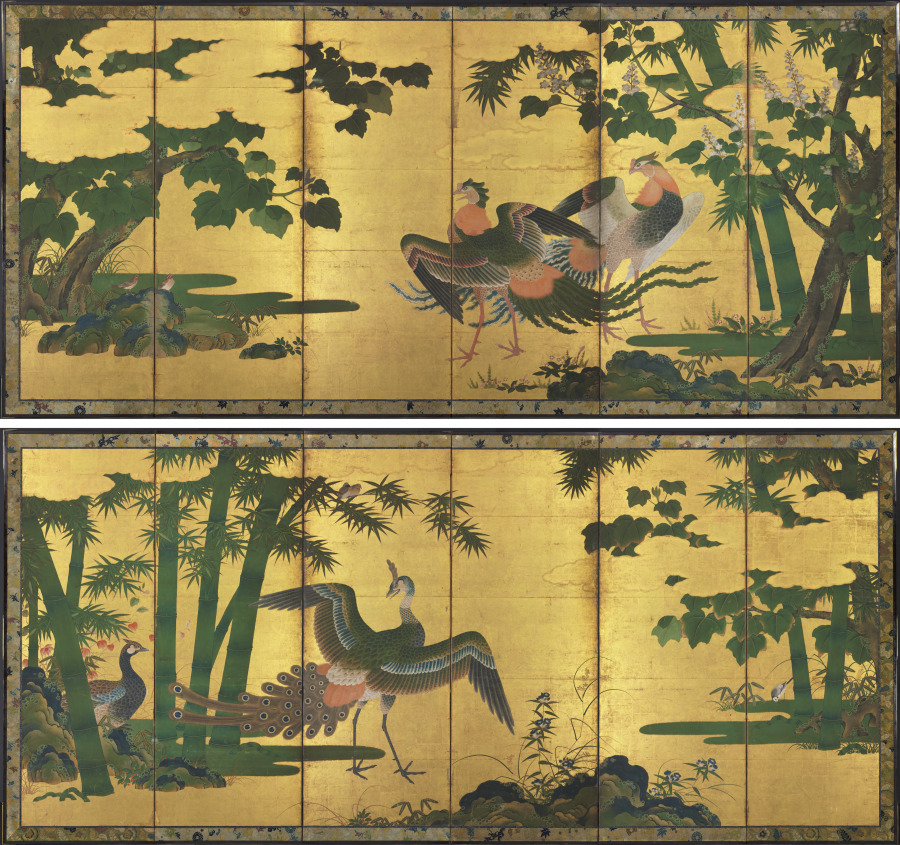
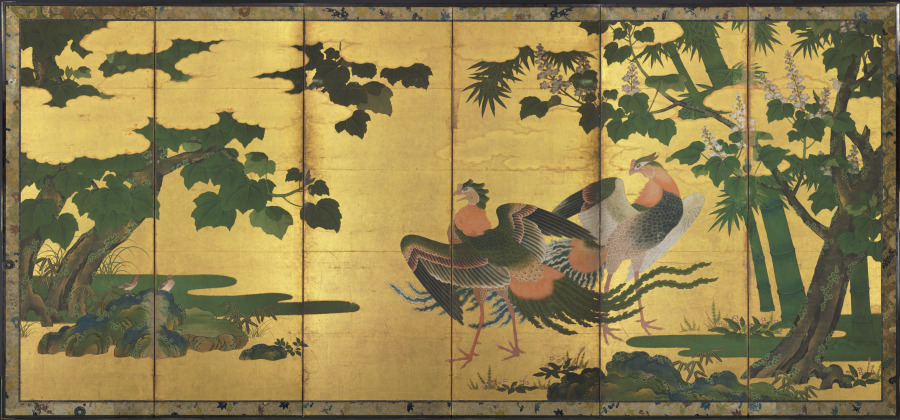
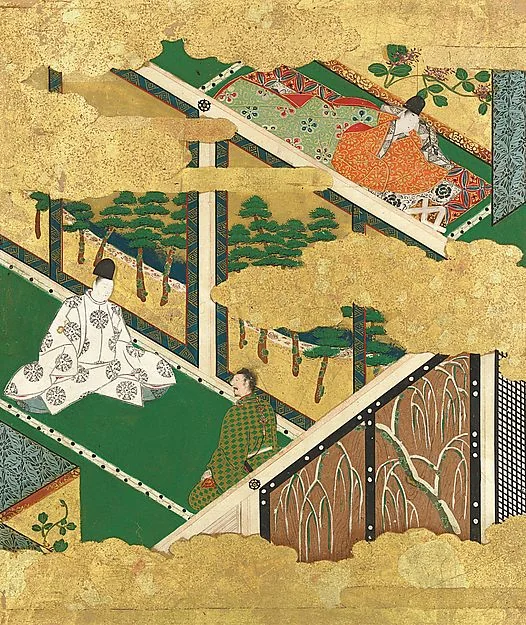
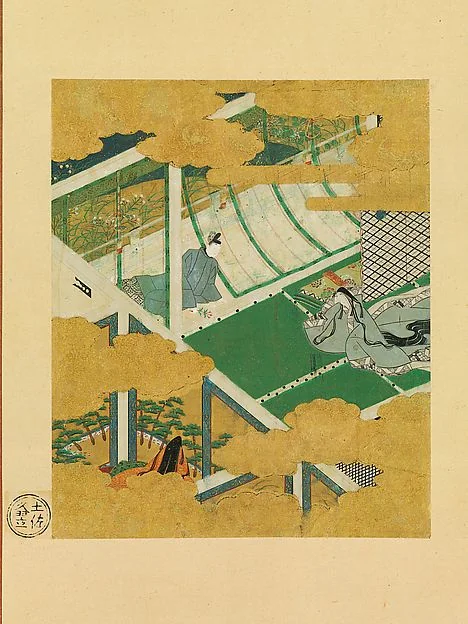
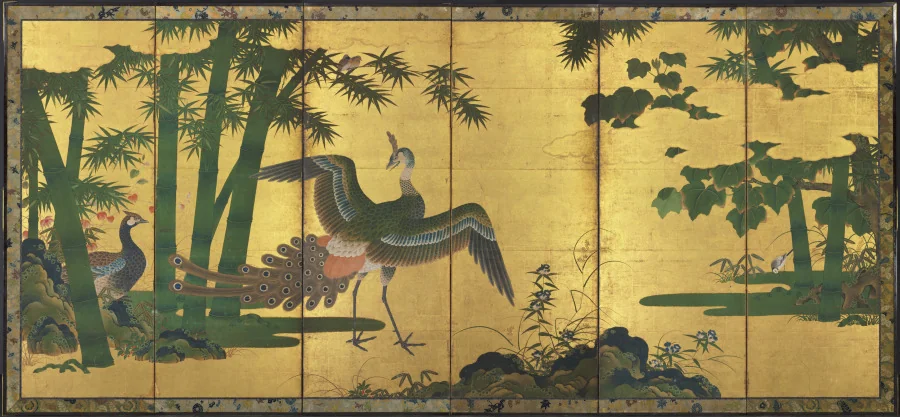
The immense heraldic birds on display in these byøbu reflect the Momoyama era's spirit of newly gained self-confidence and an affinity for grand expressive statements in painting, architecture, the textile and ceramic arts, as well as garden design. While that period preceded the arrival of prosperity, it clearly marked an extra---ordinary moment in Japanese cultural history, one frequently compared with the twelfth century of the Heian period. Through the extensive use of gold-foil backgrounds rather than the somber palette of carefully orchestrated ink tones evident in Muromachi byøbu, patrons colla-borated with artists as well as craftsmen in fostering a decidedly new look in much of Japanese painting. Here for instance there is no imaginary vista suggesting China's vast waterways and mountain ranges. The setting is composed instead of highly stylized lozenges of mineral green paint, suggesting the earth from which clumps of grass, flowering plants, and towering bamboo and paulownia trees emerge. Clusters of lumpy, blue-green rocks dotted with lichen provide stabilizing three-dimensional foils for these islands of vegetation as well as the all-encompassing flat, golden surface. The glorious artificiality of the setting precisely serves the artist's effort to compose a credible yet other-worldly vista for depicting the legendary phoenix gazing across the landscape at the pair of peacocks. Rather than an emblem of immortality, as it is in Western lore, in Japan the phoenix evolved out of its origins in Chinese mythology to become, by the sixteenth century, an auspicious symbol of political authority. Together with clusters of the distinctively shaped paulownia leaves, this long-tailed, mythical bird graced lacquerware as well as mural paintings, proclaiming an air of graceful com-mand. A characteristic infusion of temporality has been included also, through a seasonal flowering schema extending from spring to early summer (right) to fall and the advent of winter (left). Although traditionally attributed to the Tosa school master Tosa Mitsuyoshi (1539-1613), these byøbu possess neither seals nor signatures to confirm that authorship. Known for his jewel-like, modest-sized album paintings of courtly narratives such as The Tale of Genji, it is likely both studio training and contemporary fashions in patronage conspired to produce a good number of such byøbu. This example from the Momoyama era represents one such effort from a masterful Tosa painter, too little seen in Western collections.
Provenance
(Leighton R. Longhi Inc., New York, NY, sold to the Cleveland Museum of Art) (?–1986); The Cleveland Museum of Art, Cleveland, OH (1986–)
Accession Number
1986.2.2
Medium
One of a pair of six-panel screens; ink, color, and gold on gilded paper
Dimensions
Image: 160.5 x 362 cm (63 3/16 x 142 1/2 in.)
Classification
Painting
Credit Line
Leonard C. Hanna Jr. Fund
Tags
Painting Renaissance (1400–1599) Ink Panel Painting Gold Leaf Paper Japanese Color: Gold
Background & Context
Background Story
Tosa Mitsuyoshi (1539-1613) was a Japanese painter known for the elegantly composed, precisely observed paintings of birds and flowers that make him one of the most accomplished painters of the Tosa school. Peacocks and Bamboo from the late 1500s depicts peacocks and bamboo in the elegantly composed, precisely observed manner that distinguishes the Tosa school's best work from the more general painting of the period. The Tosa school was one of the most important painting schools in Japanese history, known for its elegantly composed, precisely observed paintings of Japanese subjects in the Yamato-e tradition, and Mitsuyoshi was one of the most important heads of the school.
Cultural Impact
Peacocks and Bamboo is important in the history of Japanese painting because it demonstrates the elegantly composed, precisely observed manner of the Tosa school as practiced by one of its most important heads. The Tosa school—one of the most important painting schools in Japanese history—was known for its elegantly composed, precisely observed paintings in the Yamato-e tradition, and Mitsuyoshi's late 1500s painting shows this tradition at its most elegantly composed.
Why It Matters
Peacocks and Bamboo is Tosa Mitsuyoshi's elegantly composed Yamato-e: peacocks and bamboo rendered in the precisely observed manner of one of the most accomplished painters of the Tosa school. The late 1500s painting shows the Yamato-e tradition at its most refined in one of the most important painting schools in Japanese history.