
Description
Ukiyo-e artists’ exploration of beautiful people extended to figures from other lands. Here, an elegant Chinese palace lady holding a fan stands before a banana plant. The poem at the top is written in a Japanese appropriation of Chinese called kanbun. Based on its imagery of a palanquin (an enclosed couch with poles used for carrying passengers), silk fan, and autumn winds, it may allude to the story of Lady Ban (about 48 BC–about AD 2). A Chinese beauty famous for her scholarly achievements, Ban was once consort to an emperor but later lost his favor. In a poem attributed to her, she compared herself to a used silk fan put away in autumn.
Provenance
(Eastern Fine Arts, New York, NY, sold to the Cleveland Museum of Art) (?–1988); The Cleveland Museum of Art, Cleveland, OH (1988–)
Accession Number
1988.1
Medium
Hanging scroll; ink and color on silk
Dimensions
Image: 96 x 37 cm (37 13/16 x 14 9/16 in.); Overall: 184.2 x 53.3 cm (72 1/2 x 21 in.)
Classification
Painting
Credit Line
Kelvin Smith Fund
Tags
Painting Neoclassical & Romantic (1751–1850) Ink Silk Painting Japanese Color: Gold
Background & Context
Background Story
Chinese Beauty is a hanging scroll depicting a Chinese woman in the refined style that Japanese Nanga (Bunjin-ga) painters used when painting Chinese subjects. Shunman's treatment combines the Chinese literati brush technique with the Japanese bijinga aesthetic, creating a hybrid that is simultaneously Chinese in subject and Japanese in execution. The ink and color on silk format is the most formal medium for Japanese painting, and the Chinese beauty is rendered with the refined brushwork and subtle color that distinguish Shunman's most accomplished works.
Cultural Impact
Shunman's Chinese Beauty participates in the long Japanese tradition of painting Chinese subjects in Japanese style—a tradition that goes back to the Nanga painters of the 18th century and their predecessors in the Kano school. The painting demonstrates the Japanese assimilation of Chinese visual culture: the subject is Chinese, the brush technique derives from Chinese literati painting, but the aesthetic sensibility—the refinement, the subtlety, the emphasis on elegance—is distinctly Japanese.
Why It Matters
Chinese Beauty is Shunman painting China through Japanese eyes: a Chinese woman rendered with literati brush technique and bijinga elegance, creating a hybrid that is Chinese in subject and Japanese in execution. The ink and color on silk format gives the Chinese subject the formal treatment that Japanese painting reserved for its most accomplished works.
Related Artworks
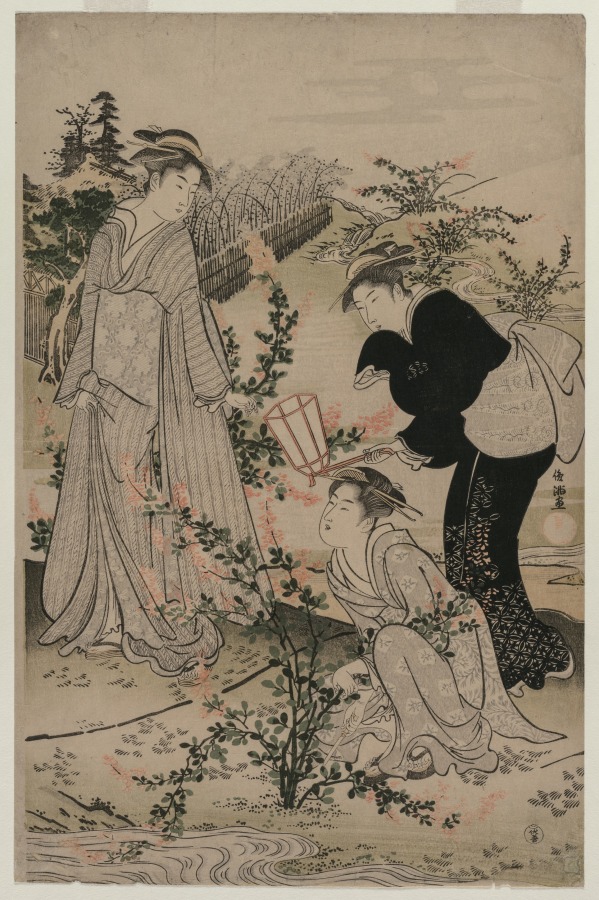
Women Cutting Branches of Bush Clover; The Noji Tama River in Omi Province, from an untitled series of the Six Tama Rivers
Kubo Shunman
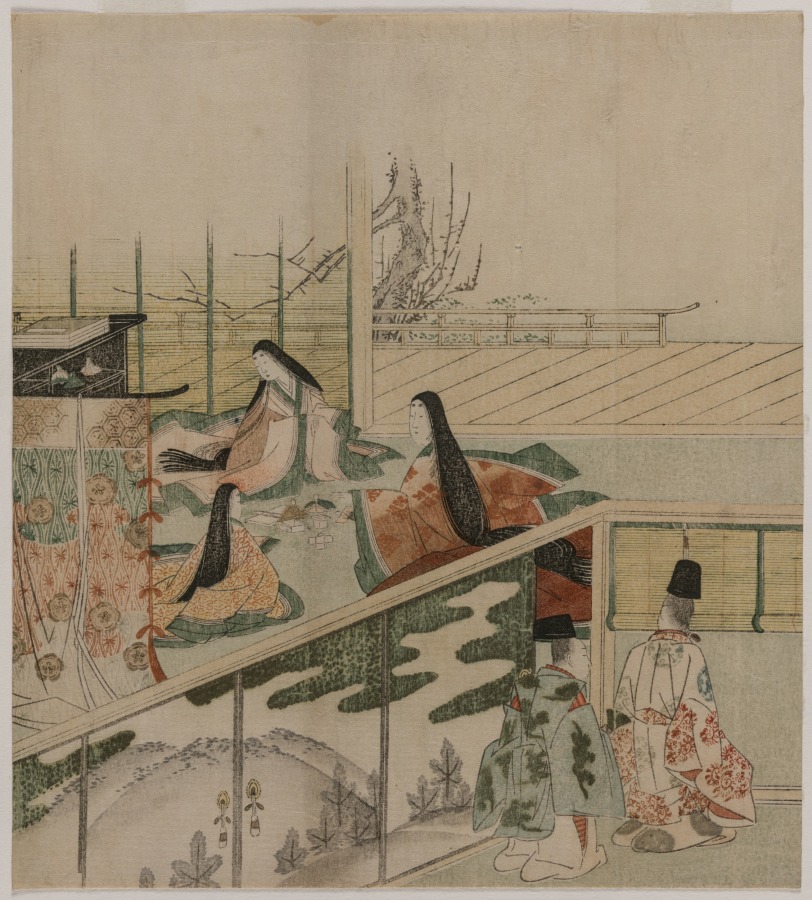
Court Ladies Making Dolls
Kubo Shunman
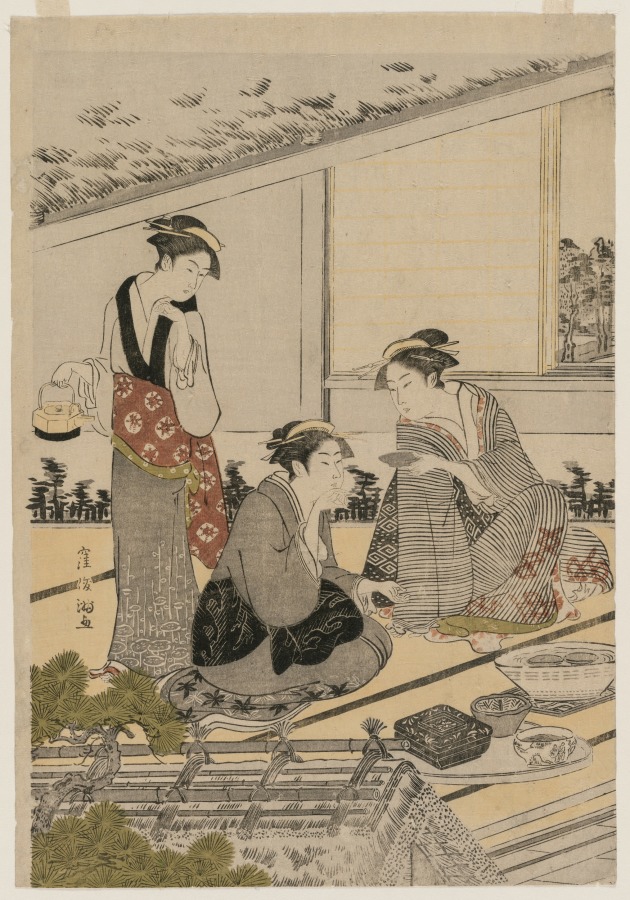
Women in a Tea House
Kubo Shunman
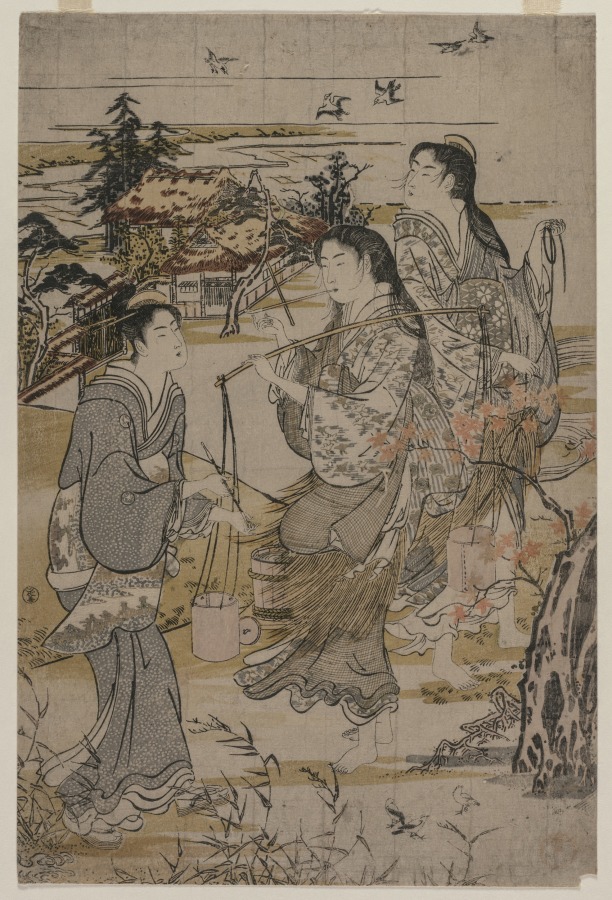
Women with Salt Pails; The Noda Tama River in Mutsu Province, from an untitled series of the Six Tama Rivers
Kubo Shunman