Provenance
Raja of Bilaspur Collection; (B. R. Sharma, New Delhi, India, sold to Severance and Greta Millikin) (?-1966); Severance A. [1895-1985] and Greta Millikin [1903-1989], Cleveland, OH, given to the Cleveland Museum of Art (1966-1989); The Cleveland Museum of Art, Cleveland, OH (1989-)
Accession Number
1989.338
Medium
Gum tempera, ink, and gold on paper
Dimensions
Image: 12.7 x 20.5 cm (5 x 8 1/16 in.); with borders: 14.5 x 21.9 cm (5 11/16 x 8 5/8 in.)
Classification
Painting
Credit Line
Bequest of Mrs. Severance A. Millikin
Tags
Painting Neoclassical & Romantic (1751–1850) Ink Tempera Gold Leaf Paper Color: Gold
Background & Context
Background Story
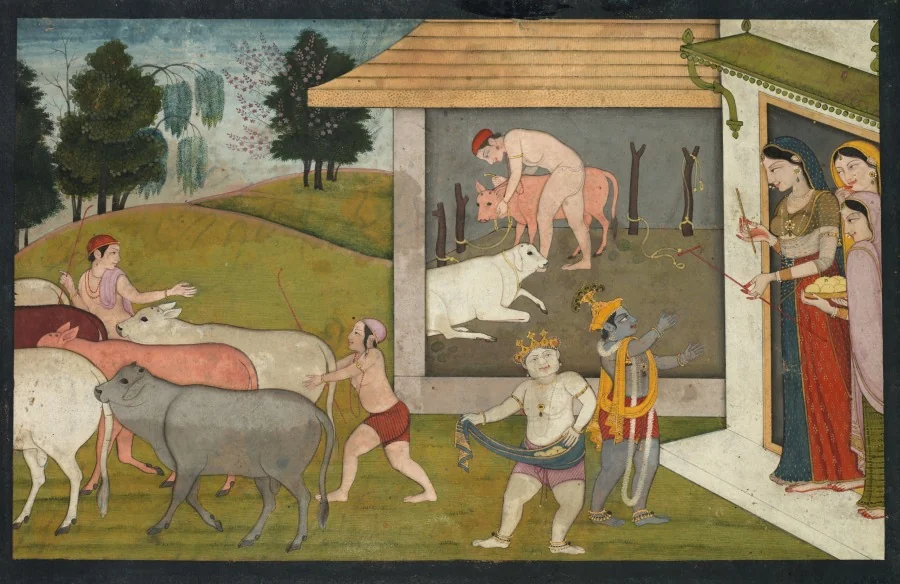
Krishna and Balarama Taking the Cattle Out to Graze from a Bhagavata Purana, created c. 1780-90, depicts Krishna and his brother Balarama taking the cattle out to graze in the richly colored, narrative manner of the Pahari miniature painting tradition. The Bhagavata Purana is one of the most important texts in Hinduism, narrating the life and deeds of Krishna, and illustrations of its stories represent one of the most accomplished traditions in Indian miniature painting. The scene of Krishna and Balarama taking the cattle to graze is one of the most beloved episodes from the Bhagavata Purana, representing the divine cowherd's pastoral life.
Cultural Impact
Krishna and Balarama Taking the Cattle Out to Graze is important in the history of Indian painting because it depicts one of the most beloved episodes from the Bhagavata Purana in the richly colored, narrative manner of the Pahari miniature tradition. The Bhagavata Purana—one of the most important texts in Hinduism—has inspired some of the most accomplished works in Indian miniature painting, and the c. 1780-90 illustration shows this tradition at its most richly colored.
Why It Matters
Krishna and Balarama Taking the Cattle Out to Graze is an anonymous Pahari miniature: the divine cowherds depicted in the richly colored narrative manner of the Indian miniature painting tradition. The c. 1780-90 illustration shows one of the most beloved episodes from the Bhagavata Purana at its most richly colored.