Description
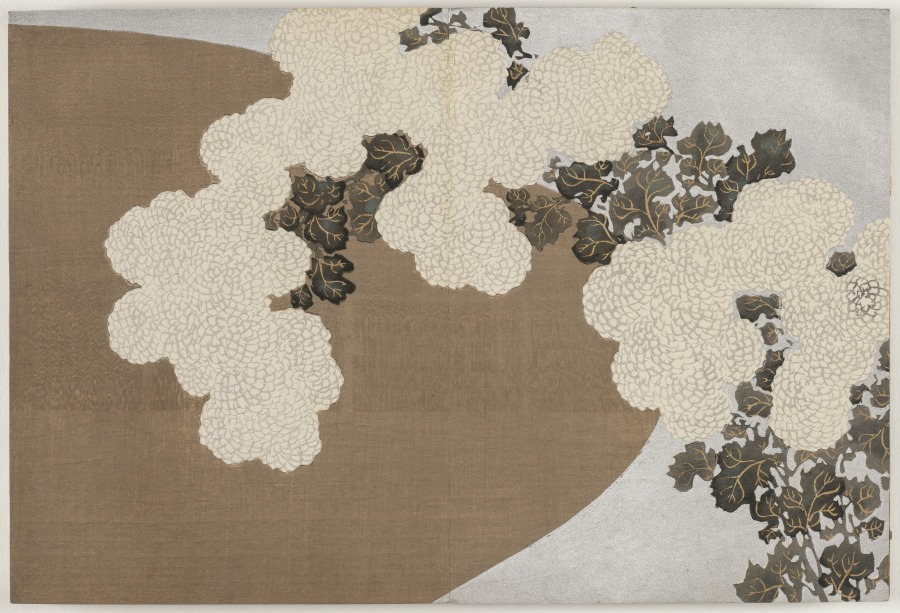
Kamisaka Sekka made preparatory drawings for his Flowers of a Hundred Worlds series on tracing paper with ink and color. The freehand sketches are much looser than the finished, printed compositions.
Provenance
(Yanagi Fine Art Shop, Kyoto, Japan, sold to the Cleveland Museum of Art) (?–1989); The Cleveland Museum of Art, Cleveland, OH (1989–)
Accession Number
1989.85.13
Medium
ink and color on paper
Dimensions
N/A
Classification
Drawing
Credit Line
John L. Severance Fund
Tags
Drawing Early Modern (1901–1950) Ink Paper Japanese Color: Orange Color: Brown
Background & Context
Background Story
The Flower Boat (Hanabune) plate from Momoyogusa depicts a poetic and festive subject from Japanese cultural life. Hanabune—flower boats used in riverside celebrations, particularly during cherry blossom season—represent the intersection of nature appreciation, social gathering, and artistic spectacle that characterized Japanese urban culture from the Edo period. These boats, often decorated with lanterns and flowers, carried parties of celebrants along rivers lined with cherry trees, combining the appreciation of blossoms, moonlight, and flowing water into a single aesthetic experience. Sekka transforms this scene into a decorative composition that foregrounds pattern over narrative. The boat itself becomes a design element, its form integrated into the flowing rhythms of the composition. Published in 1909, the print reflects an era when such traditional customs were being documented precisely because they seemed endangered by modernization. The Meiji period transformed Japanese cities; riverbanks once lined with cherry trees were being paved and industrialized. Sekka's flower boat thus operates as both celebration and preservation of a vanishing way of life. At the same time, the work's bold graphic approach ensures it reads not as nostalgia but as vital contemporary design.
Cultural Impact
The hanabune tradition influenced how Japanese festivals and seasonal celebrations were visualized in art and later in photography and film. Through works like Momoyogusa, the aesthetic of river-based seasonal celebration became internationally recognized as quintessentially Japanese. The series influenced tourism imagery, festival design, and even the way Japanese cities began to market their seasonal attractions in the 20th century.
Why It Matters
The Flower Boat plate matters because it demonstrates how decorative art can document cultural practices without becoming merely illustrative. Sekka transforms a specific social custom into universal design, showing that cultural memory need not be preserved in amber but can be rendered in forms that remain visually compelling across centuries.