Description
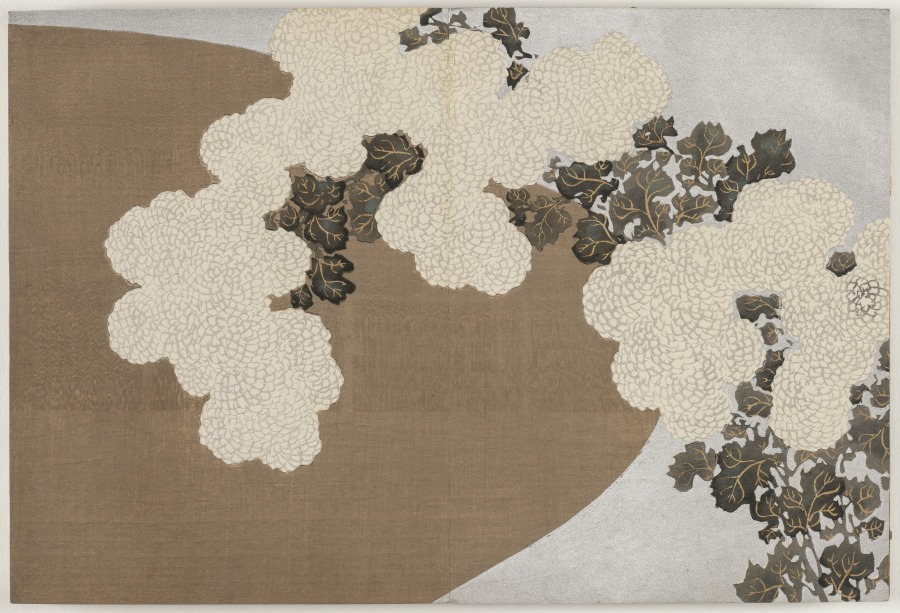
Kamisaka Sekka made preparatory drawings for his Flowers of a Hundred Worlds series on tracing paper with ink and color. The freehand sketches are much looser than the finished, printed compositions.
Provenance
(Yanagi Fine Art Shop, Kyoto, Japan, sold to the Cleveland Museum of Art) (?–1989); The Cleveland Museum of Art, Cleveland, OH (1989–)
Accession Number
1989.85.14
Medium
ink and color on paper
Dimensions
N/A
Classification
Drawing
Credit Line
John L. Severance Fund
Tags
Drawing Early Modern (1901–1950) Ink Paper Japanese Color: Yellow
Background & Context
Background Story
Idleness (Tsurezure) from Momoyogusa draws directly from one of the foundational texts of Japanese aesthetic philosophy: Yoshida Kenkō's Tsurezuregusa (Essays in Idleness), written around 1330. Kenkō's collection of musings on the beauty of impermanence, the value of aimless contemplation, and the superiority of incompletion over perfection became a cornerstone of Japanese aesthetic thought. The concept of tsurezure—idle, listless, unoccupied time—was not mere laziness but a cultivated state of receptivity and aesthetic awareness. By 1909, when Sekka published this plate, the Meiji era's industrial time discipline and Western work ethic made idleness increasingly suspect. Yet Kenkō's philosophy persisted precisely because it offered an alternative to the relentless productivity that modernization demanded. Sekka interprets tsurezure through Rinpa visual language: empty space, subtle motifs, restrained color palette—visual equivalents of the philosophical emphasis on understatement and the beauty of what is absent. The composition likely uses negative space as actively as positive forms, embodying the principle that emptiness itself carries meaning.
Cultural Impact
The concept of tsurezure has traveled far beyond Japanese art to influence global contemplative traditions, mindfulness practices, and design philosophies that value negative space. Modern minimalist design, from architecture to digital interfaces, draws indirectly on the same aesthetic principles that Kenkō articulated and Sekka visualized. The Momoyogusa series helped transmit these ideas to a Western audience already primed by Japonisme to appreciate Japanese aesthetic restraint.
Why It Matters
Idleness matters because it visualizes a philosophical concept central to Japanese culture that has no exact Western equivalent. In an age of constant productivity and digital distraction, Kenkō's insight—that the most meaningful experiences arise in unstructured time—feels more relevant than ever. Sekka's plate reminds viewers that emptiness and idleness are not deficits but resources for aesthetic and spiritual awareness.