Description
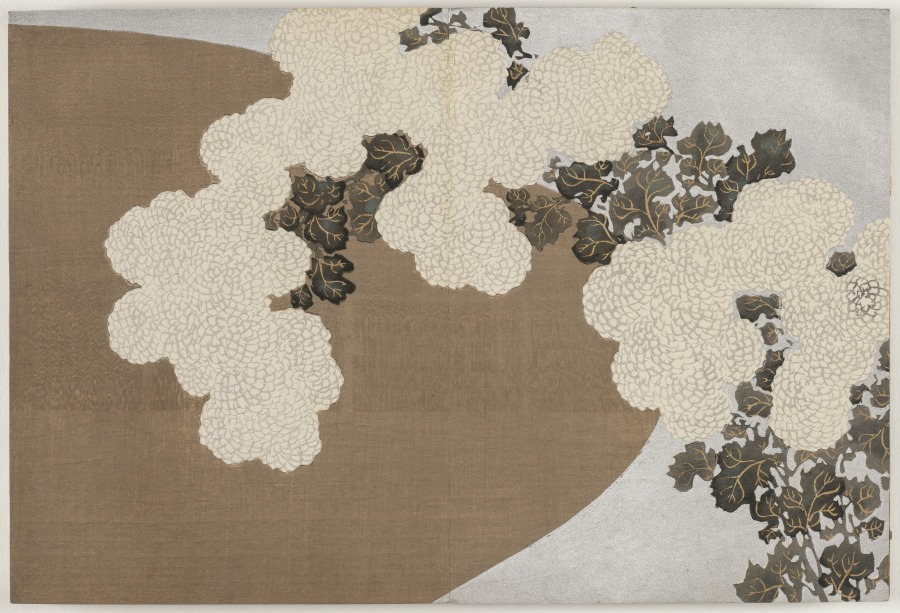
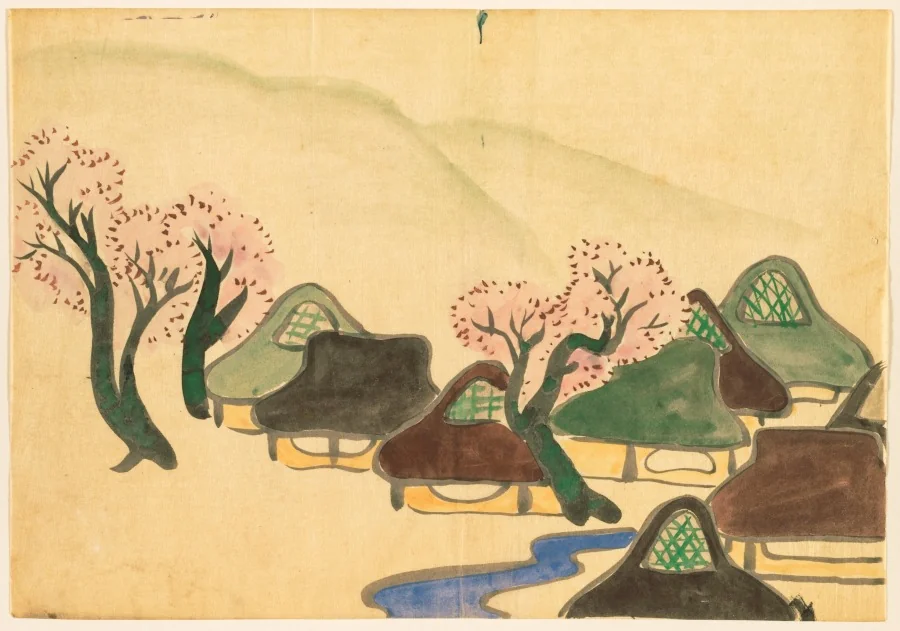
Kamisaka Sekka made preparatory drawings for his Flowers of a Hundred Worlds series on tracing paper with ink and color. The freehand sketches are much looser than the finished, printed compositions.
Provenance
(Yanagi Fine Art Shop, Kyoto, Japan, sold to the Cleveland Museum of Art) (?–1989); The Cleveland Museum of Art, Cleveland, OH (1989–)
Accession Number
1989.85.18
Medium
ink and color on paper
Dimensions
N/A
Classification
Drawing
Credit Line
John L. Severance Fund
Tags
Drawing Early Modern (1901–1950) Ink Paper Japanese Color: Orange
Background & Context
Background Story
Farming Village in Spring (Harudenka) from the Momoyogusa series depicts the vitality of rural Japanese life during the season of renewal. Unlike idealized landscape traditions that emptied the countryside of human presence, this subject embraces the people, architecture, and daily rhythms of an agricultural community. The Japanese term harudenka evokes both place and feeling—the farming village as experienced during spring's awakening. Sekka's approach transforms this scene through Rinpa decorative principles: houses, fields, farmers, and seasonal indicators become pattern elements in a flattened compositional space. The result feels simultaneously like a landscape and a textile design. Published in 1909, this plate emerged as Japan's countryside was being transformed by Meiji modernization. Land reform, new agricultural technologies, and migration to cities were reshaping rural communities. The farming village that Sekka depicts was already becoming a subject of nostalgia for urban audiences who remembered—or imagined—its rhythms. Yet Sekka's modern design sensibility prevents the image from becoming mere pastoral sentimentality. Instead, it presents rural life as a source of visual and cultural richness that deserves serious artistic attention.
Cultural Impact
The depiction of rural Japanese life in art influenced national cultural identity throughout the 20th century. Images like Sekka's farming village contributed to the ideology of furusato (hometown) that shaped Japanese domestic tourism, regional revitalization efforts, and even political rhetoric. The Momoyogusa series, by treating rural subjects with the same aesthetic sophistication as urban and courtly themes, elevated agricultural life to the status of high art.
Why It Matters
This work demonstrates that everyday rural life can be a subject worthy of sophisticated artistic treatment. It refuses the hierarchy that places courtly or urban subjects above agricultural ones, treating the farming village as a complete visual world with its own aesthetic logic. For contemporary artists, it offers a model for engaging with rural communities without condescension or romanticization.