Description
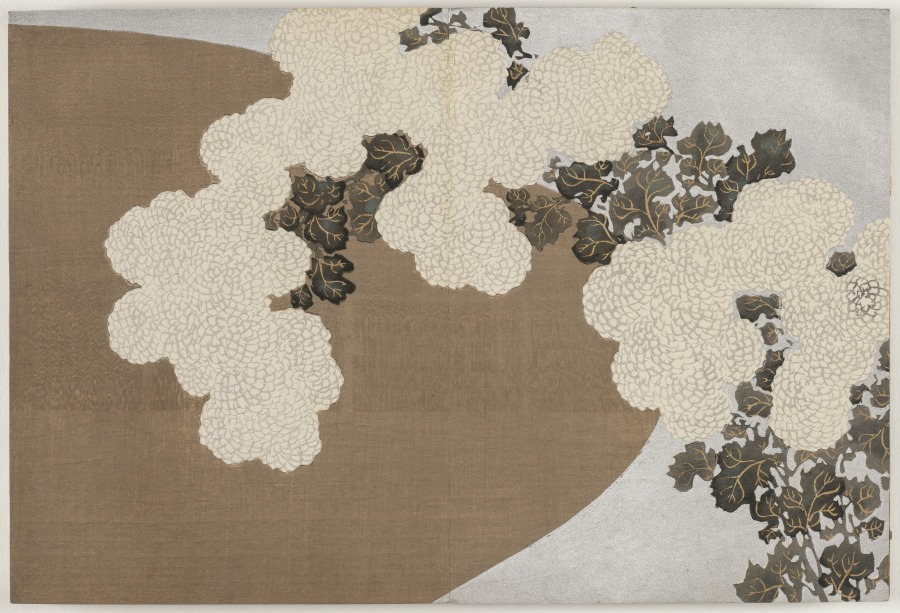
Kamisaka Sekka made preparatory drawings for his Flowers of a Hundred Worlds series on tracing paper with ink and color. The freehand sketches are much looser than the finished, printed compositions.
Provenance
(Yanagi Fine Art Shop, Kyoto, Japan, sold to the Cleveland Museum of Art) (?–1989); The Cleveland Museum of Art, Cleveland, OH (1989–)
Accession Number
1989.85.2
Medium
ink and color on paper
Dimensions
N/A
Classification
Drawing
Credit Line
John L. Severance Fund
Tags
Drawing Early Modern (1901–1950) Ink Paper Japanese Color: Green
Background & Context
Background Story
Flower-draped Carts from the Momoyogusa series depicts the magnificent festival carts (hikiyama) adorned with elaborate floral arrangements that are central to Japanese festival traditions, particularly the Takayama Festival and Gion Festival. These wheeled floats, decorated with intricate tapestries, lanterns, and fresh flowers, represent communal celebration at its most visually spectacular. The flower-draped cart combines engineering, carpentry, textile art, and floral design into a single moving artwork. Sekka renders this subject through the Rinpa lens, flattening the three-dimensional cart into a decorative pattern while preserving its ceremonial grandeur. The composition likely emphasizes the cart's ornamentation over its structure, treating flower and vehicle as a unified visual texture. Published in 1909, this plate captures a tradition that Meiji-era modernization threatened: festival culture was being reshaped as urban spaces changed and community structures evolved. Yet these festivals persisted, adapting to new conditions while maintaining their essential character, much as Sekka's art adapted tradition to modernity.
Cultural Impact
Japanese festival cart imagery influenced how Japanese cultural celebration was represented internationally. Through works like Momoyogusa, Western audiences encountered the spectacular visual culture of Japanese matsuri (festivals), contributing to the global image of Japan as a society that integrates art into communal life. Festival cart design, documented and elevated by artists like Sekka, influenced float designers, parade organizers, and event designers worldwide.
Why It Matters
Flower-draped Carts demonstrates how communal celebration can be translated into fine art without losing its festive energy. The work treats a popular cultural tradition with the same aesthetic seriousness reserved for courtly or religious subjects, refusing the hierarchy that separates fine art from folk tradition. For festival organizers and artists, it provides a model for documenting living traditions in forms that serve both preservation and innovation.