Description
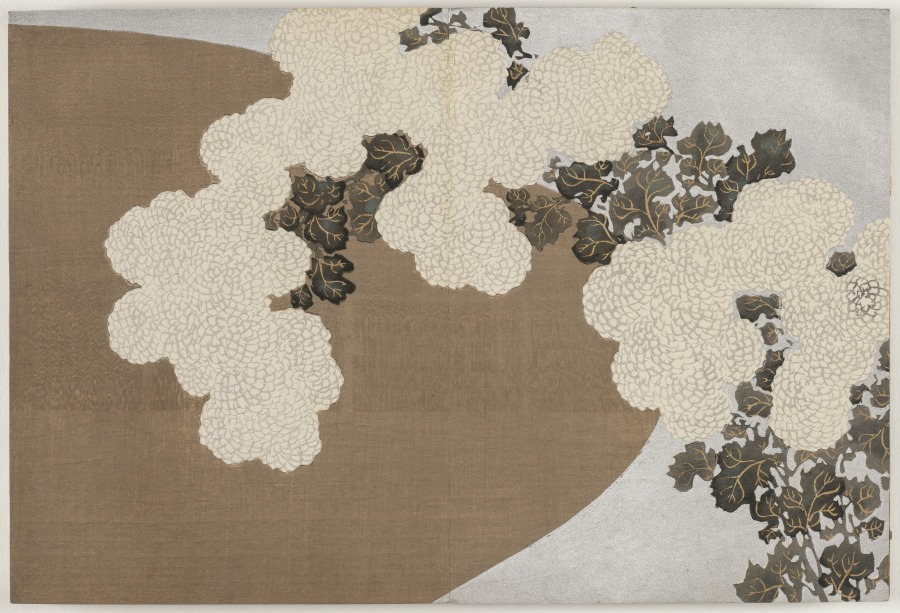
Kamisaka Sekka made preparatory drawings for his Flowers of a Hundred Worlds series on tracing paper with ink and color. The freehand sketches are much looser than the finished, printed compositions.
Provenance
(Yanagi Fine Art Shop, Kyoto, Japan, sold to the Cleveland Museum of Art) (?–1989); The Cleveland Museum of Art, Cleveland, OH (1989–)
Accession Number
1989.85.20
Medium
ink and color on paper
Dimensions
N/A
Classification
Drawing
Credit Line
John L. Severance Fund
Tags
Drawing Early Modern (1901–1950) Ink Paper Japanese Color: Orange Color: Yellow
Background & Context
Background Story
Chrysanthemum Boy (Kikujidō) from Momoyogusa illustrates one of the most beloved legends in East Asian folklore. The story of Kikujidō tells of a Chinese court attendant who was exiled to a remote island, where he survived by drinking dew from chrysanthemum flowers and eventually achieved immortality. This tale traveled from China to Japan, where it became a popular subject in Noh theater, picture scrolls, and decorative arts. The chrysanthemum, already associated with the imperial family, gained additional symbolic resonance through this legend: it became not just a sign of aristocratic authority but a source of supernatural power and eternal life. Sekka's interpretation uses Rinpa decorative principles to render the immortal boy as a design element rather than a narrative character. The chrysanthemum motifs that surround the figure function as both botanical decoration and symbolic attribute. Published in 1909, the plate reflects Meiji Japan's complex relationship with Chinese cultural heritage—simultaneously the source of Japan's literary traditions and a rival civilization. By depicting a Sino-Japanese legend through unmistakably Japanese Rinpa aesthetics, Sekka implicitly claims the shared tradition for Japanese art.
Cultural Impact
The Kikujidō legend influenced decorative arts across East Asia, appearing on ceramics, textiles, and lacquerware for centuries. In Japan, it became the basis for Noh and kabuki plays that remain in the repertory. Sekka's Momoyogusa plate influenced how the legend was visualized in modern Japanese design education and children's book illustration. The international reception of such images also shaped how Western collectors understood the connections between Chinese and Japanese literary traditions.
Why It Matters
Chrysanthemum Boy matters because it demonstrates how visual art can condense complex cross-cultural narratives into compelling images. The legend's journey from China to Japan, from oral tradition to Noh theater to woodblock print, exemplifies how stories migrate and transform across cultures. Sekka's plate captures a specific moment in this tradition's evolution—the moment when woodblock art claimed the legend for modern Japanese design.