Description
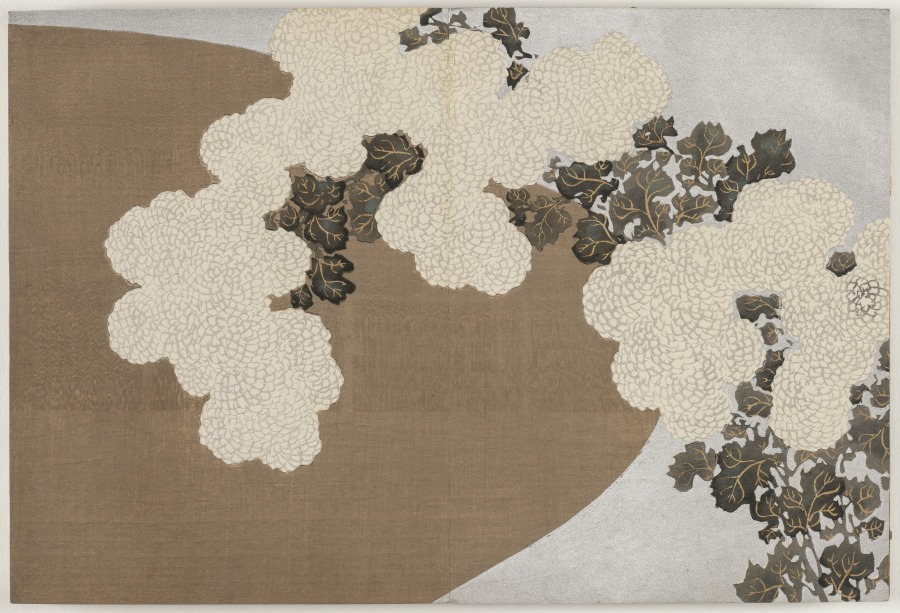
Kamisaka Sekka made preparatory drawings for his Flowers of a Hundred Worlds series on tracing paper with ink and color. The freehand sketches are much looser than the finished, printed compositions.
Provenance
(Yanagi Fine Art Shop, Kyoto, Japan, sold to the Cleveland Museum of Art) (?–1989); The Cleveland Museum of Art, Cleveland, OH (1989–)
Accession Number
1989.85.21
Medium
ink and color on paper
Dimensions
N/A
Classification
Drawing
Credit Line
John L. Severance Fund
Tags
Drawing Early Modern (1901–1950) Ink Paper Japanese Color: Yellow Color: White
Background & Context
Background Story
Court Guard (Eishi) from the Momoyogusa series depicts a figure from Japan's imperial court tradition. The term eishi refers to a court guard or military attendant in the imperial retinue, a position that carried both practical and ceremonial significance. These guards, often drawn from aristocratic families, served as living symbols of imperial authority and military tradition. Their distinctive dress—elaborate armor components beneath court robes, specific headgear, and prescribed weapons—made them instantly recognizable figures in Japanese visual culture from the Heian period onward. Sekka transforms this figure into a decorative composition, emphasizing the court guard's costume elements as pattern motifs rather than realistic details. The guard's formal posture and ceremonial equipment become elements in a visual rhythm that extends across the entire composition. Published in 1909, the plate appeared when imperial court culture was being deliberately promoted by the Meiji state as part of its nation-building project. The court guard symbolized continuity between ancient imperial tradition and the modern emperor system that Meiji leaders were constructing.
Cultural Impact
The court guard as a visual subject influenced how Japanese imperial institutions were represented in official art, ceremony, and public imagery throughout the 20th century. By including this subject in Momoyogusa, Sekka connected the commercial art market to official cultural narratives, demonstrating that design and state symbolism could reinforce each other. The series influenced how imperial symbols were incorporated into Japanese commercial design and tourism imagery.
Why It Matters
Court Guard matters because it shows how artists can engage with symbols of institutional authority without either mere celebration or mere critique. Sekka treats the court guard as a source of visual richness, extracting design elements from ceremonial dress and posture without instrumentalizing them for political purposes. The work demonstrates that even the most formal cultural symbols contain aesthetic possibilities that exceed their official meanings.