Description
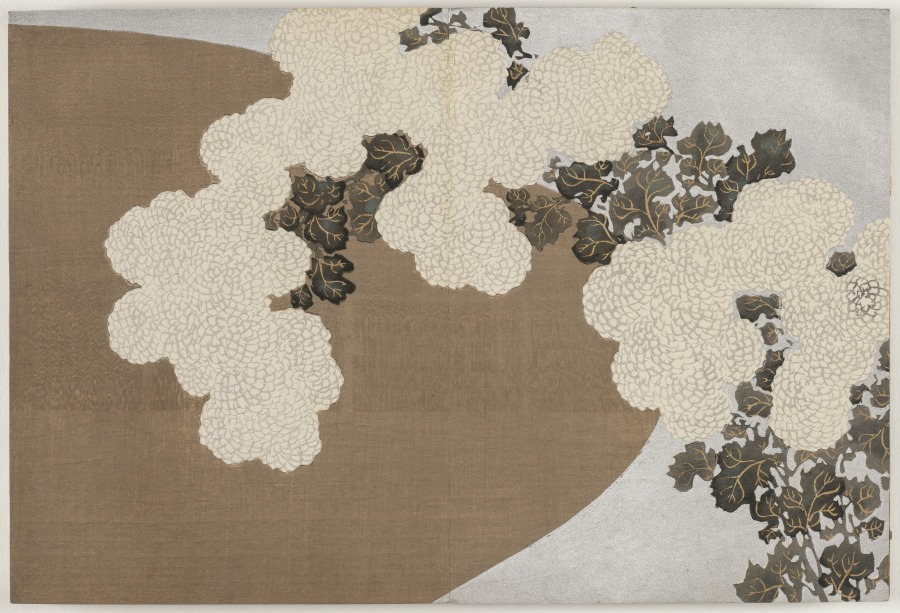
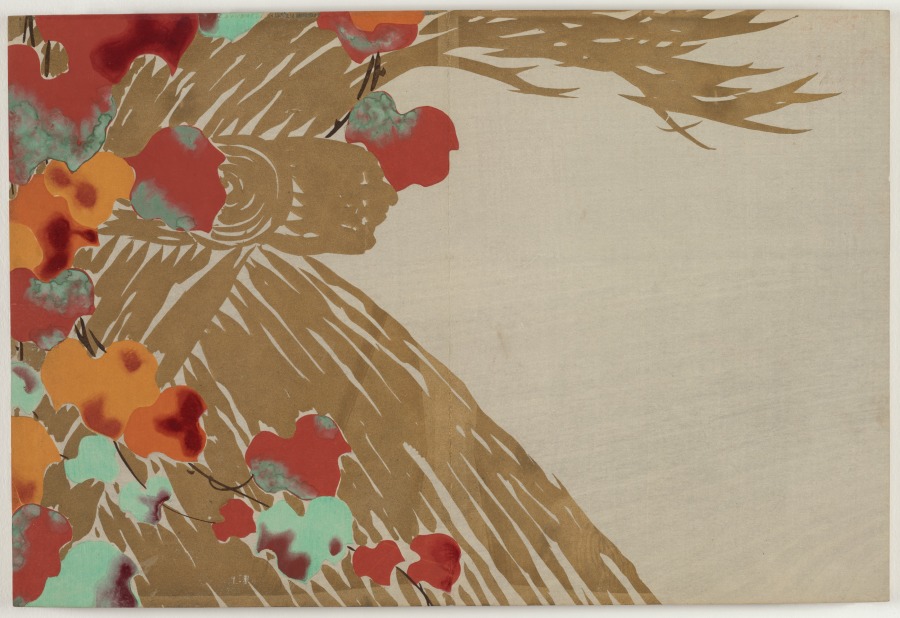
Kamisaka Sekka made preparatory drawings for his Flowers of a Hundred Worlds series on tracing paper with ink and color. The freehand sketches are much looser than the finished, printed compositions.
Provenance
(Yanagi Fine Art Shop, Kyoto, Japan, sold to the Cleveland Museum of Art) (?–1989); The Cleveland Museum of Art, Cleveland, OH (1989–)
Accession Number
1989.85.4
Medium
ink and color on paper
Dimensions
N/A
Classification
Drawing
Credit Line
John L. Severance Fund
Tags
Drawing Early Modern (1901–1950) Ink Paper Japanese Color: Yellow
Background & Context
Background Story
Dancing (Odori) from the Momoyogusa series captures a figure in the act of dance—specifically odori, the Japanese term for dance that emphasizes rhythmic stepping and stamping movements rather than the flowing arm movements associated with mai (another Japanese dance tradition). This distinction matters: odori developed primarily in the context of Edo-period popular entertainment, particularly kabuki and folk festival dance (bon odori), while mai was associated with court and shrine traditions. By choosing odori rather than mai, Sekka engages with popular, energetic, body-centered dance forms rather than elite ceremonial ones. The dancer's pose, likely rendered in the dynamic mid-movement stance characteristic of Rinpa figure painting, captures the precise moment when movement becomes visual pattern. The rhythmic repetition of the dance step translates naturally into the rhythmic repetition of decorative motifs—a connection Sekka exploits. Published in 1909, this plate documents dance traditions that were being transformed by Western influence. Ballroom dancing and Western theatrical dance were gaining popularity, making traditional odori seem increasingly old-fashioned to urban audiences.
Cultural Impact
The odori tradition influenced Japanese performing arts throughout the 20th century, from the development of modern butoh dance (which deliberately inverted odori conventions) to the persistence of bon odori summer dance festivals across Japan and in Japanese diaspora communities worldwide. Sekka's depiction influenced how traditional Japanese dance was visualized in tourism promotion and cultural education materials. The international circulation of Momoyogusa helped establish the image of the Japanese dancer as a significant visual type in world art.
Why It Matters
Dancing matters because it demonstrates how movement can be captured in static visual form without being frozen. Sekka's dancer suggests continuation—the movement extends beyond the frame—making the image feel alive despite its decorative stillness. This principle, that visual art should imply rather than depict movement, connects Rinpa aesthetics to modern animation and motion design, making Sekka's work surprisingly relevant to digital media artists.