Provenance
Charlotte Van der Veer, Cleveland, OH, bequest to the Cleveland Museum of Art (?–1990); The Cleveland Museum of Art, Cleveland, OH (1990–)
Accession Number
1990.129
Medium
hanging scroll; ink and light color on silk
Dimensions
Painting only: 34.2 x 45.2 cm (13 7/16 x 17 13/16 in.); Including mounting: 115.5 x 62.1 cm (45 1/2 x 24 7/16 in.)
Classification
Painting
Credit Line
Bequest of Charlotte van der Veer
Tags
Painting Neoclassical & Romantic (1751–1850) Ink Silk Painting Japanese Color: Brown Color: White
Background & Context
Background Story
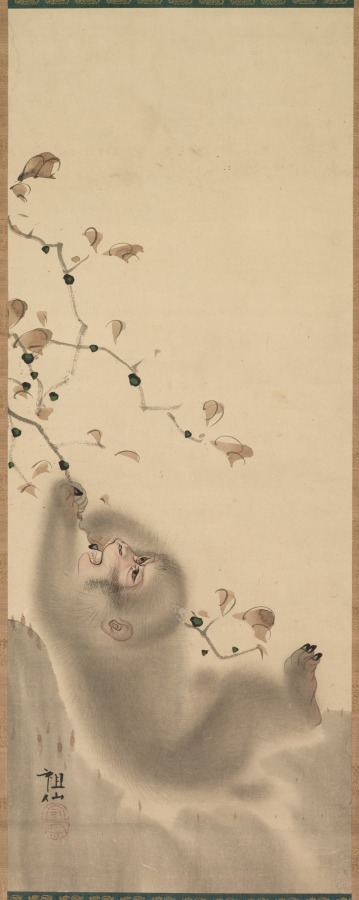
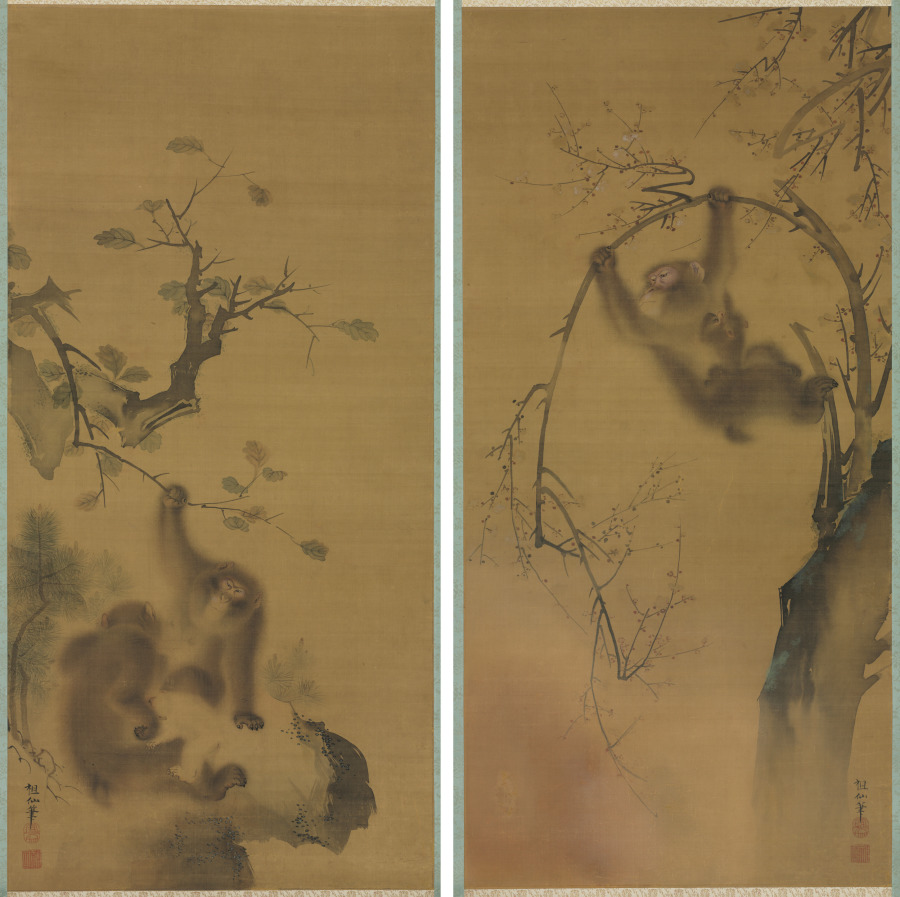
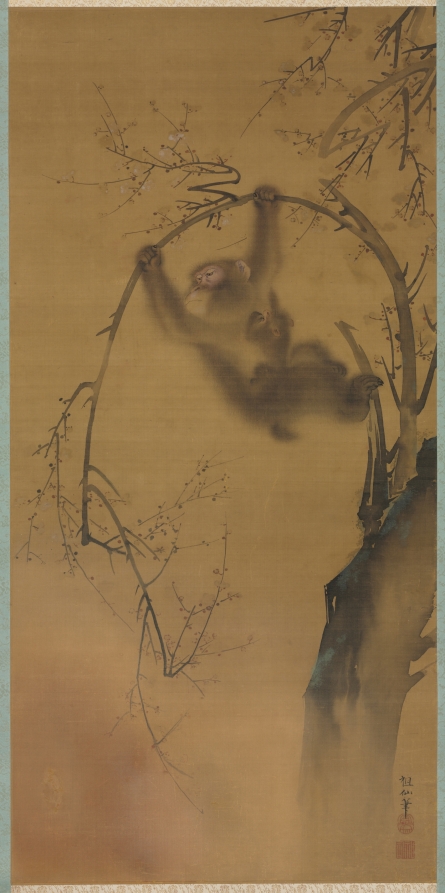
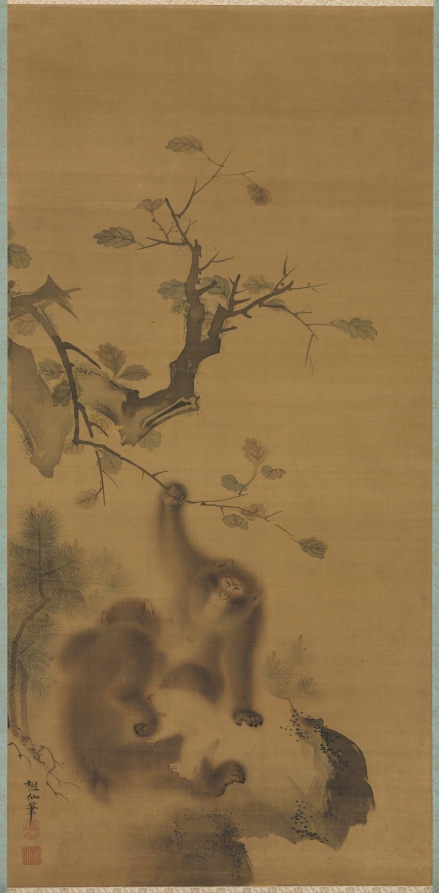
Mori Sosen (1747-1821) was a Japanese painter known as the most accomplished painter of monkeys in the Edo period, whose precisely observed paintings of monkeys in their natural behavior make him one of the most distinctive animal painters in Japanese art. Monkeys from the early 1800s depicts monkeys in the precisely observed, naturalistic manner that distinguishes Sosen's best work from the more conventional animal painting of his contemporaries. Sosen reportedly kept monkeys in his studio so he could observe their behavior directly, and his precisely observed monkey paintings are among the most accomplished animal paintings in Japanese art.
Cultural Impact
Monkeys is important in the history of Japanese animal painting because it demonstrates the precisely observed, naturalistic manner that makes Sosen the most accomplished monkey painter of the Edo period. Sosen's precisely observed monkey paintings—based on direct observation of monkeys in his studio—represent one of the most accomplished traditions of animal painting in Japanese art, and the early 1800s painting shows this tradition at its most naturalistic.
Why It Matters
Monkeys is Sosen's naturalistic animal painting: monkeys rendered in the precisely observed manner of the Edo period's most accomplished monkey painter, who reportedly kept monkeys in his studio for direct observation. The early 1800s painting shows Japanese animal painting at its most naturalistic.