Provenance
George Bickford [1901–1991], Cleveland Heights, OH (by 1966–?); Dr. Norman Zaworski [1920–2013], Cleveland, OH, given to the Cleveland Museum of Art (?–1992); The Cleveland Museum of Art, Cleveland, OH (1992–)
Accession Number
1992.84
Medium
Gum tempera and ink on paper
Dimensions
Overall: 25.8 x 35.6 cm (10 3/16 x 14 in.)
Classification
Painting
Credit Line
Seventy-fifth anniversary gift of Dr. Norman Zaworski
Tags
Painting Neoclassical & Romantic (1751–1850) Ink Tempera Paper Color: Orange
Background & Context
Background Story
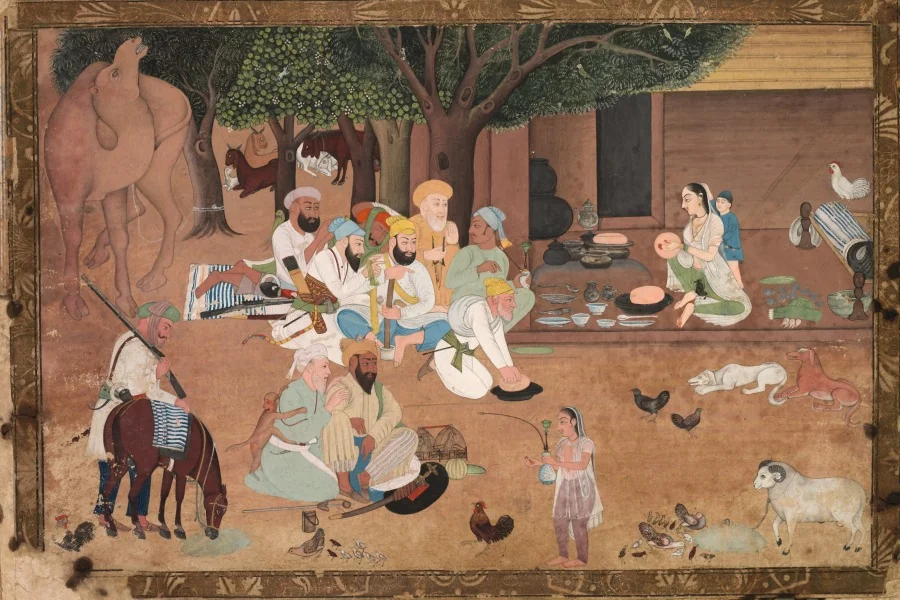
Traveling Warriors Stopping at a Farm from c. 1800 depicts traveling warriors stopping at a farm in the precisely observed, characterfully composed manner of Japanese genre painting. The subject of traveling warriors stopping at a farm represents one of the most important subjects in Japanese genre painting, combining the military culture of the samurai with the everyday life of farmers, and paintings depicting this subject represent one of the most accomplished traditions in Japanese genre painting. The c. 1800 date places this in the Edo period, when genre paintings depicting the encounter between military and rural life were producing some of their most characterfully composed works.
Cultural Impact
Traveling Warriors Stopping at a Farm is important in the history of Japanese genre painting because it depicts the encounter between military and rural life in the precisely observed, characterfully composed manner of the Edo period genre painting tradition. Traveling warriors stopping at a farm—combining the military culture of the samurai with the everyday life of farmers—was one of the most characterfully composed subjects in Japanese genre painting, and the c. 1800 painting shows this tradition at its most precisely observed.
Why It Matters
Traveling Warriors Stopping at a Farm is an anonymous Edo genre painting: warriors and farmers rendered in the precisely observed, characterfully composed manner of the Japanese genre painting tradition. The c. 1800 painting shows the encounter between military and rural life at its most characterfully composed.