
Description
Kubo Shunman dashed off this loose image of Mt. Fuji viewed in the distance from behind pine trees as a performance painting, or sekiga. He did it on the spot in the company of members of his poetry club. Six of them, including the club's founder Yadoya no Meshimori (Rokujuen, 1753–1830), added kyoka poems, 31-syllable poems like the classical Japanese waka poem in form, but with a heavy emphasis on humor. Shunman jotted down a poem as well, in the bottom right corner of the painting, before signing and sealing it. Each poem takes the painted image as its point of departure.
Provenance
[]
Accession Number
1995.18
Medium
hanging scroll, ink and color on silk
Dimensions
Painting only: 90 x 30.8 cm (35 7/16 x 12 1/8 in.); Including mounting: 183.5 x 49.5 cm (72 1/4 x 19 1/2 in.)
Classification
Painting
Credit Line
Kelvin Smith Fund
Tags
Painting Neoclassical & Romantic (1751–1850) Ink Silk Painting Japanese Color: Yellow
Background & Context
Background Story
Mt. Fuji through Pines is a hanging scroll depicting Japan's most iconic mountain viewed through a screen of pine trees—a composition that participates in the long Japanese tradition of framing Mt. Fuji with foreground elements that create depth and visual interest. Shunman's treatment combines the Nanga emphasis on literati brush technique with the distinctly Japanese reverence for Mt. Fuji that gives the mountain its unique cultural significance. The pines in the foreground are rendered with the calligraphic brushwork of the literati tradition, while Mt. Fuji in the distance is painted with the atmospheric subtlety that distinguishes Japanese landscape painting from the more topographic Chinese tradition.
Cultural Impact
Mt. Fuji through Pines participates in one of the oldest and most sustained traditions in Japanese art: the depiction of Mt. Fuji as a sacred mountain and a symbol of Japan itself. Shunman's version combines the Nanga literati tradition (calligraphic pines, atmospheric distance) with the specifically Japanese reverence for Fuji, creating a painting that is simultaneously a Chinese-style landscape and a Japanese devotional image.
Why It Matters
Mt. Fuji through Pines is Shunman's literati landscape meeting Japanese devotion: the calligraphic pines and atmospheric distance of the Nanga tradition combined with the sacred significance of Mt. Fuji itself. The painting is simultaneously a Chinese-style landscape exercise and a Japanese expression of reverence for the mountain that symbolizes Japan.
Related Artworks
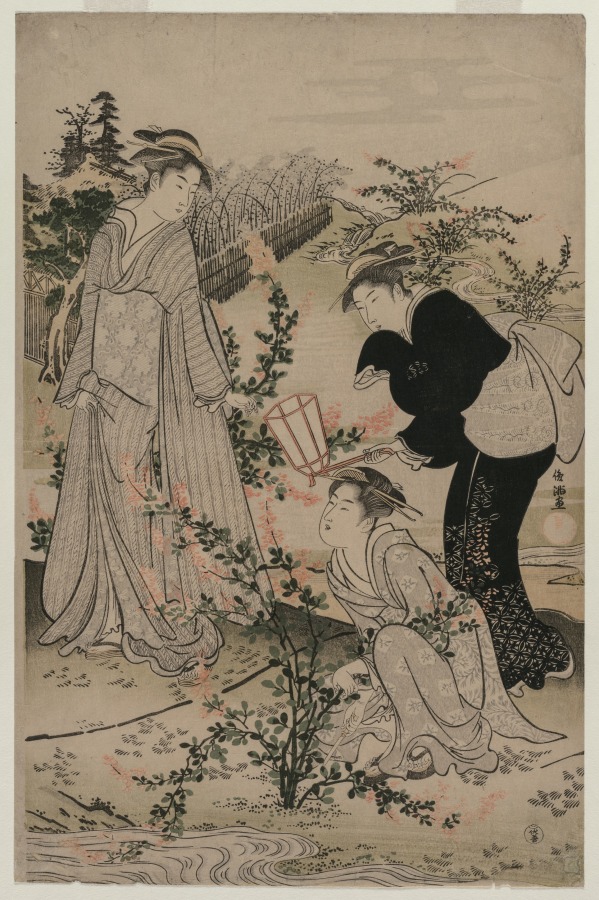
Women Cutting Branches of Bush Clover; The Noji Tama River in Omi Province, from an untitled series of the Six Tama Rivers
Kubo Shunman
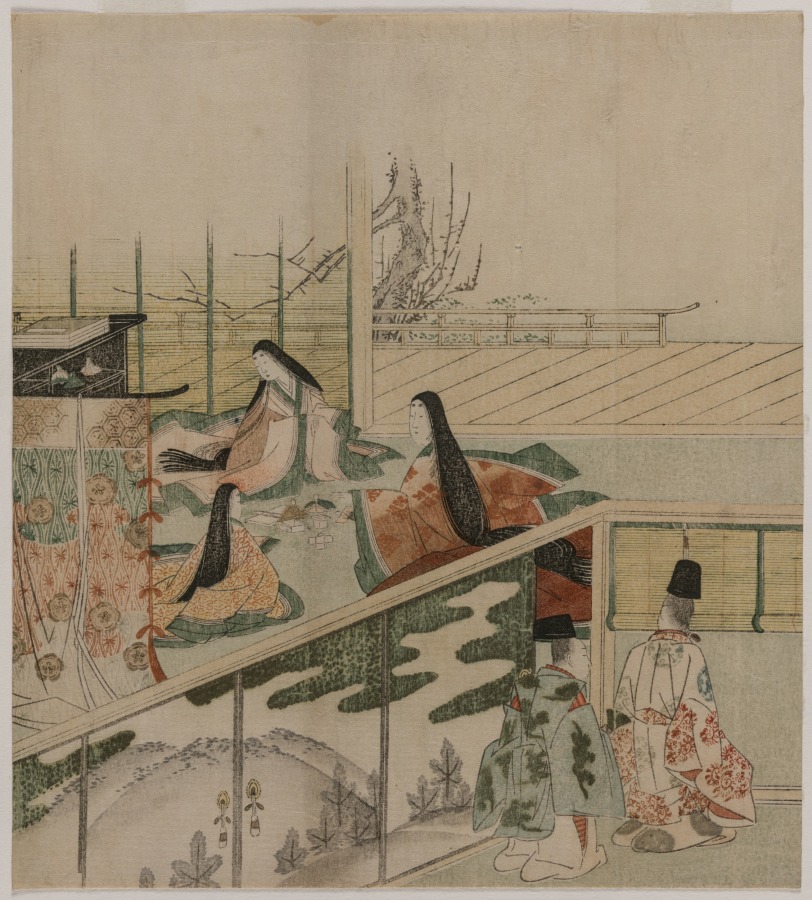
Court Ladies Making Dolls
Kubo Shunman
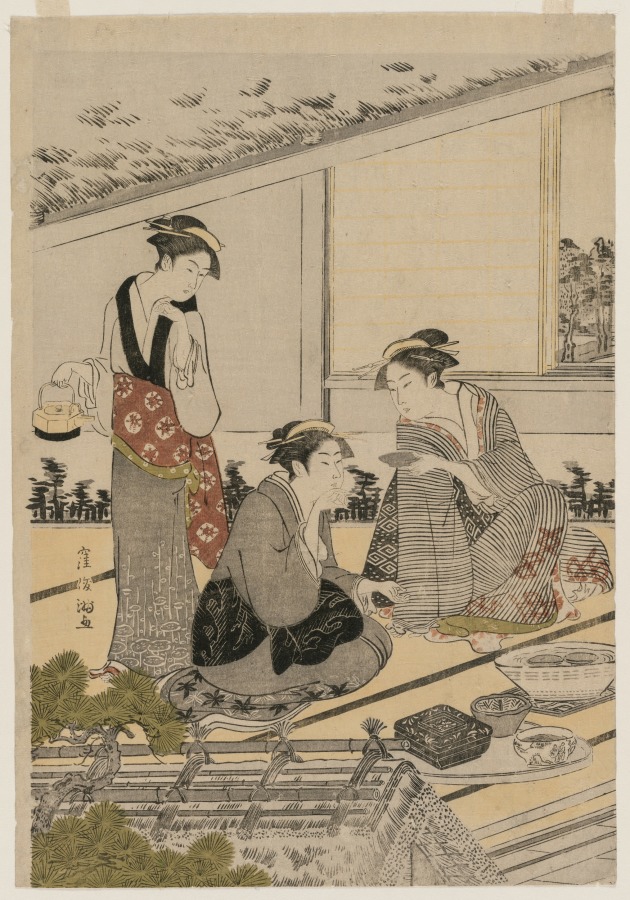
Women in a Tea House
Kubo Shunman
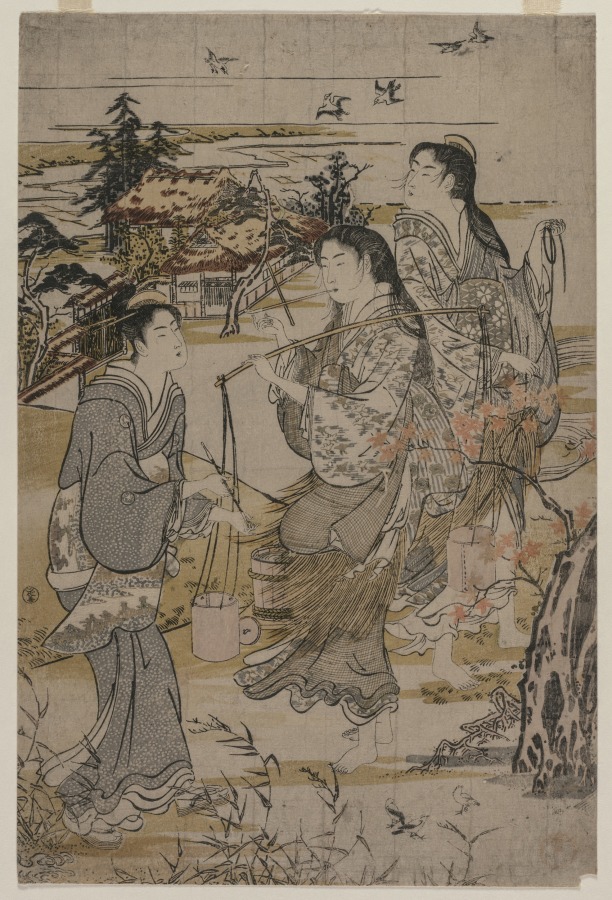
Women with Salt Pails; The Noda Tama River in Mutsu Province, from an untitled series of the Six Tama Rivers
Kubo Shunman