Accession Number
1996.273
Medium
oil on wood panel
Dimensions
Unframed: 31.5 x 46.2 cm (12 3/8 x 18 3/16 in.)
Classification
Painting
Credit Line
Gift of the Frances W. Ingalls Trust
Tags
Painting Impressionist & Modern (1851–1900) Oil Painting Panel Painting French Color: Green
Background & Context
Background Story
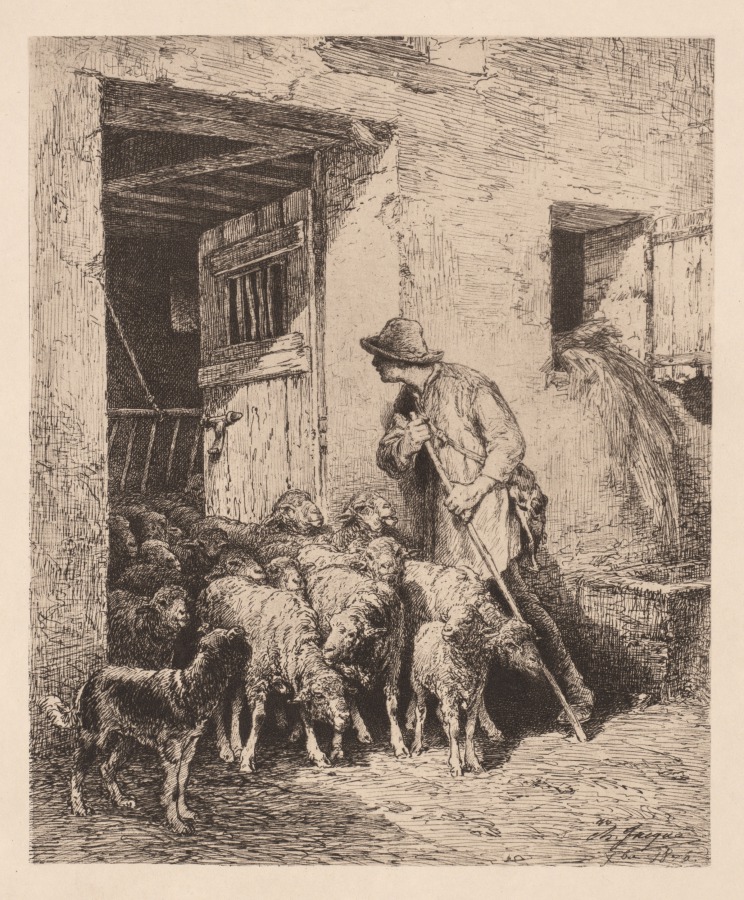
Shepherdess with Sheep (c. 1876) introduces the female figure into the pastoral tradition—.subject that connected Jacque's animal painting to the broader representation of women's work in 19th-century French art. The shepherdess, like the male shepherd, was responsible for tending the flock, but her presence in the painting added dimensions of meaning that the male figure did not carry: the shepherdess represented the specific economic role that women played in rural France—a role that urban viewers rarely acknowledged. The 1876 date places this during the later phase of Jacque's career, when his animal painting had reached its most accomplished level and when the Barbizon tradition was being extended by younger painters who had adopted its methods. Jacque's treatment of the shepherdess likely emphasizes her competence and authority—she is not a decorative addition to the pastoral scene but the figure who directs the flock and manages the pasture. The sheep surrounding her respond to her direction, confirming her professional authority. This representation of women's competence in rural work challenged the urban assumption that pastoral scenes were merely decorative, arguing that the shepherdess's skill deserved the same artistic attention that male rural labor received. The painting also documents the specific breeds and management practices of French sheep farming at the end of the 19th century.
Cultural Impact
Jacque's shepherdess paintings influenced how women's rural work was represented in 19th-century French art, documenting roles that urban culture often ignored. The paintings influenced later Realist painters who similarly sought to represent female competence in traditionally male occupations. The shepherdess subject influenced how the pastoral tradition was gendered, connecting women's economic contribution to the pastoral imaginary.
Why It Matters
This painting matters because it represents women's competence in rural work with the same attention and respect that male rural labor typically received—the shepherdess is not a decorative figure but a professional whose skill and authority the flock acknowledges, arguing that women's contribution to the rural economy deserves artistic recognition.