Accession Number
1997.110
Medium
hanging scroll; ink and color on silk
Dimensions
Framed: 57.2 x 40.7 cm (22 1/2 x 16 in.)
Classification
Painting
Credit Line
Bequest of Mrs. A. Dean Perry
Tags
Painting Baroque (1600–1750) Ink Silk Painting Japanese Color: White Color: Gray
Background & Context
Background Story
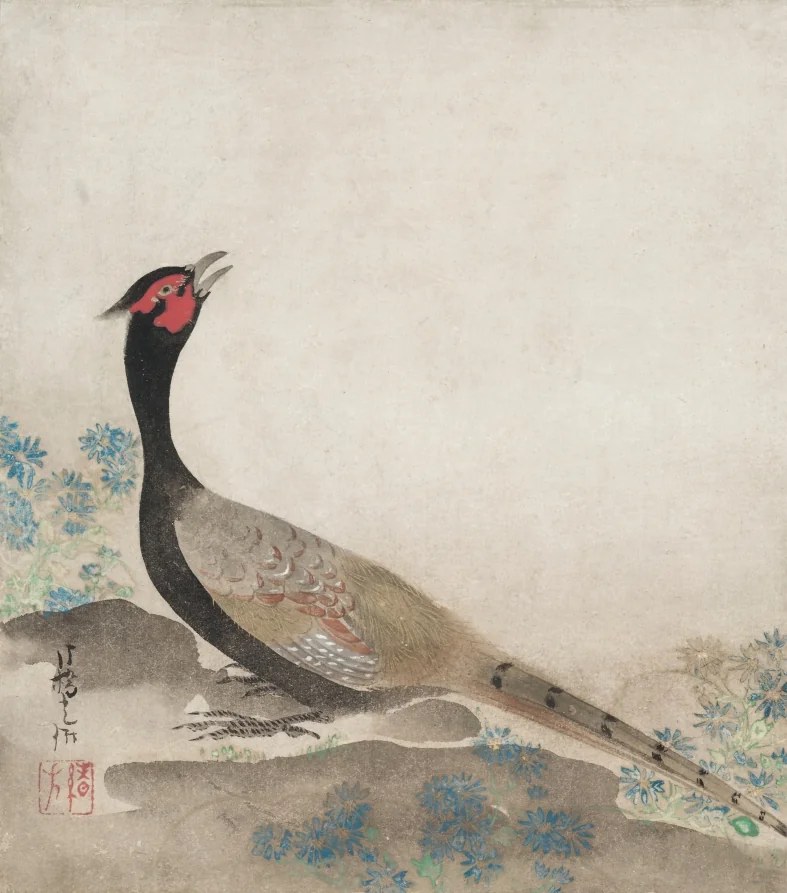
Ogata Korin (1658-1716) was a Japanese painter and designer known for the bold, decorative manner that makes him one of the most important painters of the Rinpa school. Pheasant from the 1658-1716 period depicts a pheasant in the bold, decorative manner that distinguishes Korin's best work from the more orthodox painting of his contemporaries. Korin's bold, decorative manner—using large, simplified forms and rich color—is the defining style of the Rinpa school, and Pheasant shows this manner applied to the traditional subject of bird painting with the decorative boldness that makes Korin one of the most distinctive painters in Japanese art.
Cultural Impact
Pheasant is important in the history of Japanese painting because it demonstrates the bold, decorative manner that Korin developed as the defining style of the Rinpa school. Korin's transformation of traditional Japanese subjects into bold, decorative compositions—using large, simplified forms and rich color—represents one of the most important developments in Japanese decorative art, and Pheasant shows this transformation in the traditional subject of bird painting.
Why It Matters
Pheasant is Korin's bold Rinpa manner: a pheasant rendered in the large, simplified forms and rich color that define the Rinpa school. The 1658-1716 painting shows one of the most distinctive painters in Japanese art applying the bold, decorative manner of the Rinpa school to the traditional subject of bird painting.