Description
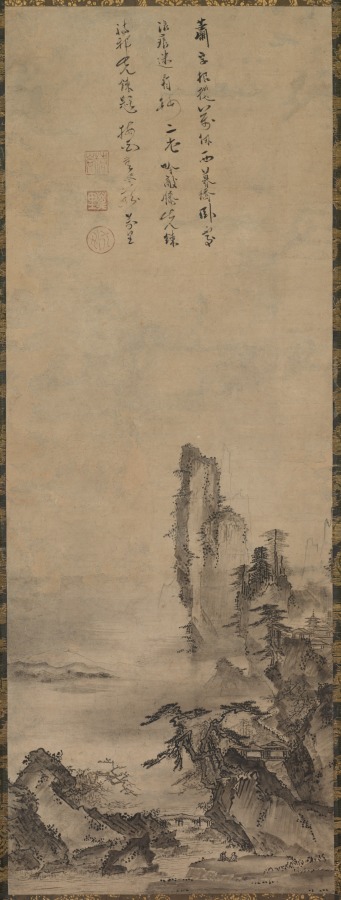
This scene illustrates the famous theme of Eight Views of the Xiao-Xiang River. This subject is also depicted in other paintings in our collection. This particular scene is known as "Returning Sail off Distant Shore."
Provenance
Mrs. A. Dean [Helen Wade Greene] Perry [1911–1996], Cleveland, OH, bequest to the Cleveland Museum of Art (by 1963–1997); The Cleveland Museum of Art, Cleveland, OH (1997–)
Accession Number
1997.113
Medium
album leaf; ink and light color on paper
Dimensions
Image: 26.8 x 30.6 cm (10 9/16 x 12 1/16 in.)
Classification
Painting
Credit Line
Bequest of Mrs. A. Dean Perry
Tags
Painting Renaissance (1400–1599) Ink Paper Japanese Color: Brown Color: Gray
Background & Context
Background Story
Kenko Shoei (active c. 1478-1506) was a Japanese painter known for the elegantly composed, atmospheric landscape paintings that make him one of the accomplished painters of the Muromachi period. View of Xiao Xiang from c. 1478-1506 depicts a view of Xiao Xiang—one of the Eight Views of Xiao Xiang—in the elegantly composed, atmospheric manner that distinguishes Shoei's best work from the more general landscape painting of his contemporaries. The Eight Views of Xiao Xiang was originally a Chinese poetic and painting tradition depicting scenic views of the Xiao and Xiang rivers in Hunan, and the tradition was adopted and adapted by Japanese painters during the Muromachi period, producing some of their most elegantly composed works.
Cultural Impact
View of Xiao Xiang is important in the history of Japanese painting because it demonstrates the elegantly composed, atmospheric manner of the Muromachi period landscape tradition as applied to one of the most important subjects in East Asian painting—the Eight Views of Xiao Xiang. The Eight Views of Xiao Xiang—originally a Chinese poetic and painting tradition depicting scenic views of the Xiao and Xiang rivers—was one of the most important subjects in East Asian painting, and the c. 1478-1506 painting shows this tradition at its most elegantly composed in the Japanese Muromachi period.
Why It Matters
View of Xiao Xiang is Kenko Shoei's elegantly composed Muromachi landscape: one of the Eight Views of Xiao Xiang rendered in the atmospheric manner of one of the accomplished painters of the Muromachi period. The c. 1478-1506 painting shows the most important subject in East Asian landscape painting at its most elegantly composed.