Description
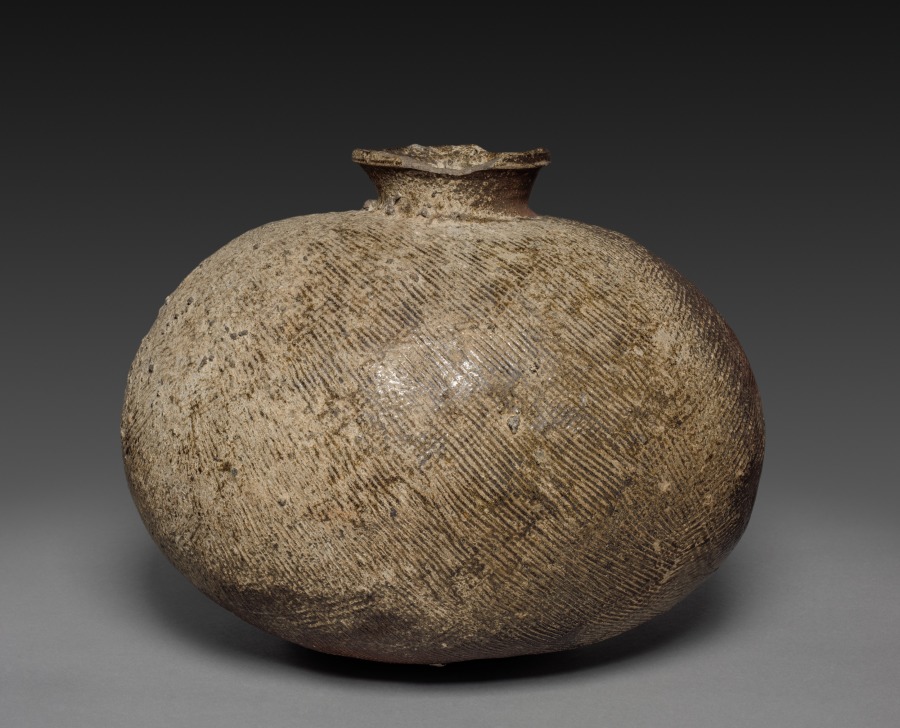
The unusual shape of this sturdy vessel derives from two deep bowl forms being joined together at their mouths. An opening was then cut out where the separately formed neck and mouth were attached. This vessel shape came to early Japan from Korea, as did the paddled surface decoration technique.The jug's rich surface tonalities were created by wood ash in the kiln chamber that settled on the vessel during firing. The mottled gray areas indicate where large accumulations of ash adhered to the hot body. The darker, green skin that appears shiny or reflective represents generous ash accumulations that vitrified, becoming a natural green glaze. In one area this accumulation is so rich that it formed rivulets of glassy green glaze, propelled across the black matte surface by the fiery winds coursing within the kiln.
Provenance
[]
Accession Number
1999.121
Medium
stoneware, with impressed decoration and natural ash glaze
Dimensions
Overall: 31 x 29.8 cm (12 3/16 x 11 3/4 in.)
Classification
Ceramic
Credit Line
Gift of Klaus F. Naumann in honored memory of Robert P. Bergman