Description
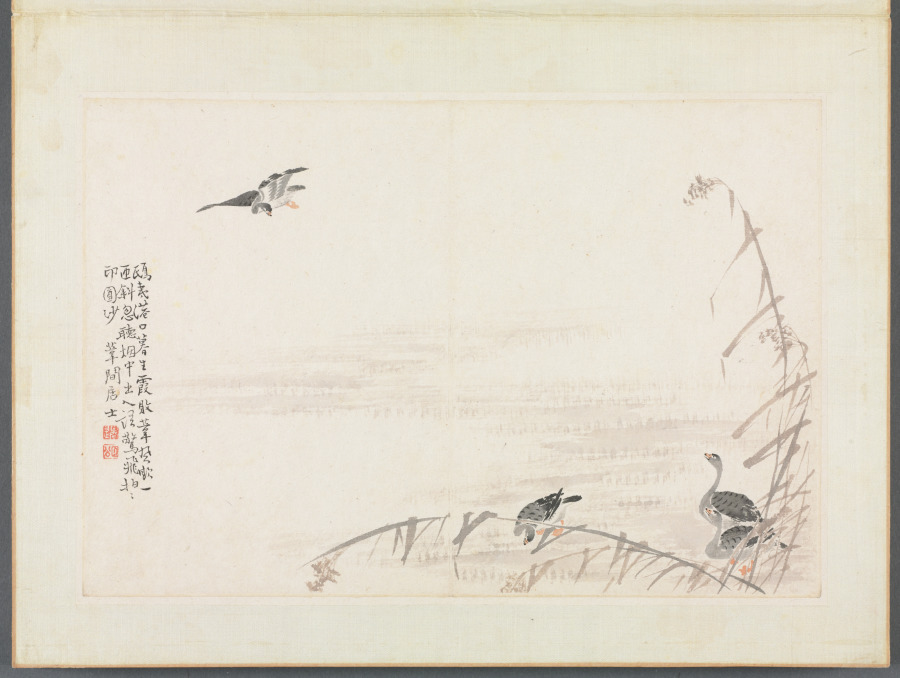
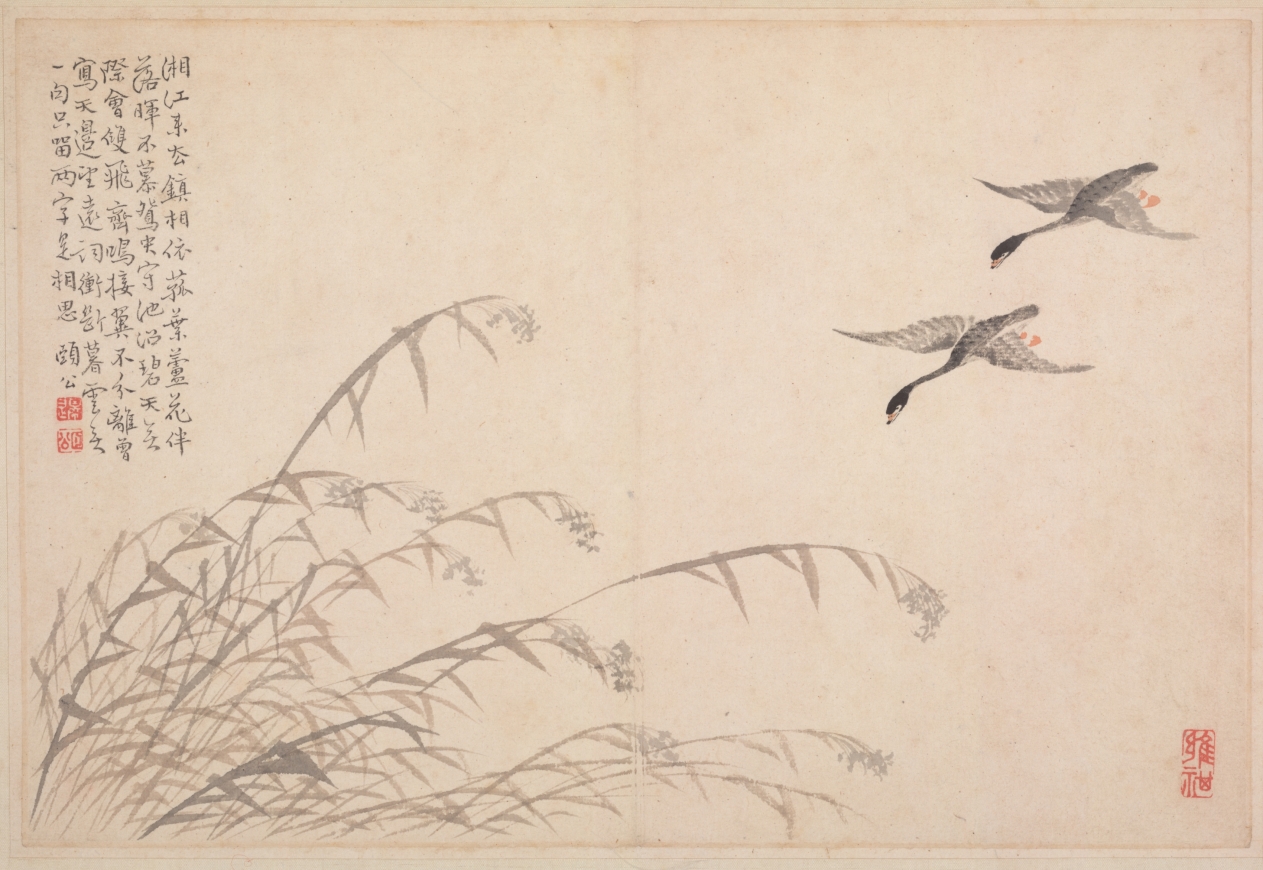
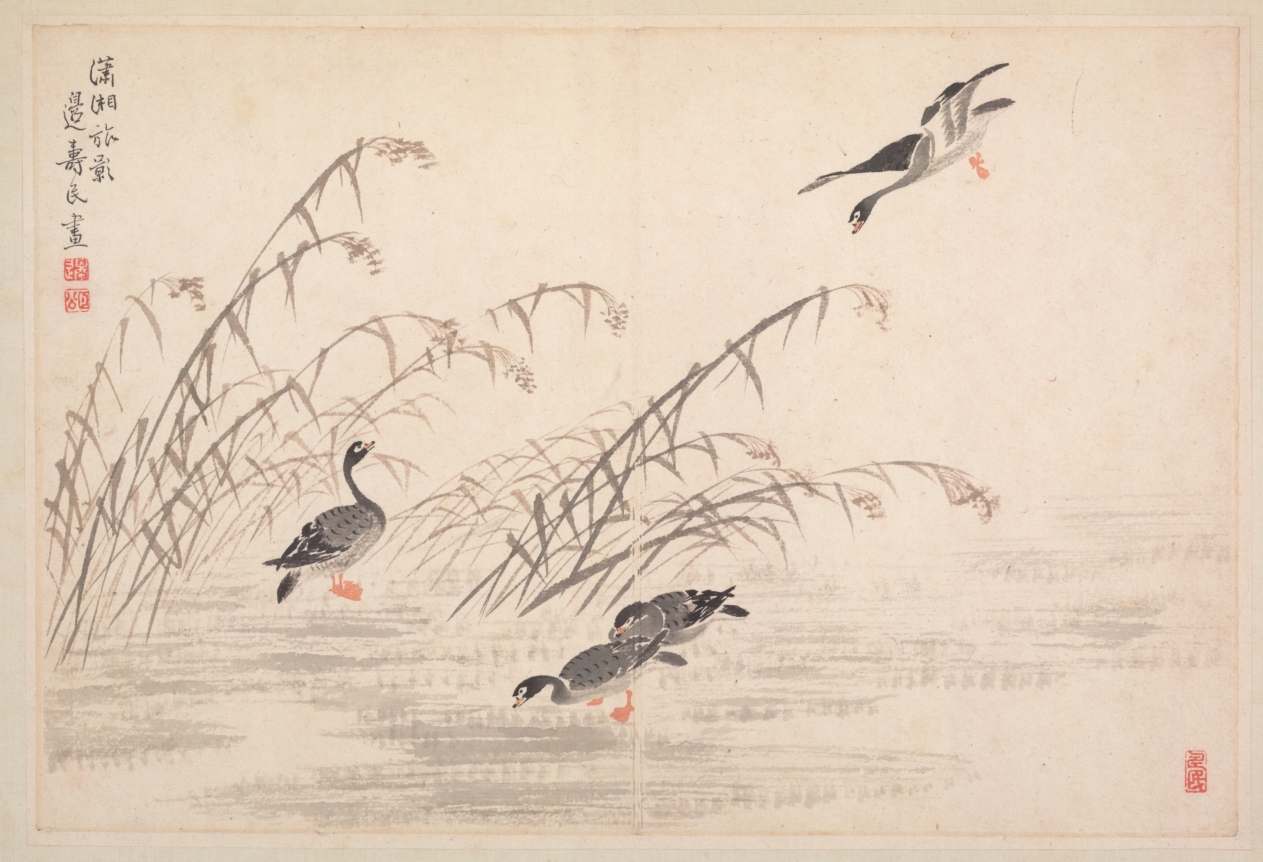
The artist Bian Shoumin is known for his depiction of wild geese, water, and reeds. The migrant birds in autumn and winter evoked, in the minds of the Chinese intelligentsia, a time of parting and sorrow.
Provenance
Dr. Roger Y. K. Hsu [1927–2022] and Mrs. Evangeline C. Hsu, Dr. Daphne T. Hsu, and Dr. Jeffrey T. Hsu, given to the Cleveland Museum of Art (?–1999); The Cleveland Museum of Art, Cleveland, OH (1999–)
Accession Number
1999.260
Medium
Album of twelve leaves, ink and color on paper
Dimensions
Overall: 18.6 x 27.6 cm (7 5/16 x 10 7/8 in.)
Classification
Painting
Credit Line
Gift of Dr. and Mrs. Roger Y. K. Hsu, Dr. Daphne T. Hsu, and Dr. Jeffrey T. Hsu in memory of Robert P. Bergman
Tags
Color: Orange
Background & Context
Background Story
Bian Shoumin (1684–1752) was a Chinese painter and calligrapher of the Qing dynasty, active during the reigns of the Kangxi and Qianlong emperors. He was a member of the "Eight Eccentrics of Yangzhou"—a group of individualist painters active in the wealthy commercial city of Yangzhou who rejected the orthodox painting conventions of their time in favor of bold, unconventional styles. This album of twelve leaves, created in the first half of the 1700s, combines calligraphy and painting in the classic Chinese format that united the "three perfections" of poetry, calligraphy, and painting.
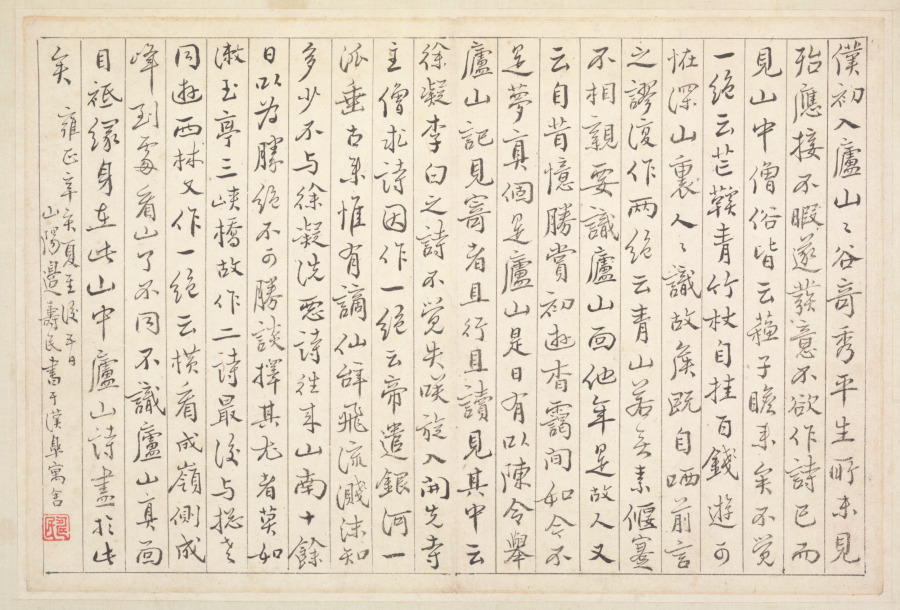
Bian Shoumin was particularly renowned for his paintings of wild geese, a subject he returned to throughout his career and for which he earned lasting fame. The present album, however, ranges more broadly across the traditional repertory of Chinese scholar painting: landscapes after various old masters, flowers and bamboo, and along with inscriptions in Bian's distinctive calligraphy. The album format allowed for a sequential experience—each leaf offering a new mood or subject, the calligraphy pages providing a rhythmic counterpoint to the painted leaves.
The Yangzhou Eccentrics flourished in the commercially vibrant, culturally cosmopolitan atmosphere of 18th-century Yangzhou, a city of salt merchants and wealthy patrons who supported artistic innovation. Bian Shoumin's work reflects the Eccentrics' characteristic freedom of brushwork, their willingness to distort and exaggerate forms for expressive effect, and their integration of poetry, calligraphy, and painting into unified aesthetic experiences. Despite abandoning the conventions of the Orthodox School, Bian and his peers maintained deep roots in Chinese artistic tradition, transforming rather than rejecting the past.
Cultural Impact
The Eight Eccentrics of Yangzhou represent one of the most vital and innovative movements in later Chinese painting. Bian Shoumin's albums demonstrate how 18th-century Chinese artists balanced individual expression with deep engagement with tradition, creating works of remarkable freshness within established forms.
Why It Matters
This album brings together the "three perfections" of Chinese classical art—poetry, calligraphy, and painting—in a format designed for intimate contemplation. Bian Shoumin's work connects us to the vibrant artistic culture of 18th-century Yangzhou, a city where commerce and art flourished together.