Description
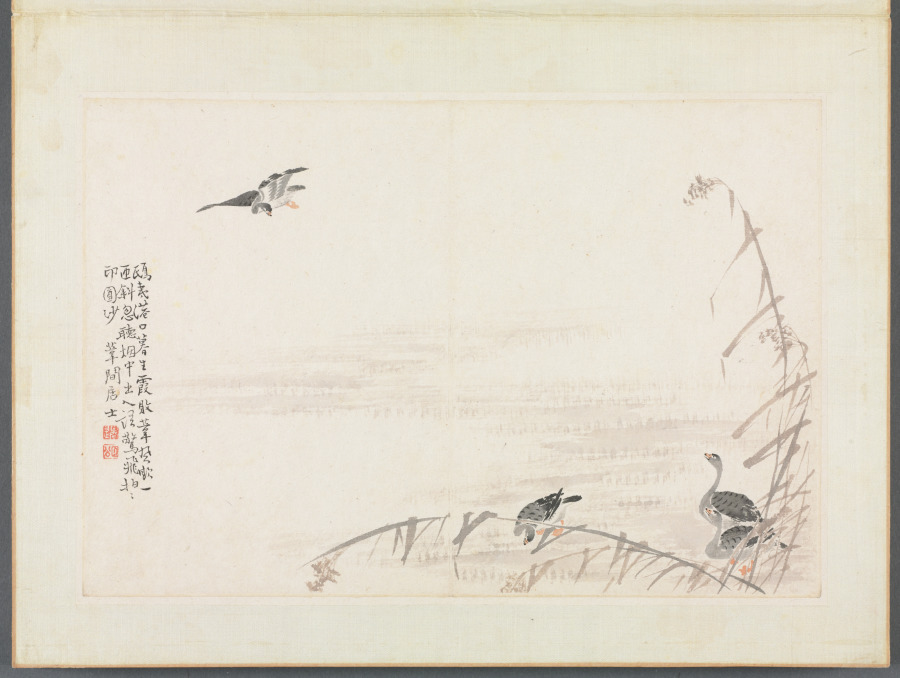
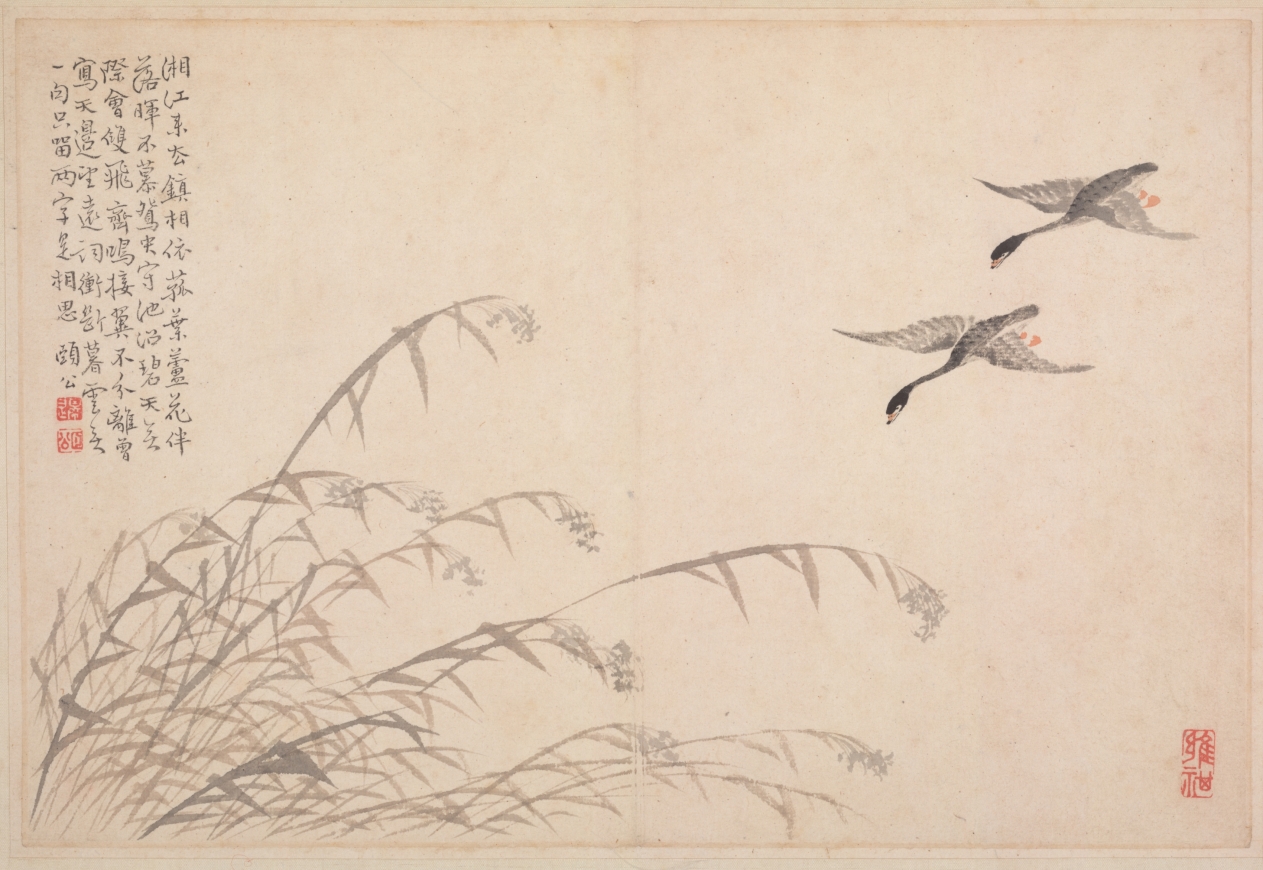
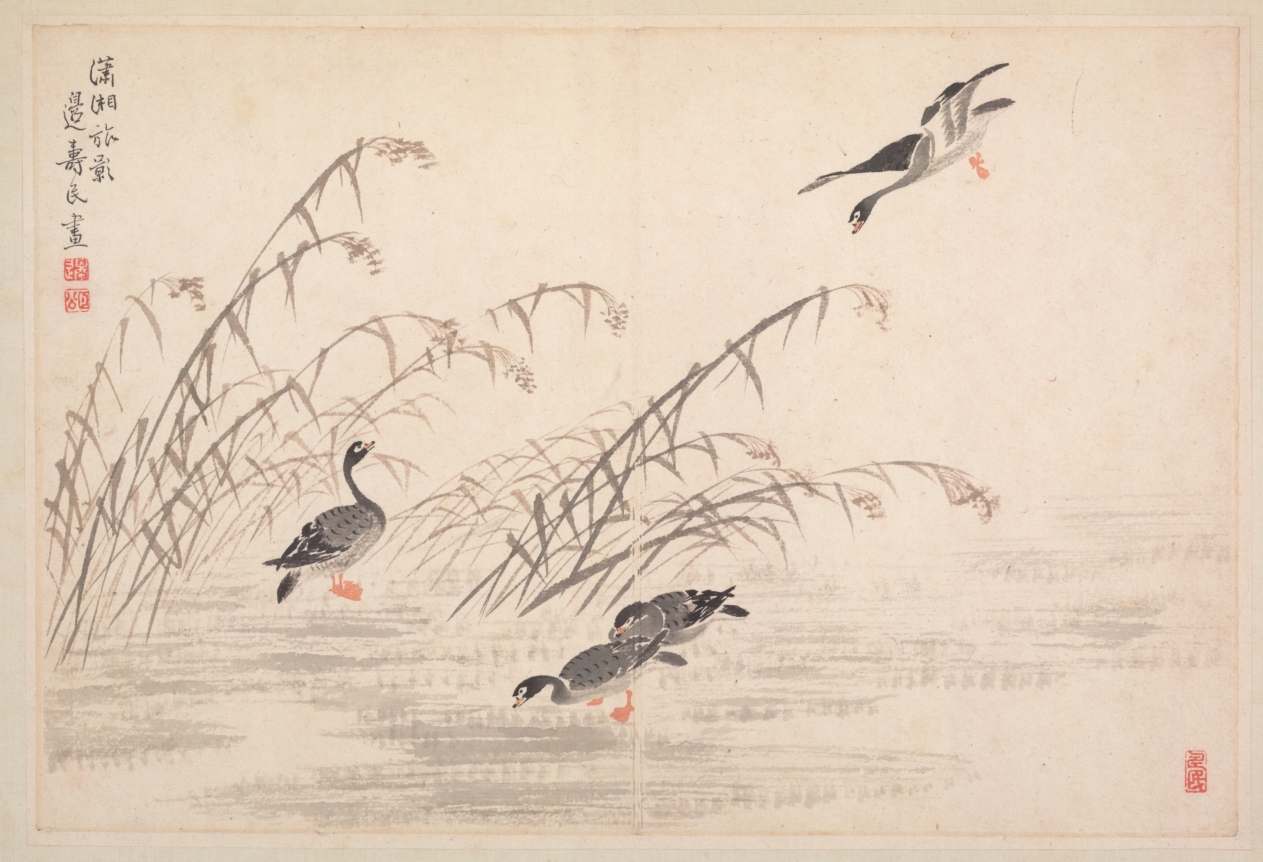
The artist Bian Shoumin is known for his depiction of wild geese, water, and reeds. The migrant birds in autumn and winter evoked, in the minds of the Chinese intelligentsia, a time of parting and sorrow.
Provenance
Dr. Roger Y. K. Hsu [1927–2022] and Mrs. Evangeline C. Hsu, Dr. Daphne T. Hsu, and Dr. Jeffrey T. Hsu, given to the Cleveland Museum of Art (?–1999); The Cleveland Museum of Art, Cleveland, OH (1999–)
Accession Number
1999.260.a
Medium
album leaf; ink and color on paper
Dimensions
Overall: 18.5 x 27.5 cm (7 5/16 x 10 13/16 in.)
Classification
Painting
Credit Line
Gift of Dr. and Mrs. Roger Y. K. Hsu, Dr. Daphne T. Hsu, and Dr. Jeffrey T. Hsu in memory of Robert P. Bergman
Tags
Color: White
Background & Context
Background Story
This album leaf is one of twelve from Bian Shoumin's album combining calligraphy and painting, created in the first half of the 18th century. As part of the "Eight Eccentrics of Yangzhou," Bian Shoumin worked outside the mainstream Orthodox School of Qing dynasty painting, developing a distinctive personal style characterized by bold brushwork, unconventional compositions, and a spontaneous quality that seems to capture the very moment of creation.
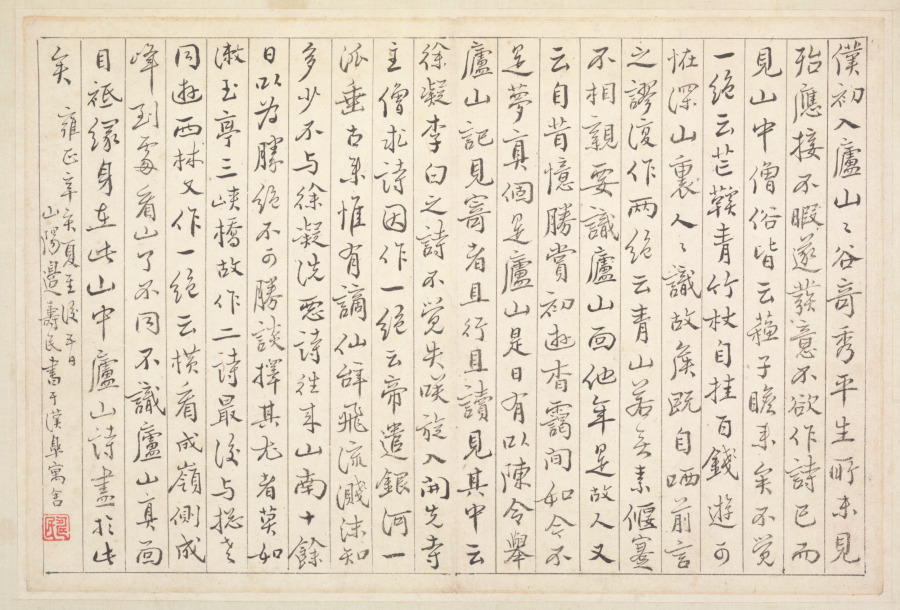
This particular leaf likely depicts one of Bian's favorite subjects: perhaps wild geese in flight, or flowers and bamboo rendered with his characteristic vitality. The ink is applied with confidence and speed—thick, dark strokes articulate the primary forms, while lighter washes create atmosphere and depth. A poetic inscription in Bian's calligraphic hand complements the painted image, adding a literary dimension that invites reflection. The relationship between image and text is central to the Chinese album tradition: the painting sets a mood, and the calligraphy extends or comments upon it.
Bian Shoumin's career coincided with the long reign of the Qianlong Emperor (1735–1796), a period of unprecedented economic prosperity and cultural flourishing in China. Yangzhou, where Bian was active, was one of the wealthiest cities in the empire, its salt merchants competing in patronage as fiercely as they competed in commerce. This environment encouraged artistic experimentation and innovation, even as the imperial court favored more conservative styles. Bian's album leaves, intimate in scale but bold in execution, capture this unique cultural moment.
Cultural Impact
Bian Shoumin's album leaves exemplify the innovative spirit of the Yangzhou school of painting. Working in a mercantile city far from the imperial court, Bian and his circle developed a lively, individualistic style that revitalized Chinese painting traditions.
Why It Matters
This album leaf demonstrates the freedom and vitality of Bian Shoumin's art. The combination of calligraphy and painting, the spontaneous brushwork, and the intimate album format create a rich aesthetic experience—a microcosm of the Chinese scholar-artist's world.