Description
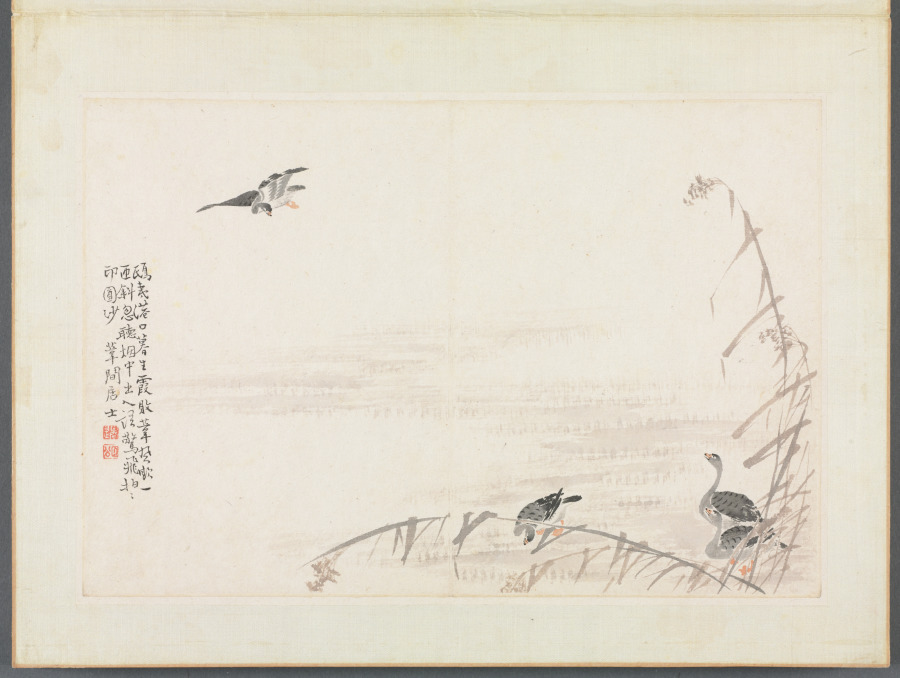
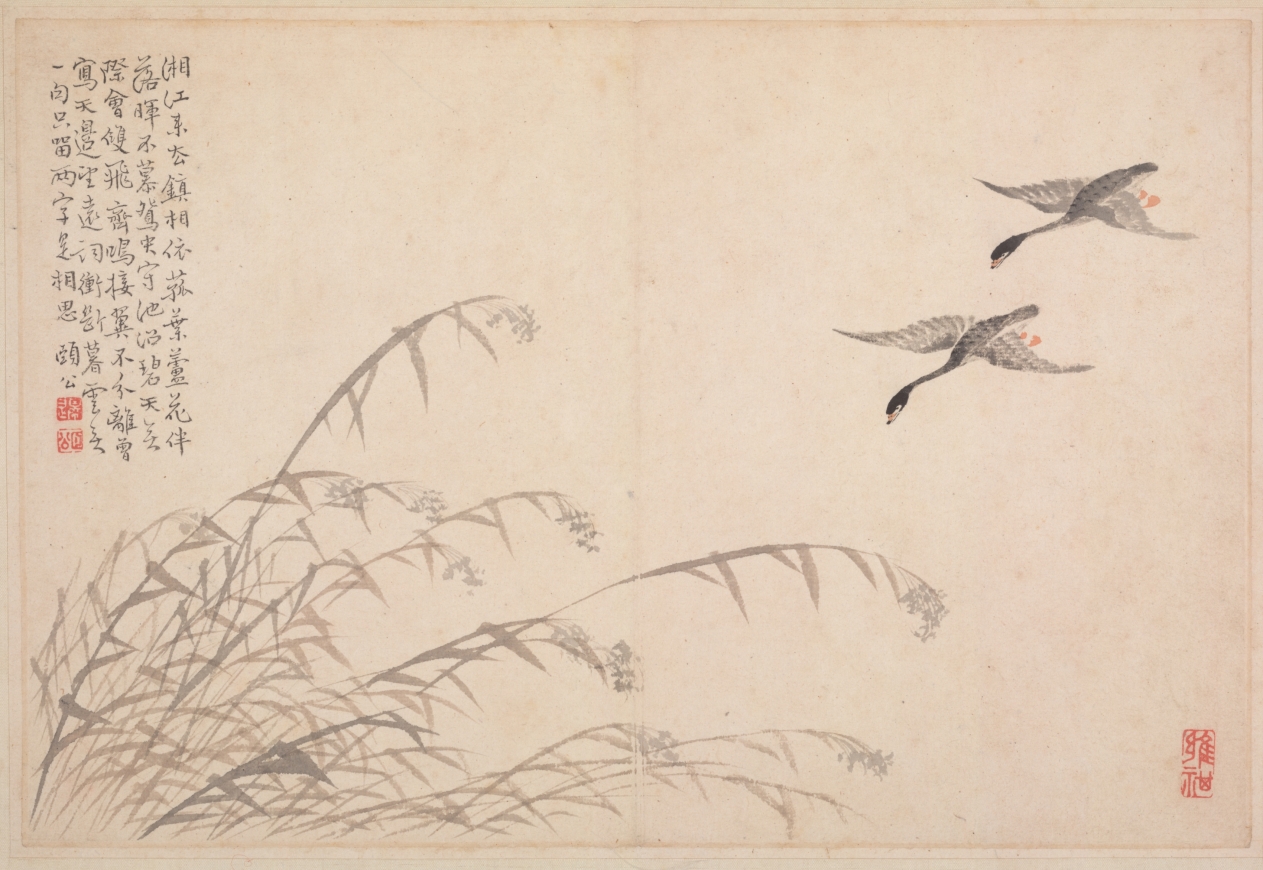
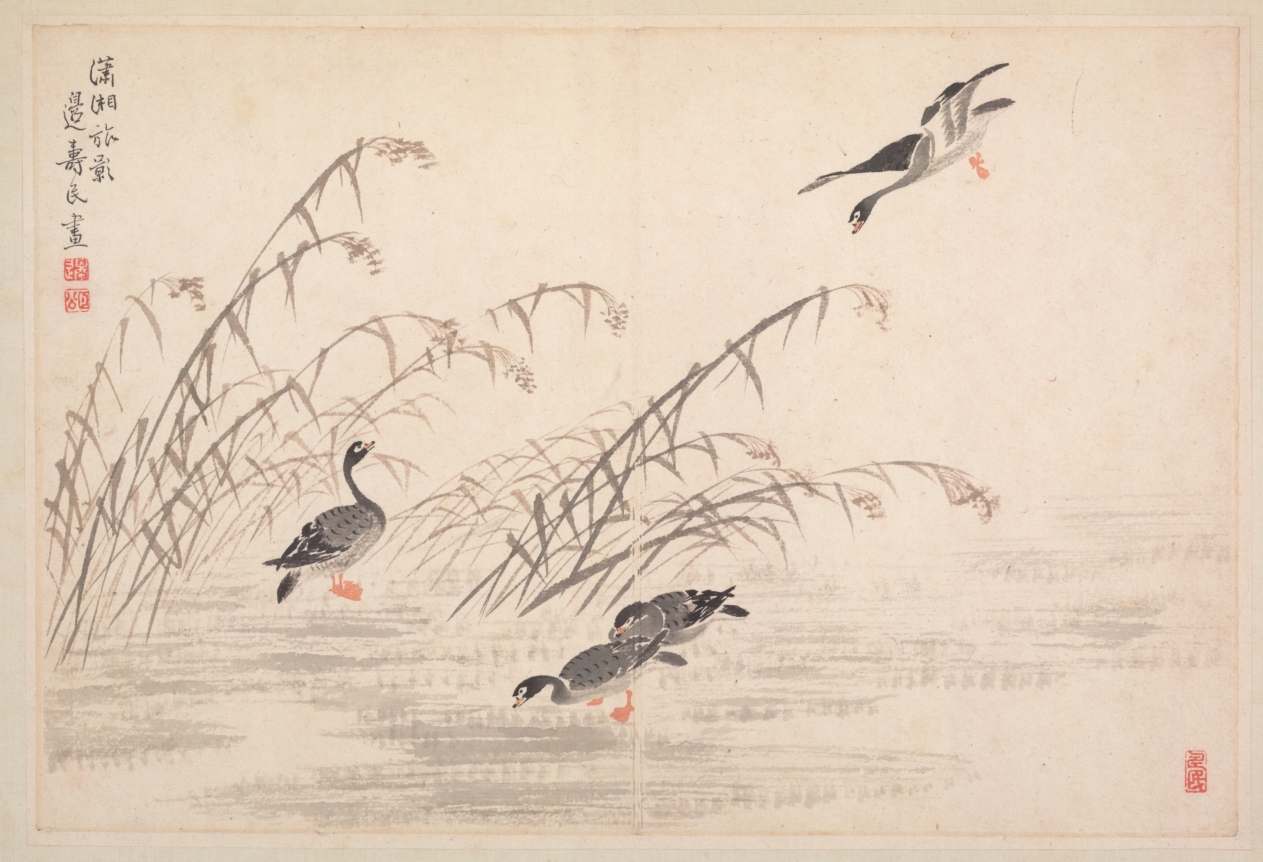
The artist Bian Shoumin is known for his depiction of wild geese, water, and reeds. The migrant birds in autumn and winter evoked, in the minds of the Chinese intelligentsia, a time of parting and sorrow.
Provenance
Dr. Roger Y. K. Hsu [1927–2022] and Mrs. Evangeline C. Hsu, Dr. Daphne T. Hsu, and Dr. Jeffrey T. Hsu, given to the Cleveland Museum of Art (?–1999); The Cleveland Museum of Art, Cleveland, OH (1999–)
Accession Number
1999.260.b
Medium
album leaf; ink and color on paper
Dimensions
Overall: 18.5 x 27.5 cm (7 5/16 x 10 13/16 in.)
Classification
Painting
Credit Line
Gift of Dr. and Mrs. Roger Y. K. Hsu, Dr. Daphne T. Hsu, and Dr. Jeffrey T. Hsu in memory of Robert P. Bergman
Tags
Color: White
Background & Context
Background Story
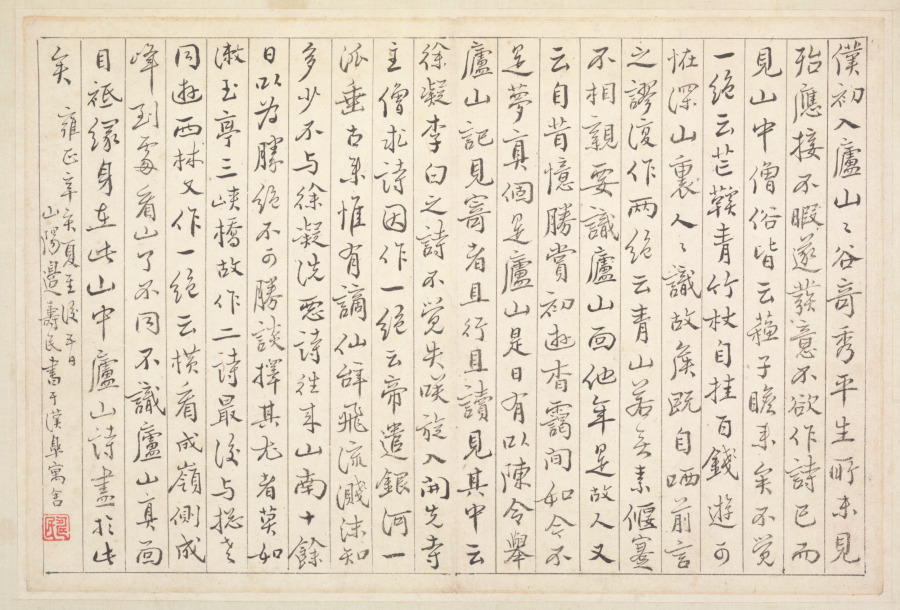
This album leaf belongs to Bian Shoumin's album of twelve leaves combining calligraphy and painting, executed in the first half of the 18th century. Like the other leaves in the album, it represents the fusion of the "three perfections" that defined the highest aspirations of Chinese literati art. Bian Shoumin was celebrated in his lifetime as a master of wild goose painting, earning the nickname "Bian of the Geese" (Bian E), but his work ranged broadly across the spectrum of traditional Chinese subjects.
The composition of this leaf demonstrates Bian's mastery of negative space—one of the key principles of Chinese aesthetic theory. A few carefully placed forms—a branch, a bird, some distant hills rendered in pale wash—activate the empty paper, creating a sense of atmosphere and spatial depth without filling the surface. The accompanying calligraphy, executed in Bian's fluent running script, balances the pictorial elements and adds the dimension of literary meaning. The inscription might contain a poem or an observation that complements the visual theme.
Bian Shoumin's reputation suffered after his death, as later critics considered the Yangzhou Eccentrics' work too mannered and commercial. In the 20th century, however, his reputation revived as modern Chinese artists and scholars recognized the freshness and individuality of his approach. Bian's willingness to break rules within the tradition, to prioritize personal expression over academic correctness, resonated with modern Chinese artists seeking to create a contemporary art that remained rooted in Chinese aesthetic values. Today, Bian is recognized as one of the most original painters of the Qing dynasty, and his album leaves are treasured for their spontaneity and grace.
Cultural Impact
The album leaves of Bian Shoumin provide an important window into the vibrant, commercially driven art world of 18th-century Yangzhou. His work exemplifies the tension between tradition and innovation that has shaped Chinese painting for centuries.
Why It Matters
This album leaf captures Bian Shoumin's spontaneous, unconventional spirit. The play between painted image and calligraphic text, the expressive brushwork, and the masterful use of empty space all contribute to a work that feels fresh centuries after its creation.