
Description
Girodet found inspiration for this drawing in Aeschylus’s Greek tragedy Seven against Thebes. Dramatized with powerful physicality, seven warrior leaders from Argos raise weapons to the war deities Ares and Enyo at the far left as they immerse their hands in the blood of a sacrificed bull, and swear an oath to defeat Thebes. Girodet’s strong black outlines and idealized male nudes are characteristic of Neoclassicism’s calculated restraint. Yet the flash of lightning and the warrior’s impassioned expressions intensify the emotional and psychological content of the scene, anticipating the growth of romanticism in European art during the early 1800s.
Provenance
[]
Accession Number
2000.71
Medium
Black chalks and white chalk with stumping and erasing on light brown wove paper
Dimensions
Overall: 41.8 x 62 cm (16 7/16 x 24 7/16 in.)
Classification
Drawing
Credit Line
Purchase from the J. H. Wade Fund
Tags
Drawing Neoclassical & Romantic (1751–1850) Paper French Color: Brown
Background & Context
Background Story
Anne-Louis Girodet's "The Oath of the Seven Chiefs against Thebes" (c. 1800) depicts a dramatic episode from Greek mythology: seven warrior leaders from Argos raising weapons to the war deities Ares and Enyo as they immerse their hands in the blood of a sacrificed bull, swearing an oath to destroy the city of Thebes. Girodet drew inspiration from Aeschylus's Greek tragedy "Seven Against Thebes," transforming the literary source into a composition of explosive physical drama.
Girodet (1767–1824) was one of the most brilliant and eccentric students of Jacques-Louis David, the leading painter of the French Neoclassical movement. While David's style combined classical rigor with revolutionary political conviction, Girodet's work moved toward a more sensual, dreamlike aesthetic that anticipated Romanticism. His paintings combined David's emphasis on precise drawing and clear composition with an emotional intensity and atmospheric strangeness that were entirely his own.
This drawing exemplifies Girodet's mastery of the chalk medium — a technique that was central to French academic training. Black chalk with white highlights on toned paper was a standard method for creating figure studies and compositional sketches, but Girodet elevates the technique to the level of finished art. The "stumping" technique — using a rolled leather or paper tool to smudge the chalk into smooth tonal gradations — allows him to model the muscular bodies of the warriors with sculptural solidity, while the white chalk highlights create dramatic flashes of light on skin and weapon.
The subject of the drawing — warriors pledging their lives to a common cause through blood sacrifice — had obvious resonance in Napoleonic France, where military oaths and sacrifices were daily realities. Girodet's choice of this subject, drawn from one of the foundational texts of Greek tragedy, reflects the Neoclassical conviction that ancient myths and histories provided ideal vehicles for expressing contemporary concerns about duty, loyalty, and the cost of war. The seven warriors, their bodies twisted in dramatic contrapposto, their faces set with grim determination, embody the heroic ideal that Napoleon's France demanded of its citizens and its artists.
Cultural Impact
Girodet's transition from Neoclassicism to a proto-Romantic sensibility made him a pivotal figure in French art, bridging the gap between David's austere classicism and the dramatic emotionalism of Delacroix and the Romantic generation.
Why It Matters
This drawing's combination of classical subject matter, dramatic physicality, and technical virtuosity in chalk demonstrates Girodet's position at the crossroads of Neoclassicism and Romanticism — an artist who could harness academic discipline while pushing toward new emotional intensity.
Related Artworks
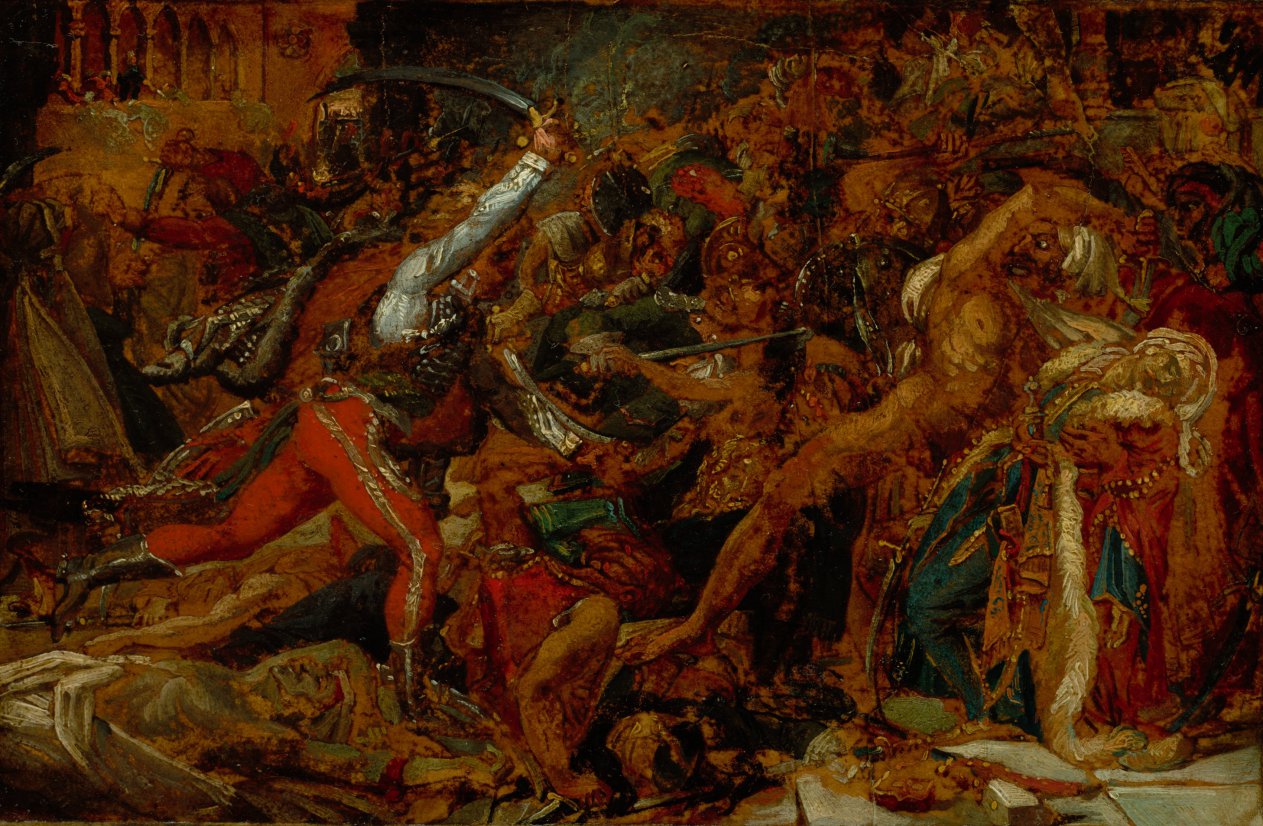
Sketch for "The Revolt at Cairo"
Anne-Louis Girodet de Roucy-Trioson
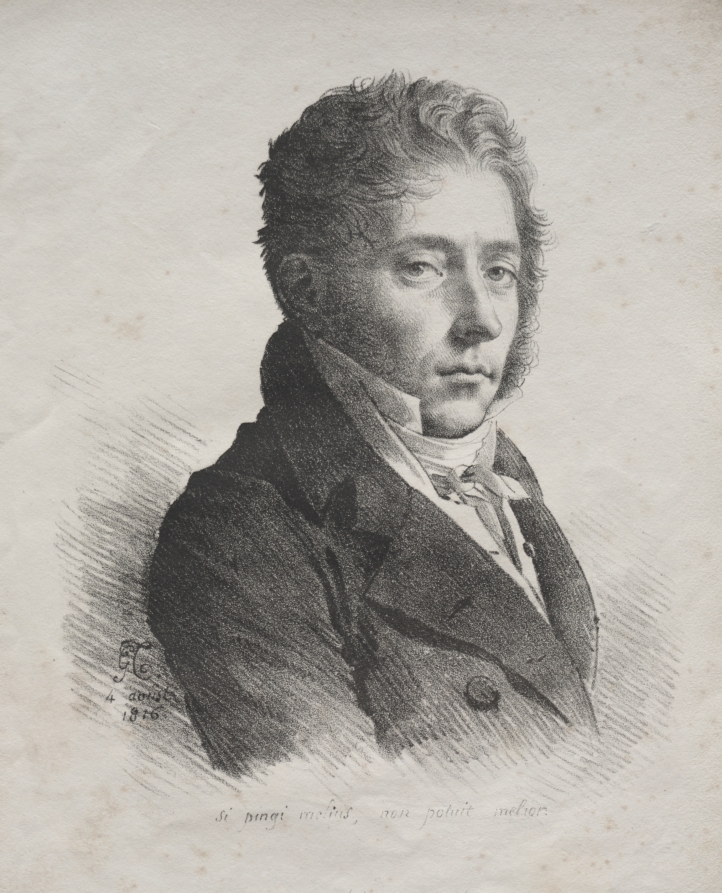
Receuil d'essais lithographiques: Portrait of M. Coupin de La Couperie
Anne-Louis Girodet de Roucy-Trioson
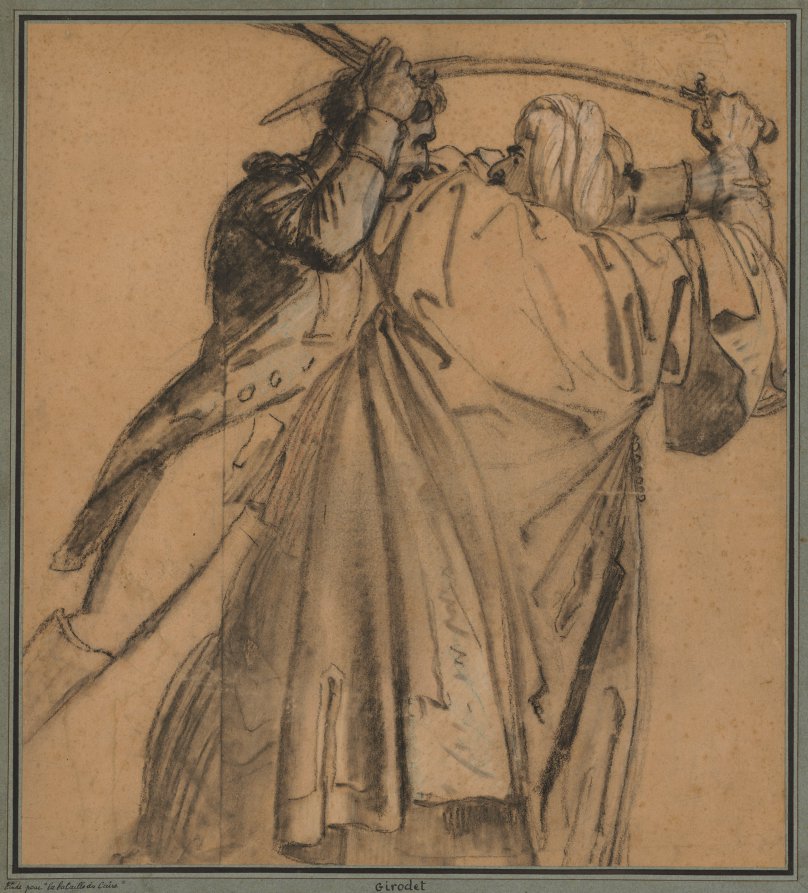
Two Arabs, for "The Revolt of Cairo"
Anne-Louis Girodet de Roucy-Trioson
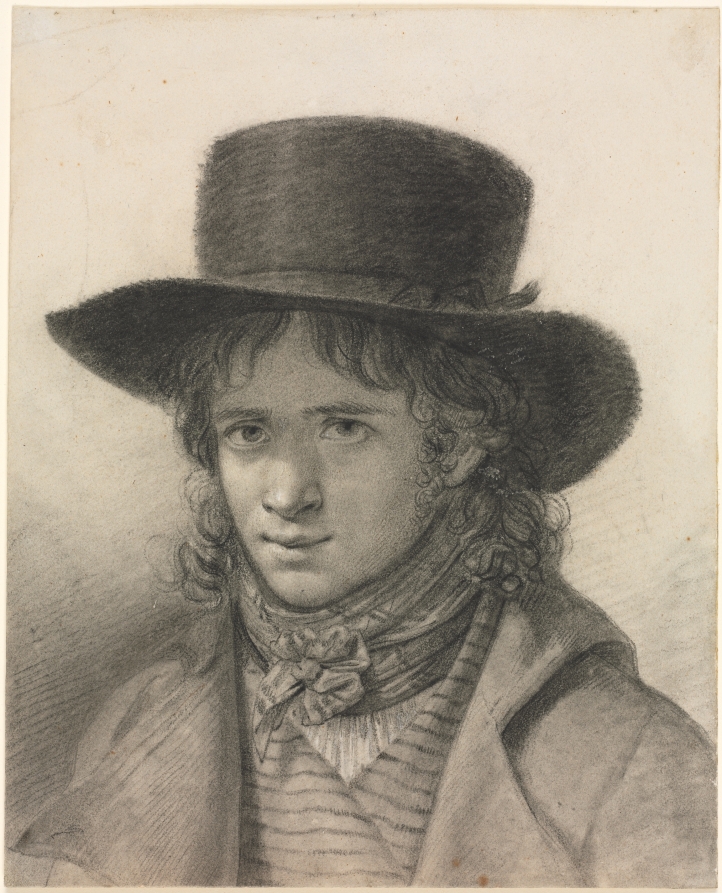
Self-Portrait in a Hat
Anne-Louis Girodet de Roucy-Trioson