
Provenance
Frederick Clay Barlett Collection, New York (by 1929); Betty Parsons Gallery, New York; Carroll-Knight Gallery, St. Louis; Rev. W. Chave McCracken, Cleveland Heights, Ohio (acquired in 1948); Adelaide McCracken, Bethel Vermont.
Accession Number
2006.139
Medium
oil on canvas
Dimensions
Framed: 87.3 x 105.7 x 7 cm (34 3/8 x 41 5/8 x 2 3/4 in.); Unframed: 70.5 x 88.1 cm (27 3/4 x 34 11/16 in.)
Classification
Painting
Credit Line
Given in loving memory of W. Chave and Mary Tyler McCracken by their daughters
Tags
Painting Early Modern (1901–1950) Oil Painting Canvas French Color: Orange
Background & Context
Background Story
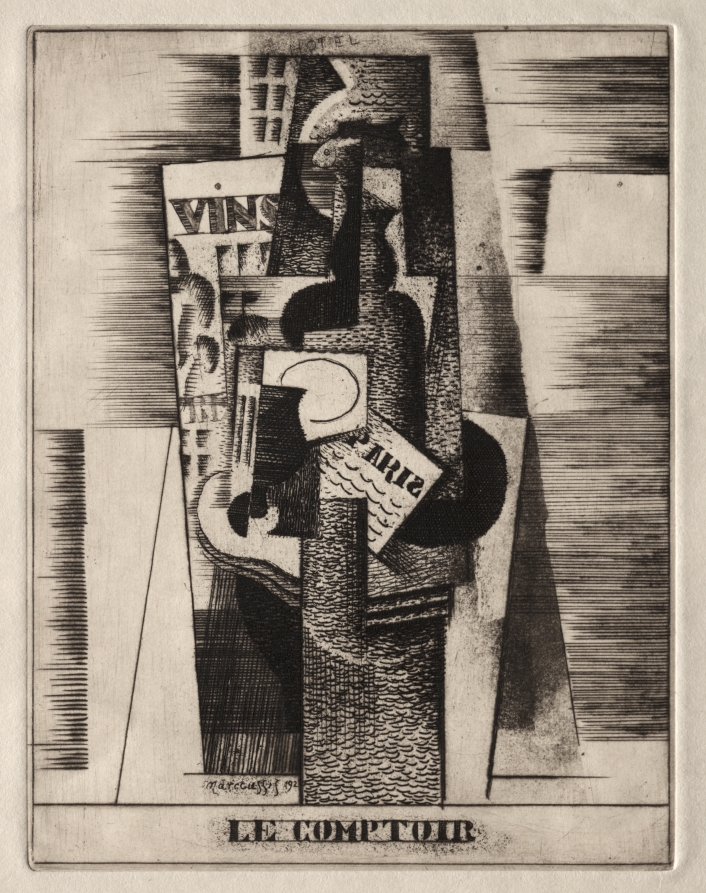
Louis Marcoussis (1883-1941) was a Polish-born French painter known as one of the most accomplished painters of the Cubist movement, whose paintings combine the structural analysis of Cubism with a poetic, melancholy quality that distinguishes his work from the more analytical Cubism of Picasso and Braque. Night Cafe from c. 1923 depicts a cafe scene in the Cubist manner that Marcoussis developed from his study of Picasso and Braque, combining structural analysis with a poetic, melancholy quality that is his most distinctive contribution to Cubism. The c. 1923 date places this in Marcoussis's most productive period, when he was producing the Cubist paintings that are his most accomplished works.
Cultural Impact
Night Cafe is important in the history of Cubism because it demonstrates the poetic, melancholy quality that Marcoussis brought to Cubist painting as one of the most accomplished painters of the movement. Marcoussis's Cubist paintings—combining the structural analysis of Cubism with a poetic, melancholy quality—represent an important alternative to the more analytical Cubism of Picasso and Braque, and the c. 1923 painting shows this alternative at its most accomplished.
Why It Matters
Night Cafe is Marcoussis's poetic Cubism: a cafe scene rendered in the structural manner of Cubism combined with the melancholy quality that makes him one of the most accomplished painters of the movement. The c. 1923 painting shows an alternative to analytical Cubism—structural analysis combined with poetic feeling.
![Saint Bernard and Saint Catherine of Alexandria with the Virgin of the Annunciation [right panel]](https://api.nga.gov/iiif/e6890364-4d99-4684-a62b-5060ee3c3446/full/400,/0/default.jpg)